Category: Nature

Discover the raw beauty of Africa’s untamed wilderness. From mist-covered mountains and ancient forests to vast savannahs teeming with wildlife, our Nature category takes you deep into the continent’s most awe-inspiring landscapes. Whether you’re chasing waterfalls in Uganda, hiking volcanic peaks in Ethiopia, or wandering through baobab-strewn plains in Madagascar, this is where nature speaks loudest. For eco-travelers, adventurers, and curious souls seeking authentic encounters with the wild—start your journey here.

  • Lake Malawi: Beaches, Villages, and Wilderness You Never Knew Existed

    Lake Malawi: Beaches, Villages, and Wilderness You Never Knew Existed

    You hop off a dusty minibus, backpack slung over one shoulder, the scent of grilled maize still clinging to your clothes. The sun is warm, the breeze balmy, and right there in front of you: Lake Malawi, sparkling like someone spilled a giant bucket of aquamarine paint across the horizon. It shimmers, stretches, and sways—looking less like a lake and more like an ocean that just happened to forget the salt.

    Behind you, the land rolls into green hills stitched with tea plantations and sleepy villages. Ahead lies water so wide your adventurous heart does a somersault. This isn’t just a place. It’s a feeling. And if you’re even remotely wired for exploration, it’s the kind of place that makes you want to pitch your tent, unplug, and never check your email again.

    Lake Malawi is a freshwater giant tucked neatly into the heart of East Africa, a place that still feels untouched, raw, and genuinely welcoming. Whether you’re a curious wanderer chasing off-the-beaten-track thrills, a local in need of a weekend escape, or simply someone who believes travel should stir the soul, this lake’s got you covered—from barefoot beaches to underwater wonderlands.

    Where Is Lake Malawi? Geography, Access, and Borders

    You know a place is special when three countries claim it. Lake Malawi—also known as Lake Nyasa in Tanzania and Lago Niassa in Mozambique—stretches roughly 580 km from its tropical top in Tanzania all the way to its mangrove-rich base in Mozambique. But the crown jewel belongs to Malawi, whose western shoreline feels like the beating heart of the whole lake.

    And here’s something few travelers realize: this great inland sea is more than just a pretty face. At its southern tip, Lake Malawi quietly gives rise to the Shire River, which meanders southward into Mozambique before joining the mighty Zambezi River. So yes, when you paddle across its glassy surface, you’re technically tracing the headwaters of one of Africa’s greatest river systems.

    And despite its remote reputation, getting here is half the fun.

    Reaching Lake Malawi by Road

    From Lilongwe, the road trip to Salima or Senga Bay takes about 4 to 5 hours. It’s an easy drive if you’re not distracted by every roadside vendor waving down your car with juicy mangoes or flaming skewers of goat meat. Blantyre? A bit longer—6 to 7 hours—but the landscapes shift from bustling towns to forested hills and sleepy villages, which is code for “make multiple photo stops.”

    You’ll pass palm groves, kids balancing buckets on their heads, and maybe a goat or two blocking the road. Standard Malawian traffic.

    Riding the MV Ilala

    Feeling romantic? Skip the roads and hop on the MV Ilala—a creaky but charismatic ferry that’s been chugging across Lake Malawi since 1951. It departs Monkey Bay and heads north, making stops at Cape Maclear, Likoma Island, Nkhata Bay, and other lakeside gems. Picture wooden crates of tomatoes, live chickens in baskets, and children waving from the shore like you’re a long-lost relative returning home.

    Sunset on the deck with a chilled soda (or something stronger) as the lake turns to gold? Unbeatable.

    Why Lake Malawi Is a Freshwater Sea

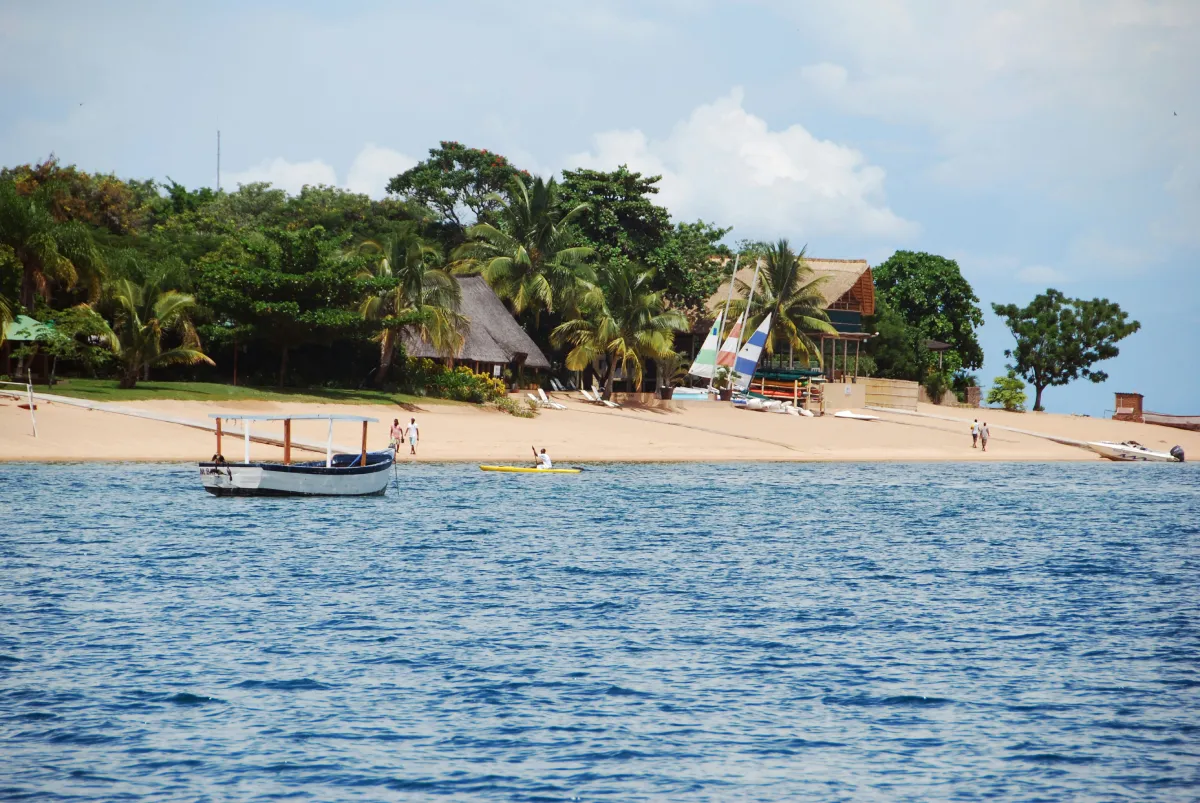
    Lake Malawi Beach Palm Tree

    Let’s be honest: calling this a “lake” feels like an understatement. With white-sand beaches, rolling waves, and a horizon that vanishes into sky, Lake Malawi gives the Indian Ocean a run for its money. It’s an inland sea in everything but name—and it has a secret beneath the surface that blows most oceans out of the water.

    And here’s a bonus trivia gem for the geography geeks: while Lake Malawi might look landlocked, its waters don’t stay put. At the lake’s southern tip, they flow out via the Shire River, winding through Malawi and Mozambique before joining the mighty Zambezi River. That means the water beneath your paddleboard will eventually meet the same river that thunders over Victoria Falls—just far downstream, where the Zambezi stretches its legs on its way to the Indian Ocean.

    Aquatic Wonderland of Cichlids

    Lake Malawi Cichlid Fish

    Underneath that dreamy blue surface swims the world’s most diverse collection of cichlid fish—over 1,000 species, most of which live nowhere else on earth. The Great African Lakes, particularly Lake Malawi, Tanganyika, and Victoria, are the undisputed global hotspot for these freshwater wonders. These little guys come in colors that would make a coral reef jealous: electric blue, neon yellow, fire orange, and combinations nature clearly had fun inventing.

    Whether you’re floating face-down with a snorkel or diving deeper with a tank strapped on, swimming in Lake Malawi feels like flipping through a fish-themed kaleidoscope. No stings, no sharks, no stress—just you, the fish, and maybe a curious crab or two.

    UNESCO-Protected National Park

    Down south, the Lake Malawi National Park guards the lake’s most pristine corners—and not just underwater. Forested hills roll down to rocky bays, home to baboons, monitor lizards, and a chorus of tropical birds. It’s a UNESCO World Heritage Site for a reason: few places in the world combine biodiversity and scenery quite like this.

    Bring your hiking boots. Bring your camera. Bring your inner Attenborough.

    Cape Maclear: Where Chill Meets Adventure

    If Lake Malawi were a mixtape, Cape Maclear would be its opening track—full of rhythm, a little bohemian, and instantly addictive. Known locally as Chembe, this backpacker-favorite has slowly matured into an eco-friendly haven that still knows how to let its hair down.

    Paddle, Hike, and Dhow into the Sunset

    Lake Malawi Sunset Reed Clouds

    Start your day by renting a kayak and paddling past tiny islands where herons perch and fishermen shout greetings in Chichewa. Up for a sweat? Hike to the local viewpoint—30 minutes of uphill determination rewarded with 360-degree lake views and a satisfying glisten of victory sweat.

    As the sun begins to yawn, climb aboard a traditional dhow for a sunset sail. The stories your captain tells may or may not be entirely true—but the vibe? 100% unforgettable.

    Bohemian Beachtown Banter

    When night rolls in, beach shacks light up their charcoal braais, and the scent of grilled chambo (Malawi’s tastiest tilapia) wafts through the air. Order a taco, sip a Mosi beer, and fall into conversation with a fellow traveler who came for the weekend and stayed for a year.

    If you’re lucky, there’ll be music—guitars, bongo drums, and a guy from Sweden who somehow learned to play the marimba after two beers.

    Because that’s what Lake Malawi does: it turns casual plans into cherished stories.

    Nkhata Bay: The Slow-Burn Sweetheart of Lake Malawi

    Head north along the lake and you’ll eventually roll into Nkhata Bay, a town that doesn’t try to impress you—it just does. This is the kind of place that wraps you in a hammock, hands you a mango, and gently whispers, “Stay a while.” Think wooden chalets on stilts, waves lapping beneath your floorboards, and that one guy with a guitar who plays the same three chords every night—yet somehow, it’s always perfect.

    Nkhata Bay is where you come when you’re not in a hurry. It’s not trying to be anything but itself, and that’s what makes it magical.

    Wandering Through Village Life

    Forget fancy sightseeing—it’s the ordinary that’s extraordinary here. Mornings start with walks through the nearby fishing villages, where dugout canoes line the shore and women in brightly patterned chitenje wrap fish in banana leaves with practiced elegance.

    Stumble into the local market and you’ll be greeted with mountains of cassava, cheeky kids trying to sell you avocados twice their size, and vendors who will not let you leave until you’ve tried their mangoes, their groundnuts, and probably their cousin’s dried fish. Spoiler: they’re all delicious.

    And don’t be surprised if a stranger walks up to shake your hand and ask where you’re from. In Nkhata Bay, small talk is a sport and everyone’s already rooting for you.

    Diving Into the Blue

    Just offshore, Lake Malawi puts on another kind of show. The cliffs around Nkhata Bay drop off into underwater canyons, home to schools of shimmering cichlids darting between boulders and caves like they’re late for a very glamorous appointment.

    Whether you’re a seasoned diver or a curious newbie, local dive schools here are relaxed, professional, and very good at convincing you that yes, you absolutely need to see the world from 15 meters below. With visibility often topping 20 meters and no strong currents to battle, it’s freshwater diving at its finest—just you, your bubbles, and a technicolor dreamscape.

    After your dive, head back to shore for a plate of steaming nsima served with smoked fish and spicy tomato relish. It’s hearty, it’s humble, and it tastes like you earned it.

    Likoma Island: A Slice of Castaway Luxury

    If Lake Malawi had a secret password, it would be “Likoma.” Tucked near Mozambique’s border (but proudly Malawian), this remote island is a place where time politely excuses itself. Life here moves to the rhythm of the waves—slow, gentle, undisturbed.

    The ferry pulls in with a groan, and you step off into a world of red-dust paths, barefoot children racing alongside bicycles, and colonial churches that seem wildly oversized for a place where goats outnumber people. And just when you think you’ve seen it all, someone mentions there’s a 100-year-old cathedral on the hill. Because, of course there is.

    Why Likoma Feels Like Another Planet

    There are no crowds. No chain hotels. No traffic. Just you, a hammock, and the kind of silence that makes you hear your own heartbeat. And then there’s the lake—Lake Malawi in all its barefoot glory, stretching in every direction like it’s trying to impress you (and succeeding).

    • Sunset dhow rides? Absolutely.
    • Snorkeling with more cichlids than you can count? You bet.
    • Mid-afternoon siestas under mango trees? Mandatory.

    Cultural Curiosities and Cathedral Surprises

    St. Peter’s Cathedral is a brick-and-stone behemoth that wouldn’t look out of place in Oxford—yet here it is, on an island with dirt roads and more bicycles than cars. Climb the bell tower for the best views of Lake Malawi, then wander down to the market where fishermen sell their morning catch and locals sell everything from fried cassava to flip-flops that may or may not match.

    If you’re lucky enough to stay overnight, opt for one of the island’s eco-luxury lodges. Hammocks, private decks, candlelit dinners on the beach… the works. It’s the kind of place that redefines “remote working” (if you absolutely must check emails, which you shouldn’t).

    Monkey Bay & Senga Bay: Easy Weekend Escapes

    Back on the mainland, Lake Malawi continues its magic in two places that are perfect for last-minute getaways and spontaneous road trips: Monkey Bay and Senga Bay.

    Monkey Bay: Gateway to the Lake’s Wild Side

    Monkey Bay has a name you’ll remember and a pace you’ll fall in love with. It’s not flashy, and it’s not trying to be. But it is real. Locals paddle dugout canoes out at dawn. Kids splash in the shallows with an infectious kind of joy. It’s a living postcard, slightly frayed around the edges, which makes it even more charming.

    From here, the lake opens up into reef-filled coves where snorkeling becomes a meditative ritual. Expect crystal-clear water, sunburned shoulders, and more fish than you can shake a waterproof camera at.

    And when you’ve had your fill of aquatic adventures, come back to shore for grilled chambo skewers, icy sodas, and a nap in the shade. You’ve earned it.

    Senga Bay: Lakeside Leisure with Just the Right Buzz

    If Monkey Bay is the charming uncle who tells long fishing stories, Senga Bay is the cousin who shows up with board games, a cooler, and a Bluetooth speaker. It’s relaxed, friendly, and slightly more polished—but in that laid-back, lakeside kind of way.

    Here, Lake Malawi offers paddleboarding, soft-sand beaches, and sunsets that make you involuntarily whisper “wow” under your breath. Resorts dot the shoreline, ranging from simple thatched cottages to breezy villas with infinity pools.

    Things to Do Around Senga

    • Paddleboarding at sunrise. Trust us: balancing on a board while fish jump around you is a core memory waiting to happen.
    • Village visits and homestays. Spend a night in a nearby community. Learn how to cook nsima, share stories, dance awkwardly—then dance a little more.
    • Fishing market madness. If you’ve never seen 300 people arguing over the same bucket of tilapia, welcome to Senga’s fish market.

    These towns may not have the polish of Cape Town or the buzz of Zanzibar, but that’s the whole point. They’re real, unfiltered, and full of those unplanned moments that end up being the best part of your trip.

    Life on the Lake: Stories, Smiles, and Fried Fish

    Lake Malawi isn’t just a body of water. It’s a life source, a meeting point, and for many, a way of living. The shoreline is dotted with villages where boats are carved by hand, meals come from the morning’s catch, and kids grow up thinking the entire world smells faintly of fish and sunshine.

    The People of the Lake

    They call Malawi “The Warm Heart of Africa” for good reason—and you’ll feel it the moment someone waves at you just because you exist. Conversations come easy here. You might sit down to buy a mango and end up hearing about someone’s cousin who moved to Mzuzu and now owns a bar with a jukebox that only plays Lionel Richie. It’s all part of the charm.

    Food, Glorious Food

    Chambo is the Beyoncé of the lake. You’ll see it everywhere: grilled whole, fried in strips, or stuffed in tacos with mango and chili. Nsima (the staple maize porridge) is served with everything, and if you’re lucky, your host might throw in fried cassava or a side of hot, smoky beans.

    Also, try the local gin. It might change your evening. Or your morning.

    Music, Markets, and Movement

    Evenings are for music. Not the blaring kind—though that exists too—but the soulful strumming of a guitar, the tap of a foot drum, the hum of a song you don’t know but somehow recognize.

    Markets hum during the day, especially on the weekend. They sell fresh fruit, fried snacks, and woven baskets sturdy enough to survive five years of grocery runs back home.

    What to Do on and Around Lake Malawi

    If you think Lake Malawi is just about dipping your toes in and gazing wistfully into the distance, you’re in for a surprise. Sure, there’s plenty of lazing to be done, but this lake is also an activity goldmine for those of us who get itchy feet after two hours on a sun lounger.

    Snorkeling and Diving in a Living Kaleidoscope

    Put on a mask, snorkel, and a slightly-too-tight life vest and prepare to float above the most dazzling aquarium this side of the equator. The cichlids here aren’t just colorful—they’re unapologetically fabulous. Electric blues, firey reds, golden stripes… they dart between rocks like confetti at an underwater parade.

    Prefer to go deeper? Dive centers in Nkhata Bay and Cape Maclear offer courses and guided dives down into the underwater crevices of Lake Malawi. With visibility often exceeding 20 meters and no jellyfish or currents to worry about, it’s one of the best freshwater dive experiences in Africa—maybe even the world.

    Paddleboarding, Kayaking, and Dhow Sailing

    This lake was made for paddling—literally. Calm, warm water and countless coves make it ideal for kayak safaris. From Cape Maclear, you can paddle out to Domwe Island and camp overnight like a true nomad of the waves. If you’re more “balance optional,” paddleboarding is a zen-like joy when the water turns to glass at dawn.

    But for full-on old-world romance, nothing beats a sunset dhow cruise. Sailors hoist giant triangular sails by hand, you lean back on a pile of cushions, and the lake delivers a pastel lightshow that somehow makes you believe in magic again. No playlist needed—the wind does all the singing.

    Hiking and Exploring Inland

    Once you’ve had your fill of floating, stretch those legs. Trails in Lake Malawi National Park snake through miombo woodlands and granite hills, where you might spot bushbuck, baboons, and a surprising number of butterflies. The viewpoints above Cape Maclear and Nkhata Bay serve up panoramas that demand a deep breath and a long pause.

    Further inland, explore craft markets and fishing villages where life unfolds with quiet rhythm. The locals might not understand why you’d voluntarily walk uphill for fun—but they’ll still point you in the right direction, usually with a laugh and a mango.

    Camping and Off-Grid Escapes

    Whether you’re sleeping under the stars on Likoma Island or setting up camp in a quiet cove near Monkey Bay, Lake Malawi was made for outdoor sleeping. There’s something deeply satisfying about falling asleep to the sound of water lapping the shore, with fireflies dancing above your tent and the occasional curious frog inspecting your gear.

    Most campsites have basic facilities and million-dollar views. Pack light, bring snacks, and don’t forget a headlamp. You’ll need it when you can’t find your flip-flops in the sand after one too many sundowners.

    Travel Tips for Lake Malawi

    Lake Malawi is refreshingly low-fuss, but a little prep goes a long way. Here’s what you need to know before you dive in (sometimes literally).

    Health & Safety

    • Malaria: It’s present, so bring repellent and sleep under a net. Antimalarials are optional but worth considering for longer trips.
    • Bilharzia: It’s a freshwater parasite that exists in some parts of the lake. Stick to busy, well-frequented beaches (especially near Cape Maclear and Likoma) and ask locals where it’s safe to swim.
    • Cash is king: ATMs exist but can be unreliable. Bring enough cash, especially for Likoma and remote villages.
    • Local SIMs: Airtel and TNM are your go-to networks. Coverage is decent in most towns, but Likoma gets patchy.

    Cultural Smarts

    • Dress modestly in villages: Swimwear is fine at lodges and beaches, but bring a sarong or T-shirt when heading into town.
    • Learn a few words of Chichewa: “Moni” (hello) and “zikomo” (thank you) will get you smiles everywhere.
    • Buy local, stay local: Support community-owned lodges, guides, and markets. Your kwacha go further when spent thoughtfully.
    • Bartering is part of the fun: Don’t be afraid to negotiate—but keep it friendly. A good-natured haggle often ends in laughter.

    Where to Stay on Lake Malawi

    Accommodation around Lake Malawi is delightfully diverse—whether you want rustic hammocks and campfire dinners or private decks and poolside cocktails.

    Budget and Backpacker

    • Mayoka Village (Nkhata Bay): Quirky, social, and set into the hillside, this lodge is perfect for travelers who want a community vibe with diving, kayaking, and hammocks in the trees.
    • Thumbi View Lodge (Cape Maclear): A classic backpacker base with lakefront views, cold beer, and rooms that won’t bankrupt your travel fund.

    Mid-Range Gems

    • Mgoza Lodge (Cape Maclear): Beachfront chalets with easy access to the park and a cozy restaurant that serves killer lake-to-plate chambo dishes.
    • Chinteche Inn (Northern Lakeshore): Bright and breezy rooms, lovely gardens, and a quiet beach perfect for early morning swims.

    Splurge-Worthy Escapes

    • Kaya Mawa (Likoma Island): The stuff of barefoot luxury dreams—think cliff-perched villas, plunge pools, and meals served under the stars.
    • Pumulani Lodge (Cape Maclear): Designed by the people behind Kaya Mawa, this hilltop haven offers panoramic views, impeccable service, and private beach access that feels… cinematic.

    Why Lake Malawi Is the Soul-Stirring Journey You Didn’t Know You Needed

    Some places beg to be seen. Others quietly wait to be found. Lake Malawi is the latter. It doesn’t shout. It whispers. And once you listen, it’s hard to walk away unchanged.

    Maybe it’s the cichlids that glitter like gemstones. Maybe it’s the fishermen who wave with both hands. Maybe it’s the sunsets that make you forget what day it is. But something about this place gets under your skin—in the best possible way.

    So, if you’re craving more than just a pretty view—if you’re chasing experiences that surprise, humble, and stir something deep inside—then pack your bag. Don’t overthink it. Bring your curiosity, a good pair of sandals, and an open heart.

    Lake Malawi is waiting.

  • Lake Kariba: Africa’s Dazzling Giant of Adventure and Serenity

    Lake Kariba: Africa’s Dazzling Giant of Adventure and Serenity

    Imagine standing at the edge of a seemingly endless expanse of shimmering water, framed by golden hills and vast skies that ignite into riots of color at sunset. Welcome to Kariba—Africa’s largest artificial lake and one of its most exhilarating frontiers. Straddling the border between Zambia and Zimbabwe, Lake Kariba is a world of floating safaris, fierce tigerfish, luxurious houseboats, ancient legends, and landscapes so surreal they seem almost imagined. Here, you don’t just visit—you plunge headfirst into a realm where the ordinary rules of travel don’t seem to apply.

    Fed by the mighty Zambezi River—the same river that hurls itself off the cliffs at the legendary Victoria Falls—Kariba trades thunderous spectacle for endless mystery. Where Victoria Falls roars, Kariba broods: a colossal inland sea born of ambition, elemental forces, and a few whispered curses from the gods.

    But how did a place of such wild, stubborn beauty come to exist? To understand Kariba, you first have to meet its ghostly past—and the mighty river spirit that many say still rules its depths.

    The Birth of a Giant: A Short History of Kariba

    Lake Kariba - Kariba Dam Wall
    The Kariba Dam – an Engineering Mega- Project from the 1950s

    Kariba is no ordinary lake. It’s a human-made marvel, the result of one of the most ambitious (and controversial) engineering feats of the 20th century: the construction of the Kariba Dam. In the 1950s, the Zambezi River—a powerful, ancient artery winding through Southern Africa—was dammed to provide hydroelectric power to the booming mining industries of Zambia (then Northern Rhodesia) and Zimbabwe (then Southern Rhodesia).

    The project was monumental, dangerous, and shrouded in mystery. Workers told stories of sudden floods, strange whirlpools, and inexplicable accidents. Locals believed these were the work of Nyaminyami, the river god—a serpentine deity with the body of a snake and the head of a fish, furious at the disruption of his watery realm.

    The flooding created the vast Lake Kariba, swallowing entire valleys and displacing thousands of Tonga people from their ancestral homes. Today, their descendants still tell tales of Nyaminyami’s anger—and some believe he’ll one day destroy the dam and reunite the separated riverbanks.

    History aside, the dam itself remains an awe-inspiring sight. Stretching 579 meters long and 128 meters high, it is a beast of concrete and ambition. Yet the lake it birthed is something gentler: a haven for wildlife, adventure seekers, and romantics alike.

    The Landscape of Legends: What to Expect at Kariba

    Lake Kariba Dead Trees Reflection

    Arriving at Kariba feels a little like stepping into a myth. The lake stretches for over 220 kilometers, a glistening inland sea surrounded by craggy hills, sandy beaches, and thick forests. Trees drowned by the flooding still reach skeletal fingers above the waterline, creating a haunting, beautiful landscape that shifts from eerie to exhilarating depending on your mood.

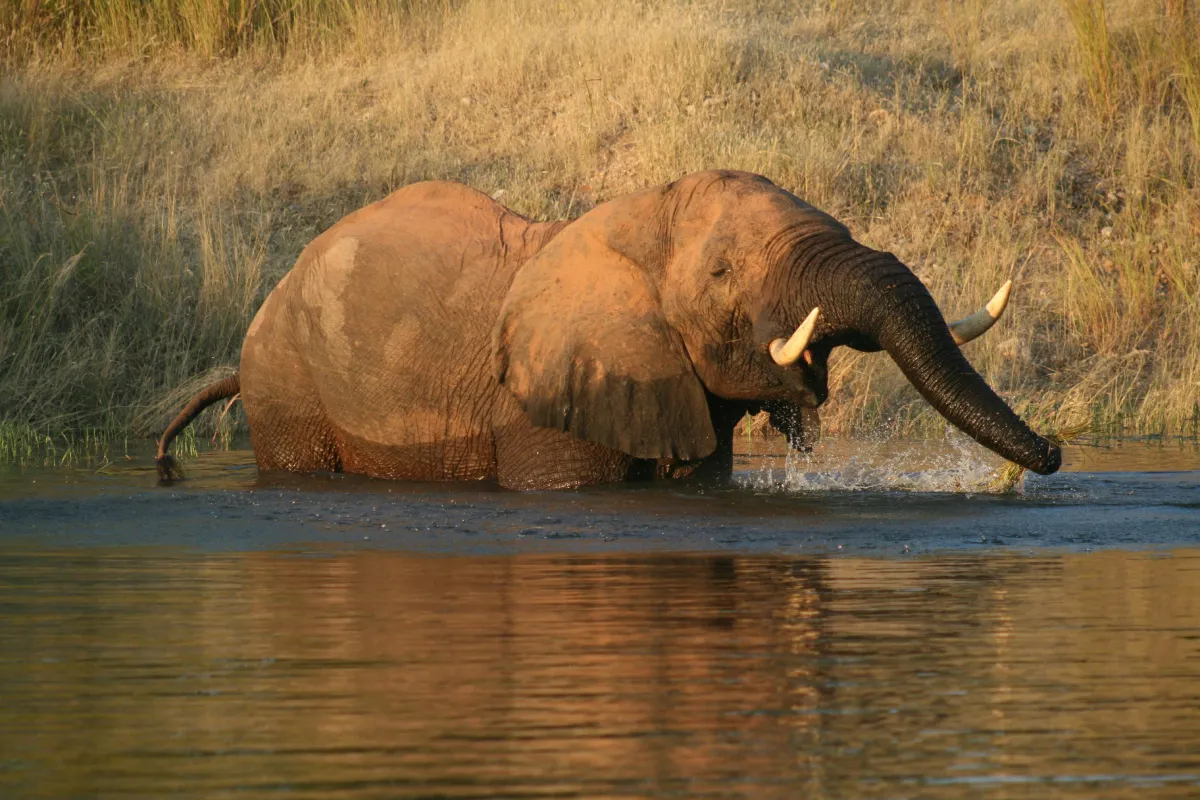
    Expect to encounter elephants wading into the shallows, crocodiles sunbathing along muddy banks, and herds of buffalo kicking up dust along the horizon. And above all, expect vast, soul-stirring skies: sunrises that paint the water in liquid gold, and sunsets so extravagantly beautiful they look Photoshopped by the gods themselves.

    If Kariba had a soundtrack, it would be the low hum of a boat engine, the call of fish eagles overhead, and the splash of a tigerfish breaking the surface in a flash of silver and muscle.

    Top Experiences on the Zambian Side

    Kariba Town and the Dam Wall

    Start your Zambian adventure in Siavonga, a laid-back town that hugs the northern shores of Kariba. From here, you can visit the Kariba Dam Wall, a jaw-dropping sight both for its sheer size and its slightly ominous aura (especially if you know Nyaminyami’s legend). Guided tours of the dam offer a fascinating glimpse into the challenges—and human drama—of its creation.

    Don’t miss the Kariba Dam Visitors’ Center, where vintage photos and intriguing exhibits tell the dam’s tumultuous story.

    Sunset Cruises on Lake Kariba

    Lake Kariba Sunset Cruise Boat

    When it comes to sunsets, Kariba doesn’t do subtle. The best way to experience one? Aboard a sunset cruise, drink in hand, as the lake turns to molten copper around you. Boats of all shapes and sizes offer cruises, from humble fishing boats to luxury catamarans complete with bars and loungers.

    Pro tip: Book a private sunset cruise with a local captain for the real magic—fewer crowds, more champagne, and the chance to drift wherever the mood (and the fish) take you.

    Fishing Adventures

    Kariba is legendary for its tigerfish, a creature that looks like it swam straight out of a nightmare: ferocious, muscular, and armed with razor-sharp teeth. Fishing for tigers isn’t just a sport here—it’s a rite of passage.

    Whether you’re a seasoned angler or just want to brag about battling Africa’s fiercest freshwater fish, local guides can arrange trips suited to all skill levels. Just remember: this is no place for cheap fishing line or lazy wrist flicks. If you’re going to wrestle with a tigerfish, bring your A-game—and maybe some plasters.

    Game Viewing by Boat

    Kariba’s edges are alive with wildlife. Join a boat-based safari from Siavonga or nearby lodges and get ready to spot elephants, hippos, crocodiles, and dazzling birdlife from a whole new angle. The thrill of seeing a herd of elephants wading just meters from your boat is pure Kariba magic.

    Top Experiences on the Zimbabwean Side

    Kariba Town (Zimbabwe)

    Zambia Lake Kariba Cruise Boat

    Cross the border into Zimbabwe, and you’ll find another Kariba Town, this one perched above the lake with sweeping views and a charming, slightly nostalgic feel. Explore the markets, visit the Catholic Church of St. Barbara (built for the Italian dam workers), or simply soak in the relaxed lakeside vibe.

    For the best views, head to Kariba Heights—a high ridge offering panoramic vistas over the dam, the lake, and the shifting silhouettes of the Zambezi Escarpment beyond.

    Matusadona National Park

    If you dream of combining water and wildlife, Matusadona National Park is your promised land. Located along Kariba’s southern shore, it’s one of the few places in Africa where you can enjoy traditional game drives and boat-based safaris in the same day.

    Expect to see lions, elephants, buffalo, and a staggering variety of bird species. Walking safaris here are particularly exhilarating, with expert guides leading you (safely) into close encounters with big game.

    Island-Hopping Adventures

    Scattered across Lake Kariba are a handful of islands, each with its own character. Spurwing Island offers lodge accommodation and excellent fishing. Chete Island is a wilder, less-developed spot, perfect for true adventurers willing to rough it a bit in exchange for extraordinary nature.

    Some islands are only reachable by private charter or houseboat—adding that delicious sense of isolation that makes Kariba feel like your own private kingdom.

    Houseboat Life

    If you really want to do Kariba right, charter a houseboat. Imagine this: Your own floating hotel, complete with crew, chef, sundeck, fishing rods, and endless access to one of the world’s most mesmerizing lakescapes.

    Houseboat life is all about slow rhythms: cruise, swim, fish, sip sundowners, feast, repeat. And if you’re lucky, you’ll wake up one morning to find a curious elephant snuffling along the water’s edge nearby.

    Places to Stay in Kariba

    Lake Kariba View Siavonga

    Kariba’s magic doesn’t stop when the sun goes down—it just shifts gears. Whether you’re after luxury, romance, adventure, or something wonderfully rustic, there’s a place with your name on it.

    On the Zambian Side

    Lake Kariba Inns

    If you like your adventures with a side of comfort, Lake Kariba Inns in Siavonga is a top choice. Perched on a hill overlooking the lake, the property offers terraced gardens, large pools, and a relaxed, old-world atmosphere. The rooms and villas, many with private verandas, offer stunning lake views—perfect for sunrise coffees or sundowner toasts.

    Plus, the restaurant serves up excellent seafood, and the bar is the kind of place where stories (and tall fishing tales) flow freely.

    Eagles Rest Resort

    More budget-conscious but no less charming, Eagles Rest Resort offers cozy, self-catering chalets right by the water. It’s a perfect spot if you’re looking to launch boat trips or simply chill by the small beach with a cold Mosi beer in hand. Expect a friendly vibe, braai (barbecue) facilities, and impromptu wildlife visits from cheeky vervet monkeys.

    On the Zimbabwean Side

    Caribbea Bay Resort

    Caribbea Bay in Kariba Town is a classic: a rambling, Mediterranean-style resort with direct lake access, multiple pools, and a family-friendly atmosphere. Think simple pleasures: big breakfasts, lazy afternoons by the pool, and sunset walks by the shore.

    It’s the ideal base if you want comfort and easy access to town facilities without blowing the budget.

    Bumi Hills Safari Lodge

    Want to go full safari-luxe? Bumi Hills Safari Lodge is a Kariba legend. Situated on a remote hillside, Bumi Hills blends five-star luxury with unbeatable wilderness views. Expect infinity pools that seem to pour into the lake, stylish suites, decadent meals, spa treatments, and guided game drives that bring you face-to-face with Africa’s wildest residents.

    It’s the kind of place you book for a “once-in-a-lifetime” trip—and end up mentally planning your second visit before you even leave.

    Houseboats: Your Floating Home

    Honestly, the ultimate Kariba experience is booking a houseboat for a few days. Options range from rustic pontoons with sleeping mats under the stars to five-star floating palaces with jacuzzis and private chefs.

    Some of the most popular houseboats include:

    • Shikra Houseboat (luxury experience)
    • Navistar (great for groups and fishing trips)
    • Osprey (perfect for budget-conscious adventurers)

    Whether you’re fishing, lounging, stargazing, or just drifting, houseboat life redefines relaxation.

    Where to Eat and Drink

    Kariba’s dining scene isn’t Michelin-starred—but it’s hearty, soulful, and infused with the spirit of the lake.

    Zambian Side

    Sandy’s Creations in Siavonga

    Part garden center, part restaurant, Sandy’s Creations is a hidden gem where you can enjoy wood-fired pizzas, juicy burgers, and cold drinks under the shade of flowering trees. Perfect for a lazy lunch after a morning on the lake.

    Eagles Rest Beach Bar

    At Eagles Rest Resort, the laid-back beach bar serves simple but satisfying meals: think grilled fish, steak sandwiches, and the ever-popular Zambezi bream served fresh from the lake.

    Zimbabwean Side

    Marineland Harbour Restaurant

    If you’re based in Kariba Town (Zimbabwe), Marineland Harbour Restaurant is a great pick for lake views and fresh seafood. Their fried kapenta (tiny, delicious fish that are Lake Kariba’s answer to whitebait) is legendary among locals.

    Caribbea Bay’s Terrace Restaurant

    This sprawling terrace overlooking the water is a beautiful place for breakfast, sunset drinks, or a long, lazy dinner featuring local specialties, steaks, and international comfort foods.

    And no matter where you are, make sure you try a traditional braai (barbecue). On both sides of the lake, it’s not just a way to cook—it’s a way of life.

    Travel Tips for Your Kariba Adventure

    Lake Kariba Scenery

    A trip to Kariba is pure magic, but a little planning goes a long way to make it smooth and unforgettable.

    Best Times to Visit

    The best time to visit Kariba largely depends on the kind of adventure you’re seeking. The dry season, which runs from May to October, is ideal for safaris, fishing, and boat trips. During these months, the weather is cooler, the skies are crystal-clear, and wildlife congregates along the shrinking shorelines, making game viewing spectacular. It’s also the peak season for houseboat charters, so expect a livelier atmosphere and plan your bookings well in advance.

    On the other hand, the wet season from November to April transforms the landscape into a lush, emerald dreamscape. The rains bring new life to the bush, fewer tourists crowd the shores, and sunsets seem even more intense against the stormy skies. However, some of the more remote roads can become muddy or impassable during heavy rains, and certain houseboat operations may scale back, so a little flexibility (and a sense of adventure) goes a long way during this time.

    Border Crossings and Visas

    Traveling between the two sides of Lake Kariba is straightforward if you plan properly. You can cross between Zambia and Zimbabwe at the Kariba Border Post, located conveniently right by the dam wall itself. Many nationalities are eligible for visas on arrival for both countries, but it’s always wise to double-check visa requirements based on your passport before setting off, as rules can shift with little notice.

    If you intend to explore both Zambia and Zimbabwe—or fancy adding a day trip to Botswana’s Chobe region—you should consider applying for the KAZA Univisa. This special visa covers both countries and allows multiple entries, saving you money and administrative hassle compared to purchasing two separate visas. Not all entry points issue the KAZA Univisa, so confirm availability at the Kariba crossing before arrival.

    Houseboat Chartering Essentials

    Booking a houseboat is hands-down one of the most iconic ways to experience Kariba, but a little prep work makes all the difference. Especially during the busy dry months from June to October, it’s essential to book well in advance to secure the best vessels and itineraries. Availability can vanish faster than a tigerfish snapping at bait during peak season.

    When arranging a charter, always clarify exactly what’s included in the package. Some boats come fully catered with a chef, crew, fishing gear, and fuel, while others operate more on a self-service model. Surprises on the open lake are only fun when they’re dolphins, not extra charges.

    If you have particular tastes in beverages or snacks, it’s a good idea to bring your own drinks and treats onboard. Supplies can be limited once you’re out on the water, and while the basics are usually covered, your favorite single malt or organic kale chips probably won’t be waiting for you in Kariba’s local shops.

    Safety Tips

    Kariba is a land of wild beauty—and that means playing smart when it comes to safety. Along the shorelines and even in the water, wildlife like hippos and crocodiles are very much a real and present danger. They’re not just myths for campfire tales; maintaining a respectful distance from the water’s edge and being cautious when swimming is non-negotiable.

    If you’re venturing out by boat or even taking a quick dip, wear a life jacket without exception. Conditions can change rapidly, and it’s far better to look slightly over-cautious than to have an epic story that ends badly.

    Finally, do not underestimate the Kariba sun, which comes at you with the intensity of a thousand spotlights. Sunscreen, wide-brimmed hats, sunglasses, and light long-sleeved shirts will help you survive and thrive in the relentless heat—because looking like a boiled lobster halfway through your trip is not a good look for anyone.

    Currency, Mobile Signal, and Connectivity

    When it comes to money, be prepared. Zambia operates using the kwacha, while Zimbabwe largely uses US dollars—although small denominations can sometimes be hard to come by. Credit cards are accepted at larger hotels and lodges, but cash remains king for everyday expenses like buying souvenirs, tipping staff, or grabbing a cold beer at a local bar.

    Mobile signal around Kariba is generally reliable in and near the main towns like Siavonga and Kariba Town, but once you venture onto the lake or into the national parks, coverage can become patchy or disappear altogether. Plan accordingly if you’re relying on apps for navigation or communication.

    Most lodges and upscale houseboats offer some form of Wi-Fi, but connections are often slow and intermittent. Frankly, that’s part of the magic. Kariba is a place where you’re meant to disconnect from emails, work crises, and endless doomscrolling—and reconnect with something a lot bigger, wilder, and more awe-inspiring.

    Getting There: Reaching Kariba from Both Sides

    Kariba may feel like the edge of the world, but getting there is surprisingly manageable—with a touch of adventure, of course.

    From the Zambian Side

    The Zambian gateway to Kariba is Siavonga, a lakeside town about 200 kilometers south of Lusaka. The drive from the capital takes around 3.5 to 4 hours, with the road mostly paved and scenic, winding past small towns, baobab-dotted hills, and roadside stalls selling mangoes, tomatoes, and occasionally, carved wooden hippos.

    If you’re arriving internationally, Kenneth Kaunda International Airport in Lusaka is your best entry point. From there, you can hire a car, book a transfer through your lodge, or arrange for a driver—self-driving is possible but comes with the usual cautions about signage and fuel stops.

    For the truly adventurous, it’s even possible to combine Kariba with a detour from Lower Zambezi National Park, linking two epic water-based adventures in one glorious circuit.

    From the Zimbabwean Side

    On the Zimbabwean side, Kariba Town is about 370 kilometers northwest of Harare, the capital. The road journey takes roughly 5 to 6 hours depending on traffic, weather, and how often you stop for photos (spoiler: it will be often). The road is generally in good condition, though the last stretch into Kariba winds through hills and offers dramatic lake views that make the drive worth every curve.

    You can fly into Robert Gabriel Mugabe International Airport in Harare, then continue overland. Alternatively, domestic flights to Kariba Airport from Harare or Victoria Falls are available with local carriers like Fastjet or charter companies, though they can be irregular, so check schedules carefully.

    Whichever route you choose, the final approach to Kariba feels like an arrival—not just into a destination, but into a different kind of rhythm altogether. One where time slows down, horizons stretch out, and adventure begins the moment you see that first glint of blue on the horizon.

    Why Kariba Will Steal Your Heart (and Maybe Your Fishing Rod)

    Kariba isn’t just a place you visit. It’s a place that wraps itself around your senses, your memories, and your sense of wonder. One minute you’re watching the mirror-flat water reflect the burning African sky, and the next you’re battling a tigerfish that feels like it might drag you straight into legend.

    It’s the sound of a fish eagle crying overhead. It’s the thrill of seeing an elephant swim—yes, swim—between islands. It’s sitting on the deck of a houseboat under a galaxy-bright sky, wine glass in hand, trading stories with new friends you feel like you’ve known forever.

    While Africa’s mighty Lake Victoria may be larger in sheer size, Kariba offers something even rarer: a wild, untamed soul you can truly lose yourself in, where every ripple of water and crackle of sunset feels like an invitation to adventure.

    On the Zambian side, you’ll find easy-going charm, warm hospitality, and a sense of intimate adventure—the feeling that you’ve stumbled on something incredible just slightly off the mainstream tourist radar.
    On the Zimbabwean side, you’ll taste wilder adventures, deeper safari encounters, and perhaps even a brush with luxury that feels all the more magical for its remoteness.

    Kariba is for adventurers, for romantics, for seekers of wide skies and wilder stories. It’s for those who believe that travel should change you a little—that it should fill your lungs with new air and your heart with a little more awe.

    And in case you were wondering: yes, Nyaminyami is still said to roam beneath those glinting waters, a silent, sinuous reminder that Kariba belongs first to the river, to the earth, and to the endless pull of mystery.

    If you’re ready to trade crowded beaches and package tours for something bigger, deeper, and infinitely more soul-stirring, it might just be time to follow the call of Kariba.

    Bring sunscreen. Bring curiosity. Bring your best fishing tackle.
    But mostly—bring your sense of wonder. Kariba is waiting.

  • Victoria Falls: The Smoke That Thunders – An Adventurer’s Guide

    There are places you visit, tick off your bucket list, and file away under “nice memories.”
    And then there are places that seize you by the soul—loudly, unforgettably, permanently. Victoria Falls belongs to the second group, and it doesn’t just nudge its way into your heart; it kicks the door down and roars its arrival.

    Straddling the border between Zambia and Zimbabwe, this monumental cascade is more than a waterfall—it’s a thundering spectacle of earth’s raw power, a place where the air trembles with energy and rainbows curl through the mist like living creatures. Known locally as Mosi-oa-Tunya—the “Smoke That Thunders”—Victoria Falls is one of the Seven Natural Wonders of the World, and trust us: no postcard, no Instagram filter, no drone footage can prepare you for standing on its edge and feeling the ground shake beneath your boots.

    Here, the experiences are just as dramatic as the view. One moment you’re teetering over the Devil’s Pool, grinning into the abyss. The next, you’re floating lazily on a sunset cruise, a gin and tonic in hand, watching elephants graze along the riverbanks.
    Victoria Falls isn’t just a destination for thrill-seekers, though it rewards the brave. It’s a full symphony—of nature, history, culture, and adventure—waiting for you to lean in and lose yourself completely.

    The Majesty of Victoria Falls

    Victoria Falls Sunset

    Imagine a sheet of water wider than a kilometer plunging 108 meters into a zigzagging gorge carved by millennia of unstoppable force. That’s Victoria Falls. Stretching approximately 1,708 meters across—almost double the width of Niagara Falls—and sending up mist visible from 50 kilometers away, this UNESCO World Heritage Site earns every bit of its grand reputation.

    Depending on when you visit, the experience changes dramatically. During the rainy season (February to May), the Falls are at their most ferocious, with so much spray that you might as well bring a raincoat—or a canoe. In the drier months, you’ll see the sheer basalt walls laid bare, revealing the geological artistry of millions of years, and you might even find secret pools and rocky outcrops inviting you closer.

    From above, the Falls look like a gaping tear in the Earth, stitched at the edges by lush rainforest and wreathed in perpetual mist. On foot, every step along the viewing trails is an unfolding revelation—an orchestra of roaring water, trembling earth, and the cool kiss of mist on your skin.

    A Journey Through Time: Historical Insights

    Long before GPS coordinates and Instagram geotags, Victoria Falls was revered by the indigenous Kololo people, who named it Mosi-oa-Tunya—an ode to its thunderous might and ever-present cloud of spray.

    In 1855, Scottish missionary and explorer David Livingstone stumbled upon the falls during his travels along the Zambezi River. Stunned by the sight, he famously declared, “Scenes so lovely must have been gazed upon by angels in their flight.” Livingstone, ever the imperialist, named the falls after Queen Victoria, a monarch who would never lay eyes on them herself.

    The British colonial period saw Victoria Falls transformed from an isolated natural marvel into a magnet for travelers and engineers. In 1905, the iconic Victoria Falls Bridge was completed—a marvel of steel and ambition, arcing 128 meters above the Zambezi Gorge. Initially constructed for a Cape-to-Cairo railway dream that never quite materialized, the bridge today is famous for bungee jumps that test your nerves (and your lunch).

    Over the decades, the Falls have witnessed colonialism, independence movements, and the evolution of tourism from gentlemen’s safaris to bucket-list backpacking. Yet through it all, the thundering heartbeat of Victoria Falls remains unchanged—untamable and awe-inspiring.

    Thrills and Adventures: Activities Around the Falls

    Zambezi River White Water Rafting Adventure Experience Things to Do Victoria Falls
    White Water Rafting on the Zambezi River – a Thrilling, Adrenaline-packed Experience

    If simply standing before Victoria Falls feels like an adrenaline shot to the heart, wait until you dive into the activities. Here, thrill-seeking isn’t optional—it’s a way of life.

    White-Water Rafting on the Zambezi River

    They don’t call it one of the best rafting destinations on Earth for nothing. Below the falls, the Zambezi River churns into a frothy tantrum of Grade IV and V rapids with names like “The Washing Machine” and “Oblivion.” Strap on a helmet, clutch your paddle, and prepare to be tossed, dunked, and exhilarated.

    Bungee Jumping from the Victoria Falls Bridge

    Ever wanted to hurl yourself 111 meters into a gorge with only a glorified elastic band to catch you? Now’s your chance. The Victoria Falls Bridge bungee jump is a rite of passage for adrenaline junkies. One second, you’re gazing at the serene waters upstream—the next, you’re plummeting towards the Zambezi in a blur of screaming euphoria.

    Helicopter and Microlight Flights

    They call the helicopter rides the “Flight of Angels” after Livingstone’s famous quote, and the name fits. From the air, the full majesty of Victoria Falls unfolds—rainbows arching through mist, the serpent of the Zambezi weaving its way through the landscape, and the gorges yawning below. If you prefer something even more intimate, microlight flights (tiny, open aircrafts) give you an unfiltered, heart-in-mouth experience.

    Swimming in Devil’s Pool

    Between August and December, when water levels are lower, brave souls can swim right up to the very lip of the Falls in a natural rock pool called Devil’s Pool. One misstep and… well, let’s just say it’s not called “Devil’s Pool” because it’s a safe kiddie park attraction. Guides are mandatory—and so is your courage.

    Sunset Cruises on the Zambezi River

    After all that heart-racing adventure, you’ve earned a little serenity. Hop aboard a luxury riverboat for a sunset cruise. Sip on chilled drinks, nibble on canapés, and watch as hippos wallow, crocodiles lurk, and elephants come down for a twilight drink—all bathed in the golden glow of an African sunset.

    Wildlife Safaris in Nearby Parks

    You’re not just visiting a waterfall; you’re entering a realm of untamed wilderness. Mosi-oa-Tunya National Park in Zambia and Zambezi National Park in Zimbabwe offer classic game drives where you might spot elephants, buffalo, giraffes, zebras, and even the occasional lion. Birdwatchers will be in paradise too, with species like the African fish eagle and the dazzling lilac-breasted roller flitting through the trees.

    Experiencing Both Sides: Zambia vs. Zimbabwe

    When it comes to Victoria Falls, loyalty is a complicated thing. Both Zambia and Zimbabwe offer jaw-dropping experiences, but each side brings its own flavor—and you’ll want a taste of both.

    Zimbabwe Side: Front-Row Seats to Majesty

    Victoria Falls Zimbabwe side
    Victoria Falls from the Zimbabwe side

    Zimbabwe boasts about 75% of the viewing area, meaning that if you want to see Victoria Falls in its full, thunderous glory, this is your stage. Within Victoria Falls National Park, a well-maintained network of trails and sixteen designated viewpoints guides visitors through a constantly shifting series of breathtaking perspectives. One moment you’re standing in a misty rain forest with sunlight filtering through the vapors, and the next you’re standing at the edge of a sheer cliff, staring straight into the plummeting abyss.

    On the Zimbabwean side, you can get up close to the Main Falls, Devil’s Cataract, and the iconic Horseshoe Falls—each section a different symphony of water, rock, and raw energy. During the high-water season, the experience becomes almost surreal: walls of spray rise in mighty columns, creating rainbows that float like bridges across the gorge, and drenching you from head to toe. In the low-water months, when the spray subsides, the hidden architecture of the Falls is revealed. You can see the deep, sculpted gorges and basalt cliffs that speak of millions of years of untamed natural force.

    One of the greatest advantages of the Zimbabwean side is its proximity to the bustling town of Victoria Falls itself. The town is only a few minutes’ walk from the park entrance, which means that after a morning spent marveling at waterfalls, you can easily slip away for a strong coffee, a gourmet lunch, or even a quick swim at your lodge before heading back out for more adventure. The infrastructure here is well-developed, with a wide range of accommodation options, restaurants, shops, and tour operators, making it a convenient and comfortable base for exploration.

    For travelers who want uninterrupted panoramic views, easy access to town amenities, and the widest selection of organized tours and activities, the Zimbabwean side of Victoria Falls offers an experience that is as grand and exhilarating as the Falls themselves.

    Zambia Side: Intimacy and Adventure

    Victoria Falls Livingstone Zambia
    Livingstone, Zambia

    Zambia may offer a smaller slice of the viewing area compared to Zimbabwe, but what it lacks in width, it more than makes up for in intimacy, adventure, and heart-pounding proximity to the Falls themselves. From within Mosi-oa-Tunya National Park, visitors can experience Victoria Falls from thrilling new angles.

    One of the highlights is crossing the Knife-Edge Bridge, a narrow walkway suspended over a dizzying drop, where the air is so thick with mist you might as well be walking through a rain cloud. As you tread carefully across the bridge, the thunder of the water vibrates through the soles of your shoes, and the swirling clouds of spray can completely envelop you—an exhilarating reminder of the raw power only meters away.

    During the low-water season, Zambia reveals some of its most exclusive treasures. When the Zambezi’s flow retreats, adventurous travelers can walk across the riverbed to reach Livingstone Island, a tiny outcrop perched on the very lip of the Main Falls. From there, the bravest visitors can take a short swim to the legendary Devil’s Pool, a naturally formed rock pool right at the waterfall’s edge. Here, in what might be the world’s most extreme infinity pool, you can peer straight down into the gorge, with nothing but a slippery stone lip holding you back from the plunge of a lifetime.

    Beyond the waterfalls themselves, the Zambian experience continues in the historic town of Livingstone. Named after the explorer who first brought Victoria Falls to the world’s attention, Livingstone is a charming and atmospheric base for your adventures. Colonial-era buildings line the main streets, giving the town a nostalgic air, while colorful local markets pulse with energy, handicrafts, and the scent of street food. Compared to the more touristy town of Victoria Falls in Zimbabwe, Livingstone has a quieter, more laid-back atmosphere, making it perfect for travelers who enjoy a slightly slower pace between adrenaline bursts.

    For those seeking close encounters with the Falls, unforgettable adventures like visiting Livingstone Island and Devil’s Pool, and a relaxed, welcoming town ambiance, Zambia offers an experience that feels raw, personal, and completely unforgettable.

    Crossing the Border: Twice the Adventure

    Victoria Falls Bridge Zambia Zimbabwe
    The Victoria Falls Bridge between Zambia and Zimbabwe

    The good news for indecisive travelers is that you don’t have to choose between Zambia and Zimbabwe—you can (and absolutely should) experience both. Thanks to the KAZA Univisa, an ingenious travel document costing around $50 USD, you can hop freely across the border as many times as you like within a 30-day period. This means you can spend your morning marveling at the epic panoramas from Zimbabwe, then saunter across the Victoria Falls Bridge and find yourself up close and soaked on the Zambian side by the afternoon.

    The border crossing itself is refreshingly straightforward. Immigration posts are located right on either side of the Victoria Falls Bridge, and the process is usually quick, especially if you travel during daylight hours. Passport in hand, a few friendly stamps later, and you’re ready to experience a new perspective on one of the world’s greatest natural wonders. It’s a rare chance to experience two countries and two very different faces of the same thundering masterpiece—without the hassle and red tape that often complicates border hopping elsewhere in Africa.

    If you plan your days well, crossing between Zambia and Zimbabwe isn’t just practical—it becomes part of the adventure. Each side offers unique angles, experiences, and moods, and stitching them together will leave you with a far richer, more complete memory of Victoria Falls than sticking to just one.

    Where to Stay: Accommodations for Every Traveler

    Whether you’re a lover of luxury, a seeker of authentic lodges, or a backpacker chasing waterfalls, Victoria Falls has a bed for you.

    Zimbabwe Side

    Victoria Falls Hotel Zimbabwe
    The Victoria Falls Hotel on the Zimbabwe side

    The Victoria Falls Hotel
    Stepping into the Victoria Falls Hotel is like stepping back in time. Opened in 1904, this grand colonial hotel oozes old-world charm. Imagine high tea on manicured lawns with a view of the spray rising in the distance and vintage decor that would make Downton Abbey jealous.

    The Elephant Camp
    Luxury tents, private plunge pools, and the occasional greeting from a wandering elephant. What more could you want? The Elephant Camp offers high-end safaris with serious eco-credentials.

    Batonka Guest Lodge
    Boutique, cozy, and full of character, Batonka is perfect for travelers who want a more intimate (and slightly less expensive) stay. Think lush gardens, a serene atmosphere, and easy access to town.

    Zambia Side

    Royal Livingstone Hotel by Anantara
    This is the place where zebras wander the grounds and the Zambezi River murmurs just beyond your veranda. With Victorian-style architecture and impeccable service, the Royal Livingstone is a splurge—and absolutely worth it.

    Tongabezi Lodge
    Perched on the banks of the Zambezi, Tongabezi is for the romantics. Expect candlelit dinners, private river excursions, and individually designed cottages and houses that redefine barefoot luxury.

    Thorntree River Lodge
    Sustainably built, stylishly modern, and utterly luxurious, Thorntree River Lodge is for travelers who want to experience Victoria Falls with minimal environmental footprint—and maximum comfort.

    Culinary Delights: Dining Around Victoria Falls

    With all this adventuring, you’re going to need fuel. Thankfully, Victoria Falls knows how to feed the hungry wanderer.

    Zimbabwe Side

    The Lookout Café
    Built right on the edge of the Batoka Gorge, the Lookout Café serves incredible food with equally incredible views. Watch daredevils zip-line across the gorge as you tuck into flame-grilled steaks and fresh salads.

    The Boma – Dinner & Drum Show
    More than just a meal, The Boma is a full cultural experience. Come hungry for a buffet of game meats, traditional Zimbabwean dishes, and mopane worms (if you’re brave). Stay for the drumming, dancing, and storytelling that will have you clapping and swaying in your seat.

    The Three Monkeys
    Funky, friendly, and full of flavor, The Three Monkeys is the perfect spot for a casual evening. Burgers, pizzas, and local beers flow freely under fairy-lit trees.

    Zambia Side

    The Royal Livingstone Dining Room
    Fine dining with a colonial twist. Expect impeccable service, white tablecloths, and dishes that fuse European technique with African ingredients.

    Café Zambezi
    If you want to eat like a local, Café Zambezi delivers. Try the crocodile tail, goat stew, or a hearty braai (barbecue), all in a relaxed, unpretentious setting.

    Olga’s – The Italian Corner
    Run by a charity supporting local youth education, Olga’s serves delicious handmade pastas and pizzas with a side of feel-good karma.

    Travel Tips for the Intrepid Explorer

    Planning your visit to Victoria Falls isn’t rocket science, but a few insider tips can make the difference between a good trip and an unforgettable one.

    Best Time to Visit

    High-Water Season (February to May):
    If you want to see Victoria Falls at its most ferocious, this is it. Expect massive spray clouds (bring a poncho!) and an almost deafening roar. Some activities like Devil’s Pool are off-limits due to safety concerns, but the sheer power of the Falls is beyond breathtaking.

    Low-Water Season (August to December):
    This is the time for adventure lovers. The water levels drop, revealing rocky outcrops and opening up once-in-a-lifetime experiences like swimming in Devil’s Pool and visiting Livingstone Island. It’s also the best time for rafting, as the rapids become more exposed.

    Shoulder Seasons (June–July, January):
    A balance between good visibility and decent water volume, plus slightly fewer crowds. Great for photography.

    Visa Requirements and the KAZA Univisa

    For most visitors, the KAZA Univisa is the golden ticket. It covers entry into both Zambia and Zimbabwe (and even a day trip into Botswana) for 30 days at a flat fee of around $50 USD. You can get it at major entry points like Victoria Falls Airport, Livingstone Airport, and border posts. Check eligibility before traveling, as not all nationalities qualify.

    If you’re not eligible, individual visas are straightforward to obtain on arrival, but they cost more if you plan to hop between countries.

    Health and Safety

    • Vaccinations: Check your yellow fever vaccination requirements depending on your travel history. Hepatitis A, typhoid, and malaria prophylaxis are often recommended.
    • Water: Stick to bottled water unless your accommodation guarantees safe filtration.
    • Animals: Victoria Falls town is unfenced. It’s not uncommon for elephants or baboons to wander through at night. Stay alert, keep a safe distance, and don’t even think about feeding them.
    • Adventure Safety: Always book adrenaline activities with licensed operators. Safety standards are generally good, but double-check your harness before taking that leap!

    Currency and Payment Methods

    Zimbabwe Dollar 100 trillion
    At the peak of the hyper-inflation in 2008, Zimbabwe issued this 100 trillion Dollar banknote
    • Zimbabwe: The local currency situation can be a bit chaotic. Most places accept USD, and sometimes South African rand or Botswana pula. Carry small denominations and expect a cash economy.
    • Zambia: The Zambian kwacha (ZMW) is king, though USD is widely accepted in tourist areas. ATMs are available but sometimes unreliable.
    • Cards: Many hotels and upscale restaurants accept Visa and MasterCard, but expect occasional outages—carry cash just in case.

    Local Customs and Etiquette

    • Greetings Matter: A warm greeting is expected. Take the time to say hello, ask how someone is, and smile.
    • Tipping: In restaurants, a tip of around 10% is customary if not included. For guides and porters, tipping is both appreciated and expected.
    • Photography: Always ask before photographing locals. Most are happy to oblige, but courtesy goes a long way.
    • Dress Code: Casual and comfortable. Cover up a bit more when visiting markets or towns (no bikinis at the supermarket, please).

    Getting There: Flights, Roads, and Border Crossings

    Reaching Victoria Falls can feel like the start of the adventure itself. Whether you’re flying in, road-tripping across Zambia, or crossing over from a neighboring country, getting there is straightforward—with a few scenic surprises along the way.

    If you’re flying, the easiest and most direct options are to land at Victoria Falls International Airport (VFA) on the Zimbabwean side or Harry Mwanga Nkumbula International Airport (LVI) in Livingstone, Zambia. Both airports receive flights from regional hubs like Johannesburg, Nairobi, Addis Ababa, and Cape Town. Some airlines also connect directly to Lusaka, making the capital an ideal starting point for Zambian travelers.

    For those feeling the pull of the open road, a drive from Lusaka to Livingstone is a rewarding journey—assuming you’re up for a little African road trip magic. The 480-kilometer route takes roughly 6 to 8 hours, depending on road conditions and how often you stop to stretch, snack, or admire a wandering herd of goats. The road is mostly paved and navigable, with fuel stations, small towns, and roadside markets along the way. If you’re self-driving, make sure your vehicle is in good shape and carry essentials like cash, water, and—just in case—a solid playlist.

    If you’re already exploring southern Africa, you can also cross into Victoria Falls by road from Botswana (via Kazungula) or Namibia (via Katima Mulilo). Buses, private shuttles, and tours operate regularly between nearby regional highlights like Kasane, Chobe, and even the Caprivi Strip.

    However you choose to arrive, there’s something uniquely satisfying about watching that first plume of mist rise into the sky as you get closer—your confirmation that the Smoke That Thunders is just around the bend.

    Let Victoria Falls Leave Its Mark on You

    There are waterfalls, and then there is Victoria Falls—a place where nature’s power is so visceral, you feel it humming through your bones. Named in honor of Queen Victoria, much like the distant Lake Victoria from which the mighty Nile begins its long journey north, Victoria Falls represents not just colonial history but the sheer grandeur that early explorers sought to immortalize. Whether you come to raft the world’s wildest rapids, stand on the edge of eternity at Devil’s Pool, or simply be mesmerized by the relentless beauty of the “Smoke That Thunders,” Victoria Falls grabs hold of your senses and refuses to let go.

    Add in vibrant towns, luxurious lodges, lively markets, and unforgettable sunsets, and you have a destination that’s equal parts wild adventure and soul-soothing wonder.

    For travel lovers and adventure seekers, Victoria Falls isn’t just another stop on the map—it’s a life-affirming, spine-tingling, mist-soaked masterpiece.
    So pack your sense of wonder (and maybe a waterproof jacket), and get ready to answer the call of the Falls.

    Because some places you visit.
    And some places?
    They visit you—again and again, every time you close your eyes.

  • Lake Naivasha: Where Kenya’s Wild Heart Finds Its Calm

    Lake Naivasha: Where Kenya’s Wild Heart Finds Its Calm

    Some lakes whisper. Lake Naivasha hums—with life, with history, with the kind of stillness that somehow feels full of sound. Tucked away in Kenya’s Great Rift Valley, about 90 kilometers northwest of Nairobi, this freshwater lake isn’t just a scenic pit stop—it’s an entire symphony for the senses.

    Lake Naivasha is where the quietly curious come to stretch their legs and still their minds. It’s for birders who speak fluent kingfisher, hikers who measure joy in altitude gain, and adventurers who prefer giraffes to traffic jams. Whether you’re chasing silence, hippos, or just a really good sunrise, you’ve come to the right place.

    At 1,884 meters above sea level, Lake Naivasha is unusually elevated for a freshwater lake. Its name is thought to come from the Maasai word Nai’posha, meaning “rough water”—a nod to the sudden storms that can sweep across its otherwise peaceful surface. The lake covers roughly 139 square kilometers, depending on rainfall, and is surrounded by an additional 64 square kilometers of swampy, bird-filled bliss.

    Naivasha is fed by underground springs and runoff from nearby Mau Forest. With no visible outlet, it’s one of those mysterious bodies of water that seems to live by its own rules—which it does, quite literally, when it decides to expand during rainy seasons and casually reclaim land, trees, and sometimes hotel gardens.

    Birds, Beasts, and Biodiversity: Why Lake Naivasha is Heaven for Nature Lovers

    The Birdwatcher’s Bucket List, All in One Place

    Lake Naivasha Marabou Storks Birds Wildlife
    Marabou Storks are part of Lake Naivasha’s rich wildlife

    You don’t need to be a professional birder to appreciate Lake Naivasha, but if you are, bring extra SD cards. This region is a feathery paradise with over 400 bird species that call the lake and its wetlands home.

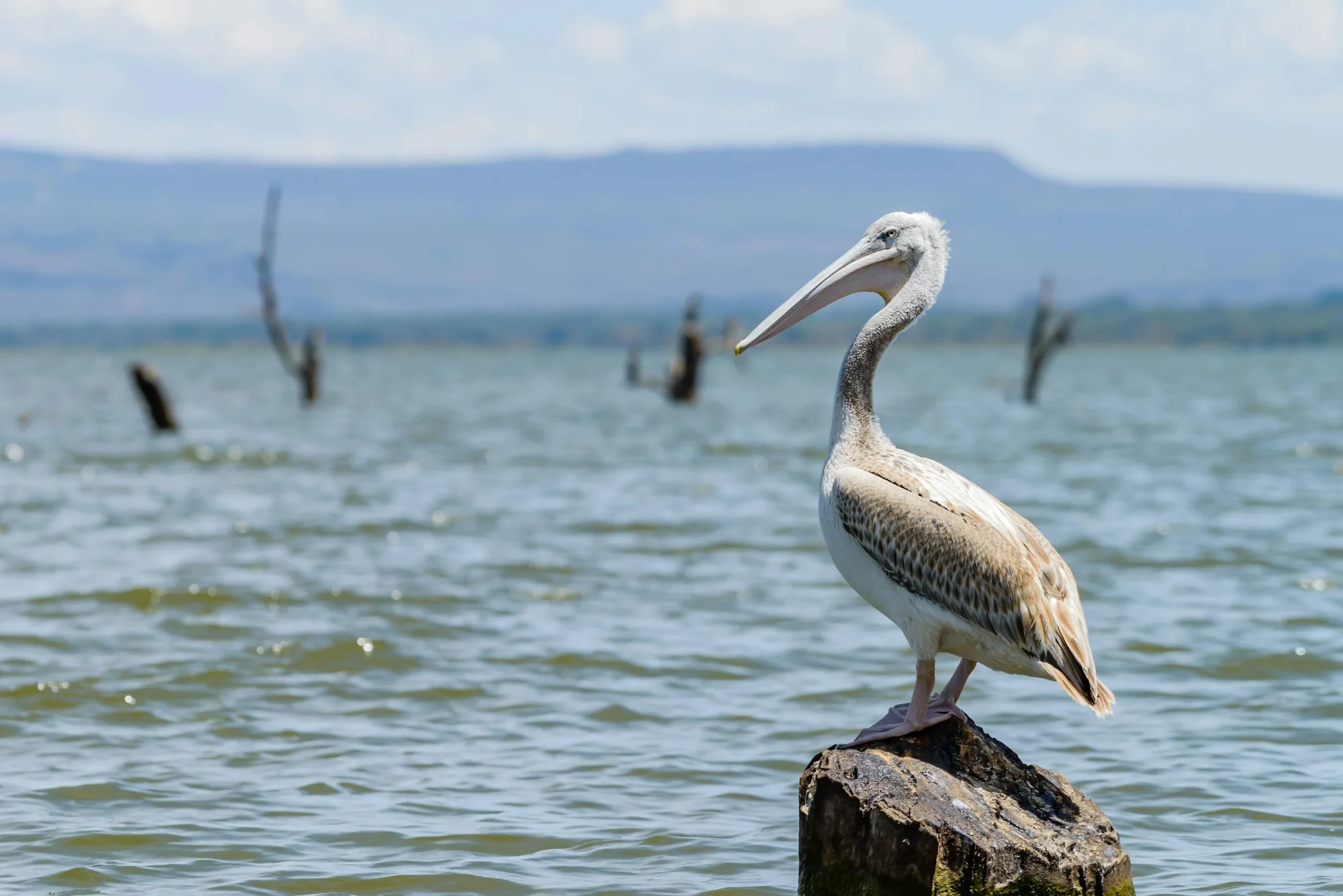
    Every morning, you’ll hear the cry of the African fish eagle echo across the water like nature’s alarm clock. Pied kingfishers hover like tiny helicopters before plunging beak-first into the lake. Great white pelicans coast over the surface in clumsy elegance. And if you’re lucky, you might spot a Goliath heron—because yes, even the herons here are overachievers.

    From reed warblers to jacanas, Naivasha’s avian life thrives in the papyrus beds, acacia woodlands, and surrounding swamps. It’s like watching a BBC nature documentary live, but with better coffee and no David Attenborough commentary (unless you do your own).

    Hippos and Hoots in the Night

    Lake Naivasha Hippo Wildlife Animals

    Lake Naivasha is home to a healthy population of hippos—roughly 1,500 of them, to be semi-precise. During the day, you’ll see their shiny backs bobbing in the shallows, often surrounded by snorting and low grumbles. At night, however, they emerge from the water to graze. If you’re staying lakeside, don’t be surprised to hear one munching just outside your tent or cottage window. It’s all part of the charm—until one blocks your path to breakfast.

    Despite their round and somewhat comical appearance, hippos are fiercely territorial, so admire them from a respectful distance. Your camera’s zoom is your best friend.

    Walk with the Wild (But Not Too Wild)

    One of Lake Naivasha’s most thrilling aspects is its walkable safaris—especially on Crescent Island. This semi-private sanctuary, accessible by boat or a short drive, allows you to stroll among zebras, giraffes, impalas, and wildebeest. No predators roam here, which makes it one of the few places in Kenya where you can safely say you walked with giraffes and meant it literally.

    The absence of lions and leopards doesn’t make it any less exciting. On foot, everything feels more immediate: the rustle of hooves through dry grass, the way a giraffe freezes to stare you down, the odd moment when you remember how fast a zebra can bolt. You’re not just observing nature here—you’re part of it.

    The Best Ways to Explore: Activities Around Lake Naivasha

    Boat Safaris: Drift into the Wild

    Imagine drifting across calm water as the early morning mist rises, your guide pointing out pelicans, fish eagles, and a pod of hippos clustered like oversized bath toys. Boat safaris are the unofficial rite of passage at Lake Naivasha. They give you a front-row seat to the lake’s aquatic life—cormorants drying their wings on submerged trees, kingfishers zipping past, and, if you’re extra lucky, otters peeking above the surface.

    Boats are small, flat, and ideal for gliding silently through reeds and open water alike. Most tours last about an hour, though you can easily book longer private trips—sunset cruises with drinks are particularly popular for obvious reasons.

    Crescent Island: Where Nature Says “Take a Walk”

    Crescent Island is a place where you don’t just spot wildlife—you walk right through it. This crescent-shaped peninsula, made famous as a filming location for Out of Africa, is home to herds of plains game that are completely unfazed by your presence.

    It’s not unusual to have a giraffe walk past as you admire the view over the lake. You’ll likely share trails with gazelle, waterbuck, and even the occasional wildebeest with attitude. There’s something deeply humbling—and oddly comic—about trying to look cool while avoiding eye contact with a curious ostrich.

    Hike Mount Longonot: Views, Sweat, and Crater Drama

    If you’re the kind of person who hears the word “volcano” and thinks, “let’s climb it,” then Mount Longonot is calling your name. This dormant volcano looms on the horizon just a 30-minute drive from Naivasha town.

    The hike begins gently enough, but don’t be fooled—reaching the rim is a workout. The path spirals steeply upward, gaining 630 meters in elevation. But once you’re at the top, the payoff is panoramic. You can walk the 7.2-kilometer loop around the entire crater rim, with views stretching out over Lake Naivasha, the Rift Valley floor, and occasionally even Lake Elementaita on a clear day.

    Tip: Start early to beat both the heat and the crowds. And pack water. Lots of it.

    Hell’s Gate National Park: Hike, Bike, and Channel Your Inner Lion King

    Want something truly dramatic? Head south to Hell’s Gate National Park. Unlike many parks in Kenya, this one encourages self-guided exploration. You can hike or rent a bicycle and pedal between soaring cliffs, geothermal vents, and gorges straight out of a fantasy film set.

    Hell’s Gate is home to zebras, hartebeests, buffaloes, and plenty of birds—but the real thrill is the landscape. Towering sandstone formations, narrow rock canyons, and bubbling geothermal activity give it a prehistoric feel. No wonder it inspired the setting for Pride Rock.

    Oh, and did we mention the Ol Njorowa Gorge? It’s a winding slot canyon carved by centuries of water and wind. Hiking through it feels like venturing into a forgotten world. Just check the weather before you go—flash floods aren’t nearly as fun as they sound.

    The Crater Lake Sanctuary: A Volcanic Secret Worth the Climb

    Naivasha Crater Lake
    The Naivasha Crater Lake – a scenic hike

    If Lake Naivasha is the charismatic celebrity of the Rift Valley, Crater Lake is its introverted cousin—the one who reads poetry, wears green, and knows how to keep a secret.

    Located on private land about 10 kilometers from Naivasha town, Crater Lake is tucked inside a small, dormant volcanic crater. The lake itself shimmers an eerie shade of jade, surrounded by cliffs and dense bushland that give it a tucked-away, enchanted-forest feel. The sanctuary here is a haven for birdlife—over 150 species have been recorded—and you’ll often see zebra, giraffe, and antelope as you wander the walking trails around the rim.

    This isn’t a place for crowds. It’s where you come to stretch your legs, breathe in the scent of acacia trees, and maybe eat your packed lunch while pretending you’ve discovered it yourself. No judgment—we all do it.

    Olkaria Geothermal Spa: Bathing Where the Earth Sighs

    In nearby Hell’s Gate National Park lies one of Kenya’s more unusual wellness experiences: the Olkaria Geothermal Spa. Here, you can soak in steaming, milky-blue waters that are naturally heated deep within the earth’s crust. The geothermal pools are the byproduct of Kenya’s bold push into renewable energy, and while the science is fascinating, the sensation is even better.

    Float beneath the open sky as warm water eases your hiking aches and turns your fingers into prunes of contentment. The water contains minerals like sulfur and silica, said to be excellent for the skin. Whether or not you believe that, there’s something deliciously surreal about relaxing in a volcanic jacuzzi surrounded by Rift Valley cliffs.

    There’s even a shallow pool for kids and non-swimmers, which means you can bring the whole family—or just your inner child.

    Flower Farm Tours: Petal-Powered Industry

    You may not know it, but the next time you see roses in a European supermarket, there’s a solid chance they came from Lake Naivasha. The area is one of the world’s leading producers of cut flowers, with greenhouses stretching out across the plains like quilt patches of color.

    Several flower farms—like Oserian and Karuturi—offer tours that peel back the petals on how this massive industry operates. You’ll learn how climate, altitude, and proximity to water give Naivasha an edge, and how these farms are shifting toward more sustainable, eco-conscious practices.

    It’s a lovely way to experience something different, and surprisingly soothing—wandering through endless rows of roses, carnations, and lilies while bees bumble lazily in the background.

    Bonus: many tours end with a fresh bouquet and a cup of tea.

    Cultural Immersion: Markets, Stories, and the Heartbeat of the Rift

    For all the natural beauty of Lake Naivasha, it’s the people who bring the soul. Spend a morning at the Naivasha town market and you’ll witness a lively rhythm of daily life—vendors calling out prices, mamas in bright kangas weighing tomatoes, and the scent of roasting maize drifting on the breeze.

    You can also visit nearby Maasai villages where community-run tourism initiatives offer immersive experiences: traditional dances, fire-making demonstrations, beadwork lessons, and real conversations that go beyond the staged performances you find elsewhere.

    If you’re the sort of traveler who collects moments over souvenirs, these encounters will stay with you far longer than a fridge magnet.

    Environmental Challenges and the Dance with Nature

    When the Lake Grows Legs: Rising Water Levels

    Lake Naivasha - Fisherman on a Tree in the Water Rising Water Levels
    Lake Naivasha – Fisherman on a tree in the water. Rising water levels in recent years have caused thousands of trees to be submerged

    Lake Naivasha, as mentioned earlier, is a lake that likes to stretch out—and occasionally overstays its welcome. In the past decade, water levels have surged by over two meters, flooding low-lying properties, walkways, and entire groves of mature acacia trees.

    If you’ve ever seen a fisherman in a canoe floating between tree trunks, you’re not hallucinating—those trees used to be on dry land. Many lakeside hotels have built raised boardwalks or relocated dining areas inland. Some properties lost entire gardens to the water’s slow but relentless creep.

    But in typical Kenyan fashion, locals adapt. Fishermen now use submerged trees as natural perches, and bird species have colonized the half-drowned branches, creating eerie, photogenic scenes of cormorants and herons silhouetted against a misty lake.

    Balancing Tourism with Sustainability

    Lake Naivasha Fish Eagle wildlife birds

    Lake Naivasha’s popularity is both its strength and its Achilles heel. As tourism and agriculture expand, so do the environmental pressures. Water pollution from farming, encroachment on wetlands, and overfishing are very real concerns.

    Thankfully, a number of conservation organizations are working to keep the lake and its ecosystems alive and well. Community cleanups, bird counts, papyrus restoration projects, and responsible tourism guidelines are all part of a growing movement to ensure that Lake Naivasha doesn’t just survive—but thrives.

    As a visitor, your choices matter. Support eco-certified lodges. Don’t feed the animals. Say no to plastic. And above all, treat this natural haven like it’s your own backyard—because for the local communities, it is.

    A Glimpse into Deep Time: Naivasha and the Rift Valley’s Ancient Past

    When Lakes Were Seas and Craters Were Volcanic Tantrums

    Long before Naivasha was a peaceful bird sanctuary, it was part of a massive prehistoric lake system stretching across the Rift Valley. Geological and paleoclimatic studies suggest that lakes like Naivasha, Nakuru, and Elementaita were once interconnected, forming an enormous freshwater network during wetter climatic periods.

    Over thousands of years, tectonic shifts and changing rainfall patterns fractured this mega-lake into smaller, distinct water bodies. These natural forces didn’t just create stunning landscapes—they carved out entirely new ecosystems.

    So when you’re boating through Naivasha’s calm waters or climbing Mount Longonot’s rugged rim, you’re literally walking through millennia of earth history. Nature doesn’t rush, but it certainly knows how to leave a mark.

    Where to Stay: Lakefront Lodges, Cosy Hideaways, and Wild Comforts

    Lake Naivasha Country Club: Colonial Grace Meets Hippo Views

    Originally a staging post for flying boats in the 1930s, Lake Naivasha Country Club still oozes a kind of old-world elegance—think wide verandas, manicured gardens, and liveried waiters who bring you tea as if it’s a sacred ritual. But don’t let the classic charm fool you; this place is also modern in the right places. Wi-Fi works, hot water is reliable, and the hippos still occasionally mow the lawn at night.

    The property opens right onto the lake, with boat safaris departing straight from its jetty. The lawns stretch lazily down to the water’s edge, where birds gather like it’s the avian version of Sunday brunch.

    Enashipai Resort & Spa: Pampering With a View

    Lake Naivasha Enashipai Hotel Resort
    Enashipai Resort & Spa at Lake Naivasha

    If you like your nature with a side of massage, Enashipai is your place. Meaning “a place of happiness” in the Maasai language, this upscale resort offers luxurious rooms, an award-winning spa, and a heated pool—all tucked into a peaceful, lakeside setting. It’s ideal for couples, families, and solo travelers who want to trade the tent for a pillow menu without losing touch with the wild outside.

    And yes, the birdwatching from your balcony is still top-notch. You might even see a hornbill giving your reflection the side-eye.

    Burch’s Resort: Budget-Friendly, Nature-Rich

    On the opposite end of the wallet spectrum, Burch’s Resort offers simple but charming lakeside accommodation perfect for backpackers, birders, and quiet souls who’d rather splurge on boat rides than bed linen thread count. The views are brilliant, and you’re just steps from the lake.

    It’s also one of the best places to wake up to the sound of fish eagles and go to sleep to the distant chuckle of hippos—without needing a bank loan to do it.

    Olerai House: Farmstay Serenity with Feathered Neighbours

    If you’ve ever dreamt of waking up on a working flower farm with giraffes roaming through the garden and weaver birds building nests in the trees above you, Olerai House is what happens when that dream checks into reality.

    This intimate, eco-friendly lodge is part of the Oserian farm estate, blending tasteful design with a deep respect for nature. Meals are made with produce from the garden, and the ambiance whispers tranquility. It’s more like staying in someone’s beautiful countryside home—if that someone were deeply stylish, wildly generous with wine, and friends with giraffes.

    Lake Naivasha Resort: Contemporary Comfort with Lakeside Luxury

    Lake Naivasha Resort blends modern amenities with a serene lakefront setting. The spacious rooms and manicured gardens provide an ideal backdrop for those looking to relax while still being close to all the main attractions. The resort features a swimming pool, spa services, conference facilities, and well-organized excursions. It’s a popular pick for couples, groups, and families who want a polished experience without losing that lakeside charm.

    Lake Naivasha Sopa Lodge: Wild Elegance in Acacia Country

    Hidden within an ancient forest of yellow-barked acacia trees, Lake Naivasha Sopa Lodge feels like a secret nature retreat. The grounds are vast and teeming with wildlife—you might spot giraffes munching near your cottage or colobus monkeys swinging past your veranda. The circular architecture, spacious rooms, and gently winding paths give it a welcoming, organic feel. Sopa is especially beloved by birdwatchers and families looking for a peaceful yet immersive nature stay.

    Hippo Point: Luxury, Legend, and a Touch of the Surreal

    If you’re in the mood for something spectacularly unique, Hippo Point is more than a place to sleep—it’s an experience. This private wildlife conservancy and boutique property is home to the iconic Dodo’s Folly—a nine-story, pagoda-like tower that looks like it was designed by a whimsical architect on safari. Inside, it’s all polished wood, antique décor, and wraparound views of the lake and surrounding wilderness.

    Outside, expect to see zebras and giraffes strolling across the lawn and, yes, the occasional hippo at the shoreline. Hippo Point blends luxurious exclusivity with barefoot philosophy. It’s not cheap, but it’s unforgettable.

    Getting There and Getting Around

    By Road from Nairobi

    Lake Naivasha is one of the easiest weekend escapes from Nairobi. Just hit the A104 highway northwest out of town, and in about 1.5 to 2 hours—depending on traffic, roadworks, or your Spotify playlist—you’ll find yourself descending into the Rift Valley with views that make you involuntarily say “wow.”

    The road is tarmacked the entire way, and while it can get busy, especially on Fridays and Sundays, it’s scenic enough to forgive a slowdown. Matatus, private cars, and even scheduled shuttle buses make the trip daily. For maximum flexibility, self-driving is best. A small SUV will help if you plan to hit any of the rougher access roads near parks or lakeside camps.

    By Air: For Those Who Prefer to Glide

    There’s a small airstrip in Naivasha for private charters and fly-in safaris. If you’re on a tight schedule or simply like to arrive with style and zero potholes, this is a great option—though not the most budget-friendly one.

    Local Transport

    Once there, getting around is straightforward. Tuk-tuks, motorbike taxis (boda-bodas), and regular taxis are all easy to find. For day trips to Mount Longonot, Hell’s Gate, or Crater Lake, most lodges can arrange a vehicle and driver. If you’re feeling adventurous and reasonably competent behind the wheel, self-driving is a great way to explore the surroundings on your own terms.

    Plan Your Visit: What You Should Know Before Falling in Love with Lake Naivasha

    Best Time to Visit

    The best time to visit Lake Naivasha is during the dry seasons, which typically run from January to March and again from June to October. These months offer ideal conditions for hiking, boat rides, and wildlife viewing, with minimal rainfall and clearer skies.

    What to Pack

    Be sure to pack the essentials: sturdy hiking boots for crater climbs and gorges, a good pair of binoculars if you’re keen on birdwatching, high-SPF sunscreen, insect repellent, and a wide-brimmed hat. And most importantly, don’t forget your sense of curiosity—because Lake Naivasha rewards those who explore slowly and observe closely.

    What to Expect

    During your stay, you can expect to encounter diverse wildlife, prolific birdlife, and soul-stirring natural landscapes. From hippos that occasionally graze near lakeside rooms to fish eagles calling across the water, nature here is constant, yet never overwhelming.

    Responsible Travel Tips

    Try to avoid feeding wild animals or using single-use plastics—both are harmful to the delicate ecosystem. Respect the natural spaces, and they’ll reward you with their full magic.

    Must-Do Experiences

    Finally, don’t leave without experiencing a sunrise boat safari, a walk among giraffes on Crescent Island, and a long, warm soak in the Olkaria geothermal hot springs. These are the moments that turn a trip into a memory—and Lake Naivasha has plenty of them waiting.

    Who Should Visit Lake Naivasha?

    Lake Naivasha is for people who like their wilderness soft-spoken. It’s not the Serengeti. It’s not the Mara. But what it offers is something many travelers don’t realize they need until they find it—space to breathe.

    It’s for birders who want to quietly tick off species while sipping tea. It’s for hikers who believe views are better when you earn them. It’s for solo travelers who crave stillness and couples who want sunsets instead of crowds. It’s for kids who still find magic in frogs, and retirees who finally have time to watch clouds.

    And above all, it’s for those who understand that nature doesn’t need to roar to make itself known.

    Final Thoughts: Why Lake Naivasha Deserves a Spot on Your Itinerary

    Lake Naivasha isn’t loud, but it speaks volumes. It whispers in the rustle of reeds, calls out in the cry of fish eagles, and hums through the volcanic steam of its geothermal spas. It’s where zebras walk beside you without drama, where birds pose like runway models, and where even hippos, despite their size, seem surprisingly good at vanishing when you’re trying to photograph them.

    For the nature lover, it’s a haven. For the explorer, it’s a map full of trails. For the hiker, it’s crater rims and gorges. And for the quiet seeker? It’s everything you didn’t know you needed.

    So pack your binoculars, your boots, and maybe a sketchbook or two. Let Lake Naivasha slow your pace and fill your senses. Because once you’ve felt its quiet magic, you’ll understand why so many people come here for a weekend… and somehow end up staying a little longer than planned.

  • 10 Must-Know Secrets of Tsavo East & Tsavo West: Epic Sundowners, Wild Encounters & Kilimanjaro Vistas

    10 Must-Know Secrets of Tsavo East & Tsavo West: Epic Sundowners, Wild Encounters & Kilimanjaro Vistas

    The Twin Legends of Tsavo

    Kenya’s Tsavo East and West National Parks together create a vast tapestry of nature’s wonders, weaving together dramatic landscapes, abundant wildlife, and historical intrigue. These parks, while distinct in character, share an irresistible charm—ranging from expansive savannahs that glow with the hues of unforgettable sundowners to modern routes like the highway and Standard Gauge Railway (SGR) that cut through their wild heart. With the iconic snow-capped silhouette of Mount Kilimanjaro as a distant backdrop, every moment in Tsavo is a captivating blend of natural beauty and storied heritage.

    The Heartbeat of Tsavo: Shared Wonders and Modern Contrasts

    Awe-Inspiring Sundowners and Scenic Vistas

    As the sun dips below the horizon, both Tsavos come alive with colors that set the skies ablaze. Elevated viewpoints reveal endless expanses of savannah dotted with acacia trees, where every sundowner is a soulful performance of reds, oranges, and golds. The distant, imposing figure of Mount Kilimanjaro adds a majestic counterpoint to these sunsets, creating an ever-changing masterpiece that captures the essence of Kenya’s wilderness.

    Tsavo West Sunset

    A Thriving Wildlife Extravaganza

    The parks are home to a dazzling array of wildlife that encapsulates the spirit of Africa. Every game drive is a lesson in nature’s delicate balance:

    • Elephants: Massive herds roam freely, their stately movements underscoring the park’s ancient rhythms.
    • Big Cats: Lions, leopards, and cheetahs move with stealth and power, providing thrilling encounters for the intrepid traveler.
    • Grazers and Birdlife: Zebras, antelopes, giraffes, and a colorful chorus of birds—from hornbills to bee-eaters—add texture and dynamism to the landscape.

    Each creature, from the mighty elephant to the elusive predator, is part of the wild narrative that makes Tsavo a living, breathing safari experience.

    Tsavo West Elephant

    Modern Highways and the SGR

    Amid the timeless wilderness, modernity makes its mark. A bustling highway slices through the parks, seasoning the journey with a reminder of Kenya’s infrastructural progress. The Standard Gauge Railway (SGR) further underscores this blend of old and new, its sleek design cutting across rugged terrain. This convergence of modern transit and natural majesty symbolizes Kenya’s dynamic evolution while serving as a gateway to deeper adventures in the wild.

    Ostrich SGR Kenya

    Tsavo East: The Land of Vast Plains and Timeless Legends

    Expansive Landscapes and Unforgettable Sundowners

    Expansive Landscapes and Unforgettable Sundowners

    Tsavo East is defined by its boundless plains and rugged terrain—a canvas where nature paints with light and shadow. Located within reach of the vibrant coastal city of Mombasa and the beach haven of Diani, this park offers a unique blend of inland wilderness and coastal allure. As day turns to dusk, expansive savannahs transform into a mesmerizing palette of colors, accentuated by dramatic escarpments and clusters of ancient acacia trees. From elevated points within the park, visitors are treated to uninterrupted views that capture the grandeur of the African wilderness, with the distant peak of Mount Kilimanjaro adding an ethereal quality to every sunset.

    Wildlife Encounters in a Realm of Giants

    In Tsavo East, the animal kingdom reigns supreme:

    • Herds of Elephants: These gentle giants parade through the arid plains, their movements a quiet celebration of survival.
    • Predators on the Prowl: The stealth of lions, complemented by the agility of cheetahs and leopards, creates thrilling moments that pulse with the raw energy of nature.
    • Avian Life: The skies are alive with vibrant bird species, adding dynamic bursts of color and melody to the park’s ambiance.

    Every game drive in Tsavo East is an invitation to witness the circle of life up close—a visceral experience where every encounter deepens your connection with nature.

    Legends of the Railway and the Infamous Man-Eater

    Tsavo East is also steeped in historical mystery. The old railway, now a rusted relic, winds through the park, bearing silent testimony to a bygone era of colonial ambition and adventure. Among the stories that linger in the dusty air is that of the infamous man-eater—a lion whose brutal exploits during the railway’s construction turned it into a living legend. This chilling narrative not only underscores the perilous nature of early railway construction but also cements Tsavo’s reputation as a land where the wild defies human control.

    Tsavo East Lions

    A Touch of Luxury: Salt Lick Lodge

    For travelers seeking respite amid the rugged beauty of Tsavo East, Salt Lick Lodge offers a perfect blend of rustic charm and modern comfort. Situated on the edge of the park, the lodge provides panoramic views of the sprawling savannah and easy access to game drives. Whether you’re unwinding after an exhilarating day in the wild or savoring a gourmet meal with the setting sun, Salt Lick Lodge transforms your safari experience into an indulgent retreat.

    Tsavo West: A Mosaic of Dramatic Landscapes and Rich Heritage

    Diverse Terrains and Mystical Sundowners

    While Tsavo East is renowned for its expansive plains, Tsavo West offers a more intimate encounter with nature through its varied terrain. Located just a short journey from the charming coastal towns of Malindi and Watamu, the park is enriched by a hint of coastal allure that enhances its diverse landscapes. Here, rocky outcrops, dense bushlands, and meandering river systems form a mosaic of environments that invite exploration. As the light fades, rugged escarpments and hidden waterholes become bathed in a soft, diffused glow, evoking a sense of mystery and wonder that is distinctly Tsavo West.

    Tsavo West Sunset

    Intimate Wildlife Encounters

    The wildlife in Tsavo West thrives amid its eclectic habitats:

    • Elephants and Grazers: Smaller, more intimate herds of elephants wander through rugged terrain, while zebras and antelopes add a rhythmic pulse to the land.
    • Predatory Elegance: The park’s natural cover provides ideal settings for lions, leopards, and cheetahs to exhibit their stealth and grace, ensuring that every safari here is filled with heart-stopping moments.
    • Aviary Delight: With an impressive array of bird species, from the delicate flutter of sunbirds to the commanding calls of raptors, Tsavo West offers a paradise for birdwatchers and nature enthusiasts alike.

    Every excursion in Tsavo West is a journey into the subtle intricacies of nature—a chance to witness how diverse ecosystems interact in perfect harmony.

    Modern Transit and Historical Echoes

    Tsavo West and Tsavo East are intersected by Nairobi-Mombasa highway and the SGR, reinforcing the narrative of modernity amid untamed wilderness. These transit routes not only provide convenient access to the park’s hidden treasures but also serve as reminders of Kenya’s rapid development. At the same time, echoes of history—like the remnants of the old railway and tales of the man-eater—infuse the landscape with a rich, storied past that deepens every visit.

    Indulgent Comfort: Ashnil Aruba Lodge

    In the heart of Tsavo West, Ashnil Aruba Lodge stands as a beacon of comfort and elegance. Overlooking some of the park’s most picturesque sceneries, this lodge offers refined accommodations and impeccable service. Whether you’re enjoying a sumptuous meal on the terrace or preparing for an early morning game drive, Ashnil Aruba Lodge ensures that your experience in Tsavo West is as luxurious as it is adventurous.

    Tsavo West Ashnil Aruba Lodge

    Immersive Safari Adventures: Game Drives and Mzima Spring

    The Pulse of the Safari

    Both Tsavo East and Tsavo West offer game drives that serve as the lifeblood of the safari experience. Traversing winding, dusty roads through expansive landscapes, every drive feels like a journey through a living documentary. The thrill of witnessing rare wildlife in their natural habitat, coupled with the element of surprise at every turn, makes these game drives an unforgettable adventure. Whether it’s the distant rumble of a lion’s roar or the graceful parade of a herd of elephants, every moment is a vivid reminder of the wild’s unpredictable beauty.

    The Tranquil Oasis of Mzima Springs

    A visit to Tsavo is incomplete without experiencing the soothing allure of Mzima Springs. This natural oasis, with its crystal-clear waters bubbling from the earth, offers a refreshing contrast to the rugged expanses of the parks. Mzima Springs supports a vibrant ecosystem of fish, birds, and small mammals, providing an intimate glimpse into the water’s vital role in sustaining life in the arid landscape. It’s the perfect spot to pause, reflect, and rejuvenate before setting out for another day of adventure.

    Two Twin Parks the Size of Rwanda

    When it comes to sheer scale, the combined majesty of Tsavo East and Tsavo West is truly staggering. Together, these parks cover an area of over 22,000 km²—a vast expanse that dwarfs many protected areas across Africa. In comparison, the nation of Rwanda spans approximately 26,338 km². While Rwanda enchants with its lush, rolling hills and vibrant greenery, Tsavo captivates with its raw, untamed beauty—a land where every kilometer is a testament to the enduring power of nature.

    This comparison not only highlights the monumental size of the twin parks but also reinforces their role as sanctuaries for countless species. The expansive landscapes provide the space necessary for diverse ecosystems to flourish, making the twin parks a critical haven for wildlife and an essential destination for adventurers seeking a genuine taste of Africa’s wild heart.

    Embrace the Wild Spirit of the Tsavos

    Tsavo East and Tsavo West are more than just national parks—they are epic narratives of nature, history, and modern progress coexisting in perfect harmony. From the soul-stirring sundowners over expansive savannahs to the thrilling game drives that bring you face-to-face with Africa’s majestic creatures, every moment in Tsavo is a celebration of life in its purest form.

    Whether you’re drawn by the ancient legends of the railway and the infamous man-eater, or you’re seeking the luxury and comfort of Salt Lick Lodge and Ashnil Aruba Lodge, the twin parks promise an experience that is as enlightening as it is exhilarating. The blend of modern highways and the SGR with untouched landscapes creates a dynamic environment where past and present intermingle seamlessly.

    And while Tsavo offers a raw and expansive wilderness experience, its spirit resonates with that of other iconic destinations like the Maasai Mara, where the magic of Africa’s wildlife continues to captivate travelers from around the globe.

    For those with an unquenchable thirst for adventure, the twin realms of Tsavo beckon with unforgettable encounters and breathtaking vistas. With every turn of the road and every glimpse of Kilimanjaro in the distance, Tsavo stands ready to capture your heart and leave an indelible mark on your soul.

    Embark on your next safari in the Tsavos, where the wild spirit of Africa unfolds before your eyes—a place where nature’s timeless beauty, modern luxury, and the echoes of legendary safari experiences combine to create a journey unlike any other.

    More about Tsavo East and Tsavo West

  • The Untamed Majesty of the Aberdares: Hiking, Wildlife, and Mountain Mystique in Kenya’s Highlands

    The Untamed Majesty of the Aberdares: Hiking, Wildlife, and Mountain Mystique in Kenya’s Highlands

    There are places in Kenya where nature feels like it’s still writing its own story—raw, wild, and beautifully unfiltered. The Aberdare Range, tucked quietly in the central highlands of Kenya, is one such place. Often overshadowed by the fame of the Maasai Mara or Mount Kenya, the Aberdares remain a secret whispered among those who love solitude, steep climbs, and the kind of wildlife encounters that feel entirely unscripted.

    For hiking enthusiasts, this place is a paradise of moss-draped forests, misty moorlands, and craggy peaks. Wildlife lovers will find themselves in quiet awe of forest elephants crashing through the underbrush or elusive leopards padding silently along muddy trails. And for those seeking off-the-beaten-track adventure, the Aberdares offer raw terrain, hidden waterfalls, and paths that rarely meet another bootprint.

    This is not just a hike. It’s an immersion into a world where forest and mountain meet sky—and where every trail seems to lead somewhere wild.

    Geography and Climate of the Aberdares

    From Bamboo Zones to Afro-Alpine Heath

    Stretching over 160 kilometers north to south, the Aberdare Range forms a natural spine running parallel to the eastern escarpment of the Great Rift Valley. Altitudes soar from 2,100 meters to over 4,000 meters, peaking at Mount Satima in the north and Mount Kinangop in the south.

    What makes the Aberdares special isn’t just the elevation—it’s the astonishing shift in ecosystems. Hike through dense montane forests filled with cedar and podo trees, break into bamboo thickets that clatter with every gust of wind, and finally emerge into the surreal world of afro-alpine moorlands, where giant lobelias and senecios dominate the skyline like something out of a prehistoric dream.

    Rainfall Patterns and Trekking Seasons

    This is one of the wettest parts of Kenya—no surprise given the thick, misty vegetation and the constant roar of waterfalls. The long rains (March to May) and short rains (October to December) can turn trails into muddy obstacle courses, making June to September and January to early March the best windows for hiking the Aberdares.

    Just don’t let a little drizzle scare you off. The moody weather only adds to the magic, especially when the fog rolls in low over the forest canopy.

    Temperature Swings: Preparing for the Highlands

    Expect temperature shifts as dramatic as the landscapes. Days can be warm and pleasant, but nights in the high moorlands often dip below freezing. A golden rule here? Always carry layered clothing, including a waterproof jacket, fleece, and gloves. Trust us, nothing ruins a sunrise view from Satima like numb fingers.

    Epic Hikes for Every Adventurer

    Summit Challenges: Nelion and Batian (Just Kidding… or Not)

    Hold up—we’re not climbing Mount Kenya today, but the Aberdares have summit challenges of their own. The highest point here is Mount Satima (4,001 meters), affectionately known as the “Dragon’s Teeth” due to the serrated volcanic rock formations scattered across its upper ridges.

    While it doesn’t require ropes like Mount Kenya’s technical peaks, Satima’s high-altitude slog is nothing to scoff at. The trails are wild, the wind is real, and the views—overlooking the Rift Valley and sometimes even Mount Kenya itself—are absolutely worth the sweat.

    You’ll want a local guide for this one, both for navigation and for their uncanny ability to spot wildlife you’d otherwise miss.

    Mount Satima Circuit: Scott’s View and Beyond

    The Satima Circuit is a loop trail that gives you a taste of everything—open grassland, dense forest, boggy moorland, and jagged rock spires. One of the highlights is Scott’s View, allegedly a favorite lookout for colonial explorers (and now, of Instagram hikers).

    The circuit can be done as a day hike or an overnight trek depending on pace and appetite for elevation gain. Bonus: fewer hikers means more chances to bump into grazing buffalo or warthog families trotting across the moor.

    Karuru Falls Trail: Jungle Waterfall Trek

    Aberdares Karuru Falls Kenya

    If you’ve ever dreamed of hiking through a rainforest to stand at the edge of a 273-meter drop, the Karuru Falls trail will make your bucket list blush. This is one of the highest waterfalls in Kenya, plunging in three distinct tiers through thick forest and deep gorges.

    The trailhead begins near Mutubio Gate and winds through mossy paths, twisted fig trees, and wet red earth. Along the way, keep your eyes open for giant forest hogs, black-and-white colobus monkeys, and shy bushbucks lurking just out of sight.

    This isn’t just a hike—it’s a full-blown rainforest expedition with a splash ending.

    Lengetia Track: Into the Aberdare Caves

    The Lengetia Track is something of a local legend among Aberdare lovers. It’s long, winding, and absolutely spectacular. One of its most fascinating detours is a hidden cave where Jomo Kenyatta and fellow Mau Mau rebels are said to have sheltered during the independence struggle.

    The trail slices through dense undergrowth and opens into a clearing where, if you’re lucky, elephants may be bathing in the nearby river. The sense of history is as palpable as the damp earth beneath your boots.

    Bring a flashlight and a sense of awe.

    Lesser-Known Pathways: Mweiga Ridge and Gura River

    Beyond the well-known trails lie countless unnamed ridgelines, forgotten paths, and animal tracks that could double as hiking routes for the bold-hearted. Mweiga Ridge offers panoramic vistas of the Laikipia Plateau, while the Gura River Valley is a botanical playground with untamed flora and icy streams.

    These aren’t marked on most maps, so a guide is essential. But that’s half the fun, right? Walking where few have trod and seeing the Aberdares in their rawest form.

    Off-the-Beaten-Path Wildlife Encounters

    Bongo Antelopes Aberdares Kenya

    Rhino Tracking in Solio Game Reserve

    Though not technically inside Aberdare National Park, Solio Game Reserve sits snugly on its eastern flanks and serves as a critical rhino sanctuary. This private reserve is a paradise for wildlife buffs, especially those obsessed with the Big Five—minus the crowds of more famous parks.

    Here, spotting white rhinos feels almost cinematic. You might catch a crash of them grazing calmly near acacia trees while buffalo and zebras mill about in the background. A walking safari (with an armed ranger) offers an adrenaline-pumping chance to track these prehistoric-looking mammals on foot—an intimate, grounding experience no jeep ride can match.

    Elephant Herds along the Ewaso Nyiro

    The Ewaso Nyiro River snakes along the base of the range, carving out lush pockets of green where animals gather, especially in dry seasons. Aberdare’s forest elephants—smaller, darker, and shier than their savanna cousins—are a rare treat to witness.

    They tend to appear silently, ghost-like among the trees, then vanish just as quickly into the undergrowth. If you spot fresh dung or hear that low rumble in the distance, stay put and quiet. The bush might be about to reveal something unforgettable.

    Night Safaris: Spotlighting Genets, Civets and Bush Babies

    Aberdare National Park is one of the few places in Kenya where night game drives are allowed. And oh, are they worth it. Forget lions (although they do prowl here)—nighttime is when nocturnal creatures step into the spotlight.

    With a red-filtered beam, you might catch the glowing eyes of civets, the curious twitch of a white-tailed mongoose, or the eerie shriek of a bush baby leaping through branches. Every bend in the road feels like it holds a secret, and usually, it does.

    You haven’t really explored the Aberdares until you’ve seen its forest life in reverse—when the day’s hikers are asleep and the wild turns electric.

    Birding Hotspots: From Endemics to Migrants

    You don’t have to be a birder to lose your mind over the avian life in these highlands. The Aberdares boast over 290 species of birds, including several endemic and threatened species.

    Look out for the brilliant Hartlaub’s turaco, with its crimson underwings and comic calls, or the Abyssinian crimsonwing, a shy gem of the forest floor. Raptors ride thermals above the moorland, while sunbirds hover like tiny, aggressive helicopters in the highland flowers.

    Bring binoculars—or better yet, a long lens and a daypack full of patience. The Aberdares reward the watchful.

    Hidden Gems Beyond the Trails

    Secret Pools and Hidden Waterfalls

    Thomson Falls Kenya Aberdares Nyahururu

    Everyone knows about Karuru and Chania Falls, but the real treasures are the unnamed cascades tucked deep into the hills. These hidden waterfalls, some only reachable via scrambling down animal tracks, often end in crystal-clear plunge pools shrouded in ferns and forest mist.

    The kind of spots where you shed your boots, wade into bone-chilling water, and momentarily forget every headline that ever stressed you out.

    Ask local guides—many rangers and community trackers know them by heart and will even show you the best boulders for sunbathing afterward.

    Forgotten Settlements: Old Outposts and Ranger Stations

    The Aberdares are steeped in history. Not just colonial or Mau Mau-era legacies, but whispers of Swahili caravans, ancient Kikuyu myths, and European explorers who got lost, stayed too long, or fell in love with the highlands and never left.

    Old ranger stations, abandoned fire lookout towers, and colonial cottages sit forgotten in the bush—sometimes repurposed, sometimes overrun by vines. One lodge claims Queen Elizabeth learned of her ascension to the throne while staying in a treetop hideout here.

    Whether fact or fable, these crumbling remnants add eerie charm to your exploration.

    Rare Flora: Giant Lobelias and Senecio Stacking

    The Aberdares are a botanical wonderland, especially once you climb beyond the forest line into the moorlands. Here, the scenery shifts dramatically. Think fewer trees, more sky, and bizarre plant life that looks straight out of Jurassic Park.

    The giant lobelias, with their thick leaves and frost-resistant sap, and the towering senecios, which look like palm trees that got lost and adapted to high-altitude life, dominate this zone. These plants are uniquely adapted to the Aberdares’ dramatic temperature shifts—proof that life thrives even in extremes.

    It’s a dreamscape for plant lovers, macro photographers, or anyone who’s ever wanted to walk through a landscape that doesn’t quite feel of this Earth.

    Where to Stay: From Canopy Tents to Park Lodges

    Treetops Safari Lodge: A Royal Connection

    No mention of accommodation in the Aberdares is complete without Treetops—a rustic lodge built into the forest canopy and famous as the place where a young Princess Elizabeth became Queen Elizabeth II in 1952.

    You won’t find a lot of marble bathtubs here, but you will get up-close wildlife viewing from your balcony, and a sense of sleeping inside nature’s very lungs. Buffalo sometimes pass under the stilts at night. Leopards occasionally appear at the salt lick. Bring a camera and an open mind.

    Alpine Garrison Camp: Rustic Comfort at Altitude

    For something a little more rugged but no less magical, the Alpine Garrison Camp sits at the edge of the moorland and caters to hikers who want to stay as close to the action as possible. Think basic wooden cabins, blazing fire pits, and the kind of silence that only altitude can deliver.

    Waking up here to the call of the Aberdare francolin and the sun breaking through clouds over Mount Satima is the kind of morning that makes you consider quitting your job forever. (Don’t, but maybe extend your stay.)

    Eco-Camps and Community-Run Homestays

    Several community conservancies and private eco-lodges have sprung up on the Aberdares’ periphery in recent years, offering a more sustainable and culturally rich way to stay. These camps offer guided hikes, local meals, and the kind of storytelling that brings the forest’s legends to life.

    They also funnel tourism revenue directly into conservation efforts and local livelihoods—so you can rest easy knowing your visit has impact beyond your backpack.

    Wild-Sleep Experiences: Night under the Stars

    Feeling brave? Some licensed operators now offer fly-camping in Aberdare’s outer zones—setting up minimalist tents under the stars, with just a guide, a cook, and the occasional grunt of a buffalo to keep you company.

    It’s not for everyone, but for true adventurers, there’s something profoundly humbling about sleeping in the wilderness, with nothing but canvas between you and the mountain wind.

    Logistics and Practical Tips

    Permits, Park Fees and Hiring a Guide

    Let’s talk brass tacks. Aberdare National Park is managed by the Kenya Wildlife Service (KWS), which means entry requires a valid permit. As of 2025, park fees for non-resident adults sit at around USD $60 per day, with discounts for East African citizens and residents. Additional fees may apply if you’re camping, using a vehicle, or entering via less-frequented gates.

    Local guides and rangers are available at most entry points, and hiring one is highly recommended—not just for safety, but for navigating the dense forests, unpredictable weather, and those tempting-but-misleading elephant trails.

    Some trails require advance booking or special permits (especially night drives and fly-camping). Reach out to KWS or a trusted local outfitter before your trip.

    Packing List: Gear for Highlands and Rainforest

    Packing for the Aberdares is like preparing for a wild wedding between Mount Kenya and the Amazon. Here’s what makes the invite list:

    • Sturdy waterproof hiking boots (it gets muddy, quickly)
    • Layered clothing for altitude variation (it’s hot in the valleys, freezing at 3,800 meters)
    • Rain gear: poncho, waterproof backpack cover, dry bags
    • High-protein snacks—cliff bars, nuts, dried mango
    • Water bottles or a hydration pack (3L minimum/day)
    • Binoculars and camera with a zoom lens
    • Insect repellent, especially at lower altitudes
    • Headlamp or flashlight with extra batteries (especially for night hikes or power outages)
    • Power bank: There’s no Wi-Fi where you’re going, but your camera will thank you

    Don’t forget to pack your curiosity. It might be your most useful tool of all.

    The Aberdares have multiple gates—Wandare, Kiandongoro, Mutubio, Shamata, and Rhino Gate, among others. Some are better suited to hikers, while others favor game drives or lodge access.

    Most park gates open around 6:00 a.m. and close by 6:00 p.m.. Plan your itinerary accordingly. If you’re on foot and you think you’ll finish late, coordinate with the rangers in advance. No one wants to be the person who knocks on a locked gate in the pitch-dark forest.

    Also, note that some areas require 4×4 vehicles, especially during or after rain. Don’t test the limits of your rental sedan. It won’t end well.

    Health Precautions: Altitude, Malaria and First Aid

    The Aberdares are generally malaria-free due to the elevation, but mosquitoes can still find you at lower levels, so pack repellent just in case. That said, your bigger challenge will be altitude sickness if you’re trekking above 3,500 meters.

    Start slow, stay hydrated, and if you feel dizzy or nauseous, descend and rest. It’s a hike, not a hero’s journey.

    Also pack a basic first-aid kit with blister pads, antiseptic, antihistamines, and meds for stomach upsets (because trail meals don’t always love you back).

    If you’re going deep into the park, a satellite phone or radio may not be overkill—it could be a lifeline.

    Conservation, Community and the Future

    Aberdare Conservation Initiatives

    The Aberdares are a critical water catchment area—a “water tower” that feeds several of Kenya’s major rivers. This lush system is vital for Nairobi’s water supply, as well as farming and pastoralist communities downstream.

    The region is protected, but still threatened by illegal logging, poaching, and human encroachment. Conservation groups like the Rhino Ark Charitable Trust have played a huge role in safeguarding it, including fencing major portions to reduce human-wildlife conflict.

    Your entry fees and guided tours directly support this work—another reason to tread lightly and spend mindfully.

    How Your Visit Supports Local Communities

    Tourism, when done responsibly, can be a lifeline for the people living on the fringes of the park. By choosing community-run lodges, hiring local guides, and buying locally made crafts, you’re putting money into the hands of people who call the Aberdares home.

    Many of these communities are guardians of the land, with generations of knowledge about the plants, animals, and sacred places you’ll never find in a guidebook.

    Travelers who listen more than they speak tend to leave with better stories anyway.

    Responsible Travel: Leave No Trace and Ethical Wildlife Viewing

    The Aberdares aren’t just pretty—they’re fragile. Stick to marked trails where possible. Don’t feed animals, chase birds for the perfect shot, or take “souvenirs” (that fern doesn’t want to live in your backpack).

    If you’re wild-camping, bury waste properly, minimize your fire footprint, and pack out every scrap of litter—including what others may have left behind. Be a hiking legend, not a hiking problem.

    Remember: You’re not conquering the mountain—you’re visiting its house.

    Sample 5-Day Itinerary for the Ultimate Aberdares Adventure

    Day 1: Karuru Falls and Rainforest Camp

    Arrive at Mutubio Gate. Spend the morning hiking to Karuru Falls, marvel at its triple plunge, then set up camp at a forest site nearby. Night sounds include hyrax calls and rustling tree canopies.

    Day 2: Rhino Tracking and Community Visit

    Early transfer to Solio Reserve for a morning of rhino tracking. Afternoon spent visiting a local village or conservancy on the eastern edge. Optional storytelling session around a fire if you’re staying in a community camp.

    Day 3: Summit Push on Satima or Lengetia Track

    Trek to Mount Satima, the range’s highest point, via the Dragon’s Teeth route. Expect moorland madness, surreal scenery, and if lucky, a view stretching all the way to Mount Kenya. Camp on the moorland or stay at Alpine Garrison.

    Day 4: Night Safari and Canopy Walk

    Head back to the forest belt for a short hike and check into a lodge like Treetops. Join a night game drive to spot genets, porcupines, and night-jumping bush babies. Finish with warm cocoa under the stars.

    Day 5: Birding Marathon and Departure

    One last hurrah with a morning birding hike—bring a checklist and binoculars. Then it’s time to pack up, say goodbye to the baboons at the gate, and head back to civilization with a backpack full of memories (and probably mud).

    Where the Trail Ends, the Magic Begins

    The Aberdares aren’t just a destination—they’re a revelation. Here, mountains rise without fanfare, forests breathe history, and wildlife still moves to rhythms older than the roads that try to reach them.

    For hiking lovers, nature seekers, offbeat adventurers, and anyone tired of following dusty safari convoys, the Aberdares offer a wilder, deeper, quieter kind of magic.

    So lace up your boots, shoulder your pack, and follow the mist. The mountains are waiting—and they don’t mind if you take your time.

    More about the Aberdares