Category: Culture

Culture in Africa – A Wanderlust-Fueled Journey Through Tradition and Heritage

For those driven by wanderlust, travel in Africa is more than just exploring landscapes—it’s about immersing yourself in the continent’s rich and diverse culture. From the rhythmic beats of West African drumming to the ancient traditions of the Maasai, every region offers a unique experience that connects the past with the present.

Whether you’re walking through the bustling souks of Morocco, witnessing age-old ceremonies in Ethiopia, or sharing stories around a fire in a remote Namibian village, Africa’s culture is deeply woven into its people, music, art, and traditions. Every encounter is an opportunity to learn, celebrate, and expand your perspective.

At Wanderlust Trails Africa, we bring you closer to the heart of the continent through stories, guides, and first-hand accounts of authentic cultural experiences. Whether you’re planning your next travel adventure or simply curious about the richness of African traditions, this is your gateway to a deeper understanding of Africa’s vibrant culture.

  • Coral and Trade Winds: Uncovering East Africa’s Swahili Cities

    Coral and Trade Winds: Uncovering East Africa’s Swahili Cities

    The East African coast doesn’t just brush up against the Indian Ocean—it dialogues with it. It’s a place where salt air carries tales of emirs and sultans, where the crumbling walls of long-forgotten kingdoms whisper in Swahili, and where the tides have pulled in traders, mystics, and adventurers from across the seas for over a millennium.

    This isn’t your average beach holiday territory. This is the ancestral shoreline of the Swahili cities—a chain of shimmering settlements that once ruled a maritime civilization stretching from modern-day Somalia all the way to Mozambique. Some of these cities still breathe with life, charm, and chaos. Others lie in sun-bleached ruins, half-swallowed by jungle and myth, waiting for the curious to rediscover them.

    Coral-stone alleyways still echo with footsteps of merchants and poets. Timeworn relics bear the marks of sultans, traders, and African kings. From the last living towns to the most forgotten ruins, each Swahili city offers a story not just of trade and architecture, but of identity, legacy, and quiet resistance to time itself.

    And so begins the journey—where history is still very much alive.

    The Living Swahili Cities – Where Past and Present Still Dance

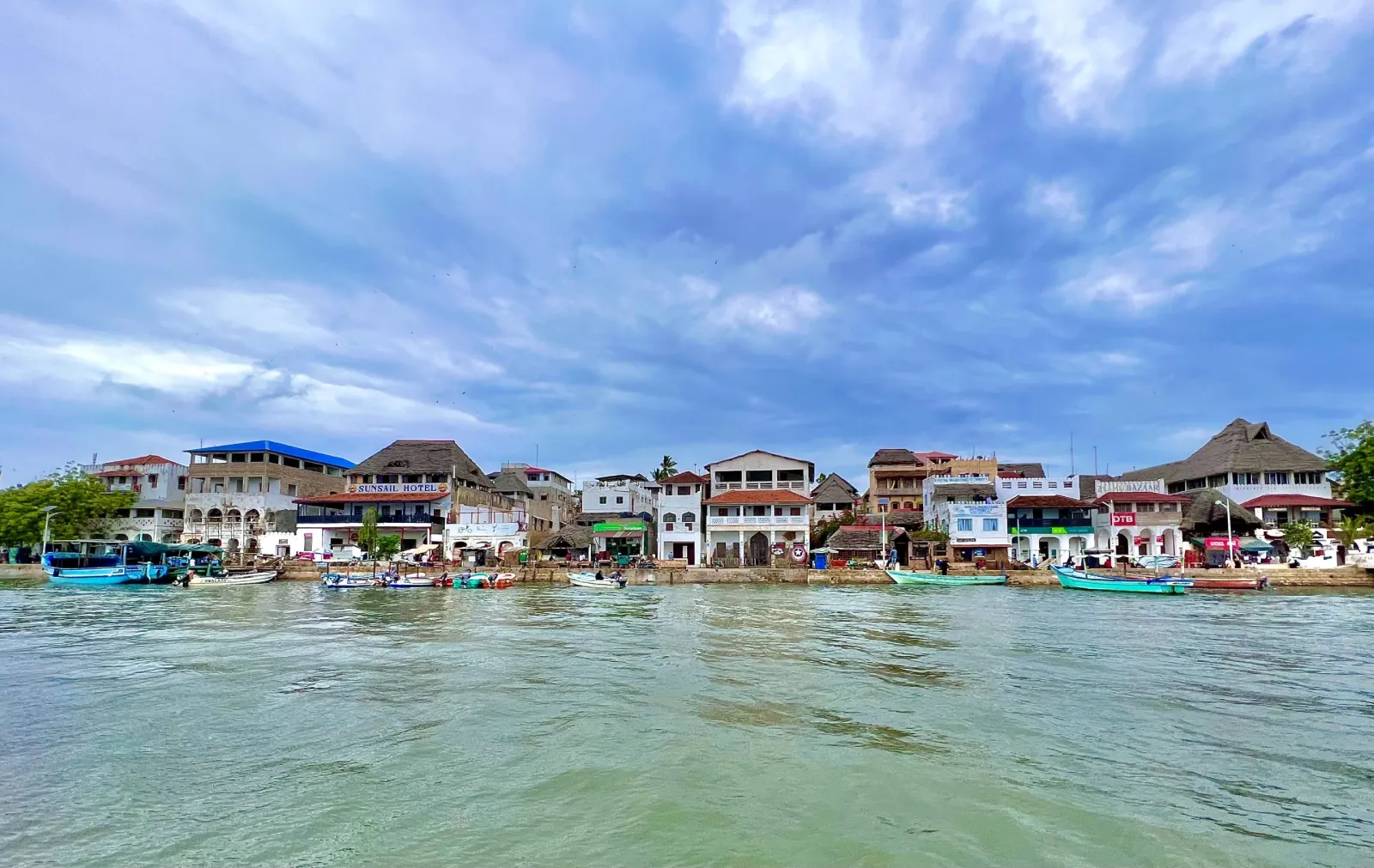
    Lamu: Where Time Took a Nap and Forgot to Wake Up

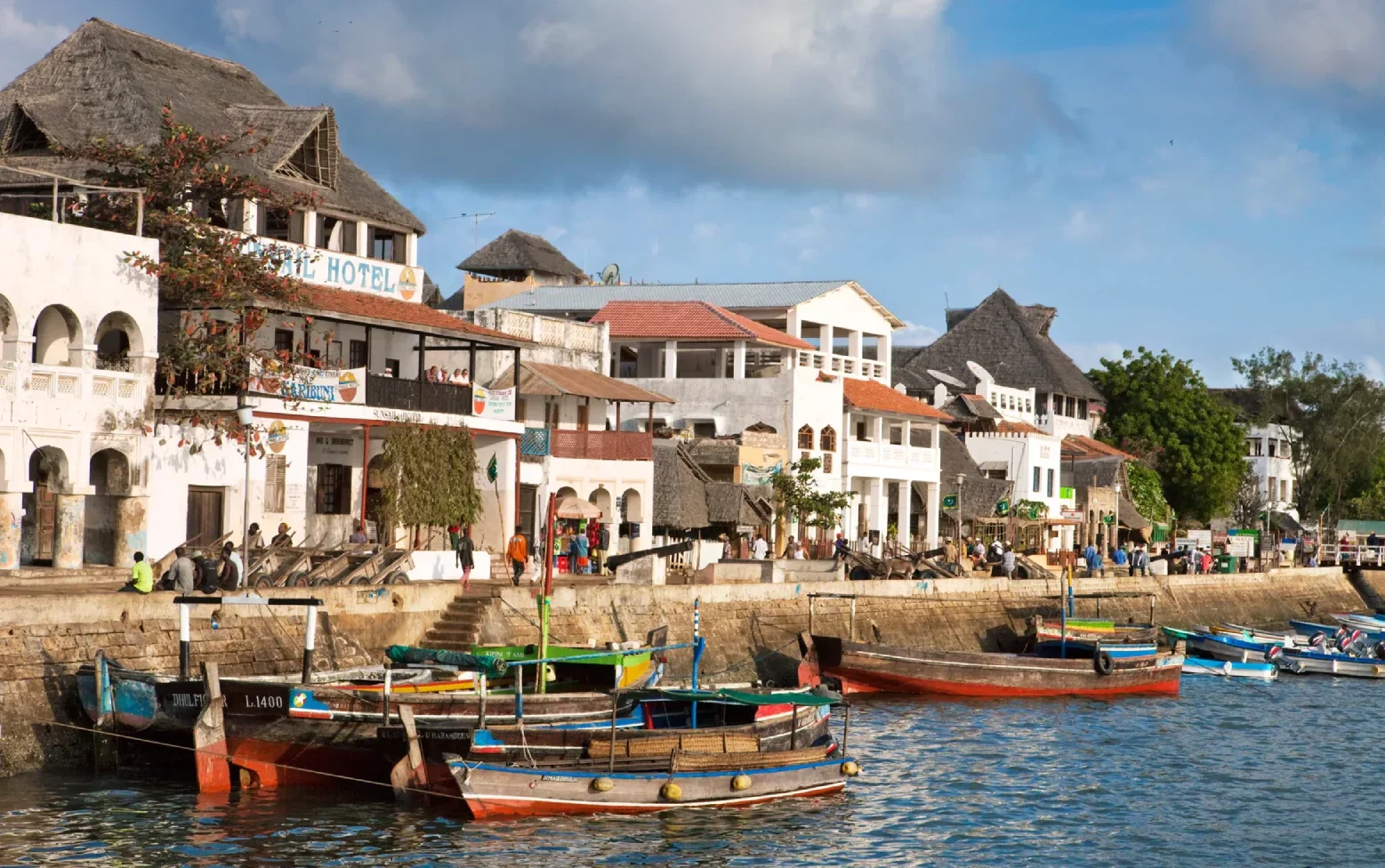
    Lamu Town Island Swahili Culture Heritage
    Lamu Town’s coral-stone alleyways and carved wooden doors whisper centuries of Swahili heritage—where donkeys still outnumber cars and time moves to the rhythm of the tides.

    There are Swahili cities that fell to ruin. Then there’s Lamu—a place that refused to fall. This ancient settlement, nestled on Kenya’s northern coast, is arguably the last great Swahili city still standing tall. Founded around the 14th century and recognized as a UNESCO World Heritage Site, Lamu is a kaleidoscope of coral-brick houses, winding alleys, wooden balconies, and centuries-old mosques. The only wheels in town belong to wheelbarrows—because the city has no cars. Instead, donkeys rule the streets with all the slow, majestic authority of retired generals.

    What makes Lamu so captivating isn’t just its architecture or spice-scented air—it’s the living, breathing Swahili culture. Locals still recite poetry in the old dialect. Women craft intricate henna patterns during weddings. The Maulidi Festival, celebrating the Prophet’s birth, transforms the town into a spiritual celebration of music, dance, and poetry. And all of this happens beneath the same carved wooden doors and coral facades that watched Portuguese and Omani sultans sail in centuries ago.

    If you’re looking for authenticity, Lamu doesn’t perform it—it is it.

    Mombasa: A Swahili City Wrapped in Layers of Civilization

    Mombasa Old Town Street Building
    Mombasa’s Old Town blends centuries of Swahili, Arab, and Portuguese influence—where carved balconies lean over narrow lanes and Fort Jesus still guards the stories of a city once called Mvita.

    Mombasa wears its age like a patched tapestry—frayed in places, glorious in others, but stitched from history so rich it’s practically gold-threaded. Thought to be founded as early as the 10th century, this coastal city has been home to emirs, invaded by the Portuguese, claimed by the Omani sultanate, and later courted by European colonizers. Today, Mombasa pulses with the energy of a modern port but still smells like cardamom and salt, and sings in the lilting tones of coastal Swahili.

    Fort Jesus stands like a coral sentinel over the old harbor—a UNESCO-listed relic built by the Portuguese in 1593, later taken over by Omanis, and then the British. Once known as Mvita, this Swahili city has seen centuries of conquest and coexistence. Mombasa’s Old Town, with its faded balconies and carved doors, offers a quieter kind of wonder, while the call to prayer from the Mandhry Mosque—one of the oldest on the East African coast—reminds visitors that the spirit of Islam has long been stitched into the city’s identity.

    It was here, according to local legend, that Vasco da Gama referred to Mombasa as “a town of devils.” The devil, clearly, had impeccable taste in cities.

    Stone Town, Zanzibar: Coral Palaces and Clove Breezes

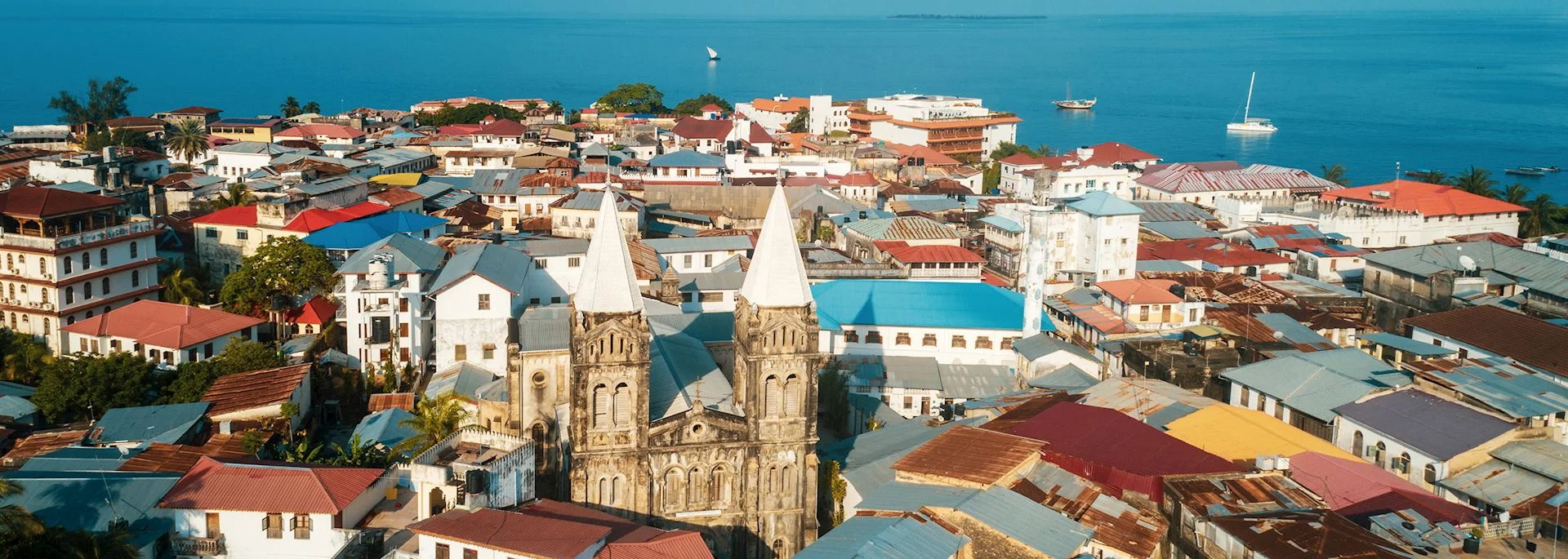
    Stone Town Cathedral
    Above Stone Town, coral rooftops and slender minarets sketch the skyline of a Swahili city built on trade, faith, and ocean winds.

    Zanzibar’s Stone Town is less a place and more a dream made of coral, wood, and clove-scented air. Once the capital of the Sultanate of Zanzibar and a hub of Indian Ocean trade, Stone Town is a Swahili city with an Arabian heartbeat and African soul.

    Its alleyways twist and turn like a labyrinth designed by poets. As you wander past the House of Wonders (Beit al-Ajaib), peek into the Old Dispensary, or visit the Palace Museum, you’re stepping through centuries of Swahili culture, Arab opulence, and European ambition.

    But Stone Town’s true power lies in its subtle magic. It’s where you can hear Taarab music echoing off walls at sunset. Where fishermen chant as they pull in the day’s catch. Where the shadows of ancient sultans and Indian traders seem to linger in the spice-laden air.

    And yes—this was also the birthplace of a certain Farrokh Bulsara, better known as Freddie Mercury. Zanzibar’s gift to rock ‘n’ roll history.

    Bagamoyo: A City That Refused to Fade

    Bagamoyo Ruins Ocean Coast Boats

    Bagamoyo is where the threads of memory fray and tug at your soul. Once a thriving Swahili city and capital of German East Africa, it was also a major port in the slave and ivory trades. The name itself means “lay down your heart,” a haunting reference to enslaved peoples departing for the Middle East.

    What’s left now are weathered buildings from the German colonial era, silent forts, an abandoned Catholic mission that once hosted David Livingstone’s body en route to Westminster Abbey, and a crumbling port that once bustled with dhows.

    And yet Bagamoyo refuses to vanish. Artists, dreamers, and scholars have begun to trickle back, giving the town a sleepy but growing second life. It’s not Lamu. It’s not Mombasa. But it’s raw, real, and rumbling with memory.

    The Ghosts of the Coast – Lost and Ruined Swahili Cities

    Once upon a tide, a constellation of Swahili cities stretched along the coast of East Africa, from Somalia to Mozambique. Some were rich in gold, others in ivory or enslaved labor, but all were rich in culture and ambition. These were not mere trading posts—they were full-fledged settlements, with mosques, royal palaces, and coral mansions. They minted their own coins, crafted intricate inscriptions in Arabic and Swahili, and attracted kings, sultans, and merchants from India, Persia, and Arabia.

    Today, many lie in crumbled silence, but their stories still linger in the stonework—and in the sea breezes that rustle through baobabs and acacias.

    Kilwa Kisiwani – A Coral Crown Once Gilded in Gold

    If the Swahili civilization had a capital, Kilwa Kisiwani was it. Located off the coast of southern Tanzania, Kilwa flourished between the 13th and 15th centuries and was once one of the most powerful city-states on the entire Indian Ocean rim. From here, trade routes reached deep into the African interior, drawing in gold from Great Zimbabwe, ivory from the southern savannas, and enslaved people destined for distant lands.

    Its Great Mosque, built in the 11th century, was the largest in sub-Saharan Africa at the time and one of the earliest to incorporate a domed roof. The Husuni Kubwa palace—part fortress, part royal residence—was once a marvel of coral and grandeur.

    Ibn Battuta, the Moroccan explorer who never found a coastline he didn’t want to sail, visited Kilwa in 1331 and called it “one of the most beautiful cities in the world.”

    Today, Kilwa is a UNESCO World Heritage Site, its coral ruins stark against a backdrop of turquoise sea and bright sky. And yet, despite its past glory, few travelers make it this far south. Those who do often have the ruins entirely to themselves—and the ghosts.

    Gedi Ruins – The Jungle-Swallowed Mystery Near Malindi

    Gede Ruins Watamu Swahili Heritage
    At Gede, moss-covered walls and silent courtyards hint at a Swahili city once rich with trade, now swallowed by forest and mystery.

    If Kilwa was the crown, Gedi was the secret gem. Located inland from the Kenya coast, hidden in dense forest, the Swahili city of Gedi thrived between the 13th and 17th centuries. Unlike many of its coastal siblings, Gedi wasn’t directly on the water—but that didn’t stop it from becoming a flourishing hub of trade and architecture.

    Its layout reveals a settlement with sophisticated infrastructure: coral houses with bathrooms and internal wells, an intricate mosque complex, and a fortified wall suggesting a town wary of invaders—or perhaps hiding from them.

    No one quite knows why Gedi was abandoned. Theories abound: a shift in trade routes, conflict with neighboring kingdoms, or the looming threat of Portuguese expansion. Local lore adds a more colorful possibility—curses and spirits protect the site to this day.

    You don’t have to believe in ghosts to feel the eeriness here. But it helps.

    Takwa – A Sacred Silence on Manda Island

    Lamu Takwa Ruins Swahili City Manda Island Lamu

    Takwa, on Kenya’s Manda Island opposite Lamu, is not your typical ruin. For starters, it’s mostly uninhabited, accessible only by boat, and veiled in an almost spiritual hush.

    Established in the 15th century, this Swahili city was relatively modest but spiritually significant. Its mosque—with a well-preserved mihrab and minbar—still stands with regal simplicity, and many Swahili families from Lamu consider it a pilgrimage site. Each year, some sail across the channel to honor ancestors buried in Takwa’s coral tombs.

    Local stories tell of inter-clan conflict and water shortages forcing the residents to flee. The result is a place frozen in time, hemmed by mangroves and haunted by a kind of sacred nostalgia.

    Mnarani – The Watchtower Above Kilifi Creek

    Kilifi - Mnarani Ruins - Abandoned Swahili Settlement Culture Heritage

    Perched above Kilifi Creek, the Mnarani Ruins offer dramatic views and dramatic stories. Established in the 14th century, this Swahili site includes two coral-stone mosques, a cemetery of intricately carved tombs, and panoramic views of the Indian Ocean.

    Mnarani may not have been the largest or most powerful, but it served as both a spiritual and navigational anchor for the region’s coastal settlements. Its high cliffside perch likely made it a lookout, too—a place where the arrival of dhows would have been signaled long before the harbor felt their sails.

    Anecdotally, elders speak of ancient imams buried here whose spirits still protect the hilltop from desecration.

    Jumba la Mtwana – The Tide-Touched Slave Town

    Roughly translating to “the large house of the slave,” Jumba la Mtwana sits just north of Mombasa near Mtwapa Creek. It was likely a small but active 14th-century Swahili city, built unusually close to the shoreline. The remains of coral houses, mosques, and water wells sit in haunting symmetry along the beach, half-overtaken by roots and sea air.

    There’s little written about Jumba, but local tradition suggests it was linked to the slave trade, possibly abandoned due to Portuguese attacks or shifting political fortunes. Today, baobabs grow through its courtyards, monkeys scamper through half-open doorways, and the place holds an almost cinematic stillness—like a set waiting for a ghost to appear.

    It’s a lesser-known site, but few places combine beauty and tragedy so eloquently.

    Kua – Mafia Island’s Lost Kingdom

    Kua, nestled on Mafia Island’s Chole Bay, was once a thriving Swahili city—perhaps the most powerful on Mafia. Dating from the 13th to 18th centuries, it featured a royal palace, elaborate mosques, coral homes, and a reputation as a gateway between the interior and the sea.

    Portuguese cannons and pirate raids are thought to have triggered its collapse. What remains are moss-covered walls, tumbled gates, and hints of grandeur being slowly eaten by vines and sea air.

    Modern Mafia Island is better known for whale sharks and coral reefs—but those who step ashore at Kua will find the bones of a forgotten kingdom, and the breeze might just carry the sound of old Swahili chants.

    Tumbe, Chwaka, and Shanga – Silent Sisters of the Northern Coast

    Tumbe – Pemba’s Forgotten Commercial Heart

    Tucked along the northern edge of Pemba Island lies Tumbe, a once-vibrant Swahili city whose name now barely ripples through history books. In the 11th to 14th centuries, Tumbe was a commercial force, thriving on maritime trade with merchants from Arabia, Persia, and even the Indian subcontinent.

    Excavations reveal pottery from China, glass beads from the Middle East, and local ironwork, indicating Tumbe’s pivotal role in global exchange. The city was one of the earliest known on Pemba and is thought to have housed a palace or noble compound. But by the 15th century, Tumbe faded—its coral walls giving way to jungle and wind.

    Today, local villagers tread paths that run through its ruins. Some believe their ancestors were part of a once-glorious kingdom, and oral traditions still reference the ghosts of lost royalty.

    Chwaka – Another Pemba Whisper from the Past

    Further south on Pemba’s coast lies Chwaka, a Swahili site that, like Tumbe, played its part in the mosaic of trade, culture, and seafaring life. Chwaka was inhabited between the 13th and 16th centuries and featured a mosque and several stone structures, now reduced to skeletal remains.

    Not to be confused with Chwaka Bay on Unguja, this Chwaka is less visited and less preserved—but no less historically significant. It may have served as a sister port or spiritual refuge in a network of interconnected settlements across the archipelago.

    As with many Swahili cities, Chwaka didn’t fall to war or natural disaster. It simply faded—like a candle slowly flickering out once the trade winds changed course.

    Shanga – The Hidden Legacy Beneath Pate Island

    Shanga, located on Pate Island in the Lamu Archipelago, is one of the oldest Swahili settlements ever discovered, dating as far back as the 8th century. Its remains tell an extraordinary tale: that of an early Islamic city where Arabic script adorned tombs and coral-stone mosques predated many of the more famous ruins.

    Here, the fusion of indigenous Bantu and imported Islamic elements is tangible. Shanga is physical proof that the Swahili civilization was never a simple offshoot of foreign influence—it was a cultural alchemy between African ingenuity and global connection.

    Shanga was mysteriously abandoned around the 15th century. Excavations have unearthed intricate jewelry, glassware, and beautifully inscribed gravestones. Today, all that remains is a tangle of broken coral, the occasional unearthed coin, and the eerie silence of a town that once prayed five times a day.

    Local legend claims the spirits of scholars and sultans still linger in the seabreeze. Whether you believe that or not, Shanga is one of the most spiritually evocative places you’ll find on the Swahili coast.

    Other Scattered Ghosts – Lesser-Known Swahili Settlements in Kenya and Tanzania

    Beyond the well-known ruins and UNESCO darlings, the Swahili civilization left behind dozens of smaller, fragmentary cities and settlements—each with its own footprint in coral and history.

    In Kenya:

    • Ungwana (Tana Delta): Believed to have had a vibrant community and early mosque foundations.
    • Mkama Ndume (Vumawimbi): Known for its fortress-like coral walls and dramatic name, which means “Mr. Harsh Man.”
    • Ngomeni (north of Malindi): A fishing village with submerged ruins, possibly lost to coastal erosion or sea-level rise.
    • Faza (Pate Island): Still inhabited today, with an Old Town atmosphere and links to Swahili royal lineages.
    • Mwana and Mwamtani: Sparse ruins near Mombasa, sometimes noted in oral histories.

    In Tanzania:

    • Kaole (near Bagamoyo): Home to two ancient mosques and over 20 coral tombs, Kaole was active from the 13th century and may have once been a rival to Bagamoyo.
    • Kunduchi (north of Dar es Salaam): Containing the remains of a mosque and notable stone pillar tombs.
    • Tongoni (near Tanga): Known for its vast graveyard and a mosque that once hosted travelers from across the seas.
    • Msuka (Pemba): A minor Swahili site, with fragments of early coastal culture hidden in mangroves.

    These sites rarely appear on travel brochures or glossy UNESCO maps. But for authenticity seekers and amateur archaeologists, they offer something better: the thrill of unfiltered discovery.

    The Role of Swahili Cities in the Indian Ocean Trade

    A Civilization of Coral and Commerce

    The Swahili cities weren’t isolated fishing villages—they were nodes in a vast and ancient web of commerce that extended from the African interior to the Arabian Peninsula, India, Persia, and China. These were maritime kingdoms built not on blood but on barnacles and barter.

    Trade goods included:

    • From the interior: Gold, ivory, slaves, iron, animal hides, timber.
    • From overseas: Ceramics, silk, glass beads, spices, incense, and coins.

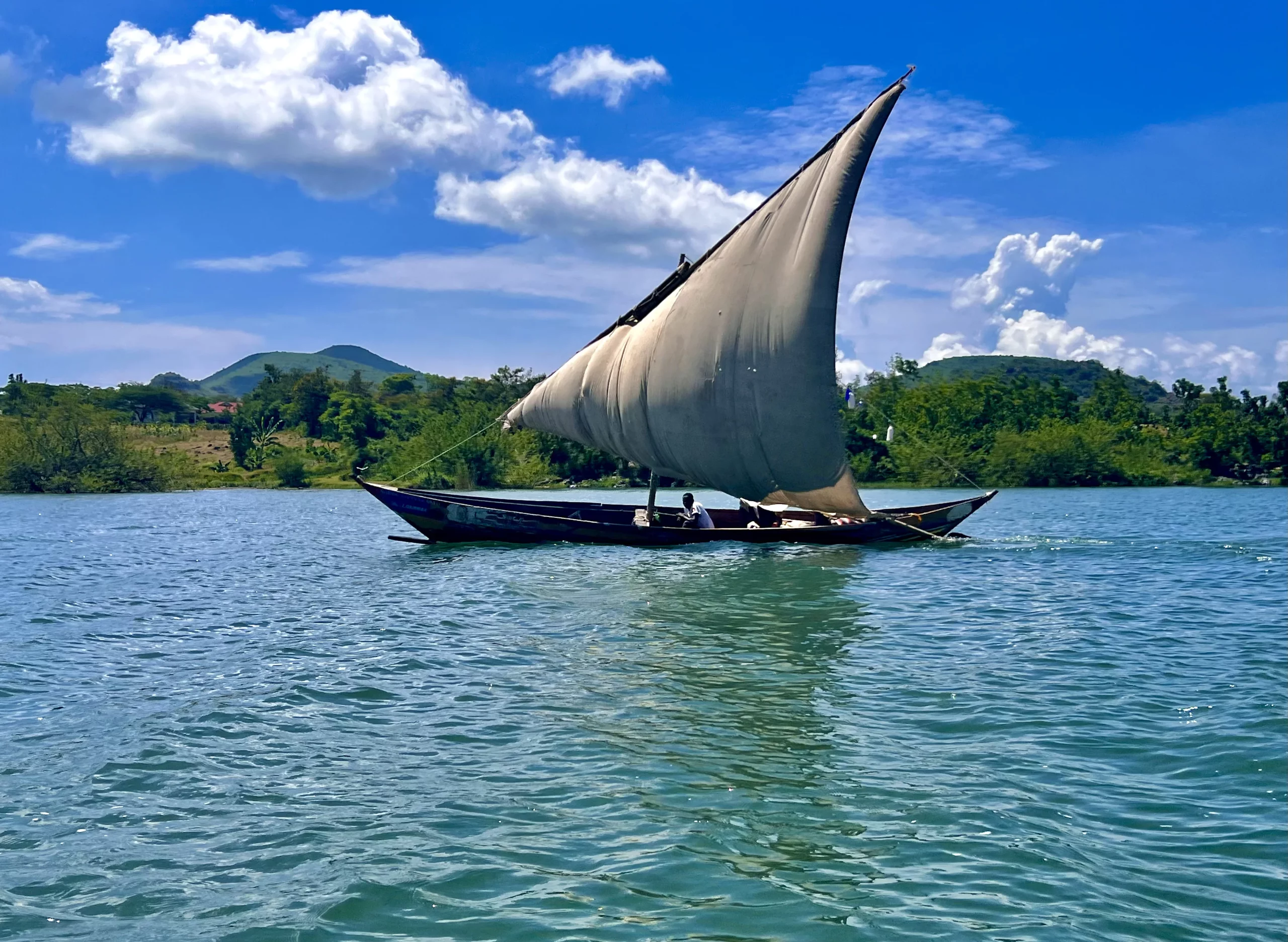
    Every monsoon season, dhows would sail into harbor, heavy with goods and gossip, their triangular sails like white wings crossing cultures. These weren’t just trading centers; they were cultural hearths, where African, Arab, Persian, and Indian identities fused.

    As a result, Swahili culture evolved into something utterly unique. The Swahili language, a Bantu base with Arabic infusion, became the lingua franca of the coast. Architectural styles incorporated coral limestone, mangrove beams, carved wooden doors, and courtyards arranged for both privacy and spiritual contemplation.

    Political and Spiritual Hubs

    Each Swahili city was typically governed by a sultan, often with lineage tracing to Oman, Persia, or Yemen—though ruling power was deeply entwined with local clans. Some cities formed loose confederations; others fought bitter rivalries.

    Mosques weren’t just places of worship—they were symbols of legitimacy and prestige. To build a mosque in coral was to assert authority and piety. Many mosques were modest in size but grand in meaning. They helped bind the civilization through a shared Islamic identity that coexisted with local beliefs and traditions.

    Some cities, like Kilwa and Zanzibar, even minted their own currency, asserting their independence and economic might.

    Why These Cities Mattered—and Still Do

    Cultural Continuity and Revival

    While the coral walls of many Swahili cities have crumbled, the cultural DNA remains intact. Lamu, Zanzibar, and parts of Mombasa still carry the rhythms of Swahili life—call to prayer echoing through narrow streets, henna-painted hands during wedding celebrations, Swahili poetry recited in shadowed courtyards. Across the coast, there’s a quiet but passionate movement to revive this heritage. Young artisans carve traditional doors in Lamu. Scholars in Zanzibar are reprinting ancient Swahili manuscripts. In Bagamoyo, festivals now celebrate not colonial memory but indigenous brilliance. In a world hooked on speed, the Swahili coast offers something increasingly rare: cultural depth experienced at human pace.

    Lessons from Ruins

    The silence of Takwa. The faded elegance of Kilwa. The tangled mystery of Gedi. These ruins aren’t just architectural leftovers—they’re stories about impermanence, power, and identity. Each ruined Swahili city is a reminder that civilizations thrive and fade, often quietly. Some were brought down by conquest or trade collapse. Others simply vanished with the tides. Yet their ruins now serve as classrooms without roofs. They teach us about sustainable coastal living, about the architecture of belief, and about African cosmopolitanism that existed long before European boots hit the beach. And they stand as open invitations for cultural explorers to walk with ghosts—and maybe learn from them.

    Practical Travel Tips for Cultural Explorers

    How to Visit the Still-Inhabited Swahili Cities

    Start with Lamu for living culture. There are daily flights from Nairobi to Manda Airport, followed by a dhow or boat ride to Lamu Town. Stay in restored Swahili houses or beachfront guesthouses. In Zanzibar, Stone Town is walkable and alive with sensory delights—book a walking tour to peel back the layers. For Mombasa, Old Town is best explored early in the morning, before the crowds and heat set in. Speak some Swahili if you can; even a few words go a long way. Dress modestly—these are still deeply spiritual towns. Ask before photographing people or private homes.

    Visiting the Ruins Respectfully

    Many Swahili ruins are sacred spaces. Even in decay, they command respect. Wear respectful clothing, especially when visiting former mosques or cemeteries. Some sites, like Kilwa and Gedi, have entry fees and local guides—hire them. Not only does it support the local economy, it also adds layers of context you’d miss on your own. Don’t climb on tombs or mosques. Avoid loud music or behavior. And don’t pocket pottery shards or beads. They belong to the past—and to the people who still claim it.

    Off-the-Beaten-Path Adventures

    If you’re hungry for more than tourist trails, hire a dhow and go ruin-hopping. From Lamu, you can reach Takwa in under an hour, ideally timed with the tides. On Mafia Island, arrange with local guides to visit Kua by canoe or kayak. For the northern coast of Kenya, connect with historians or NGOs working in places like Ungwana or Mkama Ndume. These aren’t polished destinations, but that’s the point. They’re stories still being uncovered, and you’ll return with tales no guidebook could script.

    In Search of Lost Time by the Indian Ocean

    The Swahili cities weren’t built on conquest or cathedrals—they were built on coral, wind, and trade. They were civilizations that hummed with poetry, prayer, and conversation. They reached across the Indian Ocean while staying rooted in Africa. And though many have fallen silent, they are far from forgotten. For cultural explorers, they offer more than photo ops. They offer intimacy with history. You walk their streets and hear echoes: of kings who ruled from coral palaces, of sultans who prayed in sea-facing mosques, of merchants who once crossed oceans in dhows heavier with stories than spice. These are cities where the past doesn’t just linger—it leans in and invites you to listen.

  • Lake Victoria Uncovered: Islands, Cultures, and Cuisine on East Africa’s Inland Ocean

    Lake Victoria Uncovered: Islands, Cultures, and Cuisine on East Africa’s Inland Ocean

    Lake Victoria is one of those places that hides in full view. Everyone’s heard of it, sure—it’s the largest lake in Africa and the source of the Nile—but how many travelers actually go beyond the trivia? Most safari-goers loop past it en route to more obvious destinations: gorillas, wildebeest, or Zanzibar’s sugar-soft beaches. But those in the know, the slow-moving, map-examining, detour-loving travelers, are now turning to Lake Victoria for their next story.

    Sprawling across Uganda, Kenya, and Tanzania, Lake Victoria isn’t just a body of water. It’s a microcosm of East African life—a freshwater galaxy teeming with culture, cuisine, wild islands, bird-choked wetlands, and towns that hum with both nostalgia and innovation. If you’re the kind of traveler who’s already been to the Serengeti and is wondering “what’s next?”, this lake is the answer. If you’re obsessed with marine life, love your fish fresh from the net, or want to kayak through papyrus watching shoebills stomp like dinosaurs, welcome to your next great adventure.

    This is your guide to Lake Victoria. No fluff, no gloss—just real places, local tastes, boat rides, and lake breezes.

    Island Hopping on Lake Victoria

    Ssese Islands, Uganda: A Laid-Back Archipelago of Forest and Fire

    Ssese Island Lake Victoria

    The Ssese Islands are Uganda’s worst-kept secret and its best slow-travel destination. This archipelago of 84 islands floats off the northwestern corner of Lake Victoria, and getting here is half the fun. The MV Kalangala ferry departs Entebbe’s Nakiwogo dock once a day, slowly cutting across glassy water while goats, soda crates, and mango-sellers jockey for space on deck. By the time you reach Bugala Island—the largest of the bunch—you’ll already feel far from the mainland rush.

    Bugala’s main settlement, Kalangala, offers beachside resorts, quiet guesthouses, and enough hammocks to lose track of time. Forest trails snake through monkey-filled jungle, and the island’s sandy shores are perfect for a morning swim or a moonlit barbecue. Want to go deeper? Take a boat to Bukasa or Bubeke, smaller islands where life moves with the tides. Community tourism thrives here: help fishermen haul nets, cook tilapia with local women’s groups, or hike to shrines that blend Christianity with ancestral lake spirits.

    Rusinga and Mfangano, Kenya: Fossils, Fish, and Suba Culture

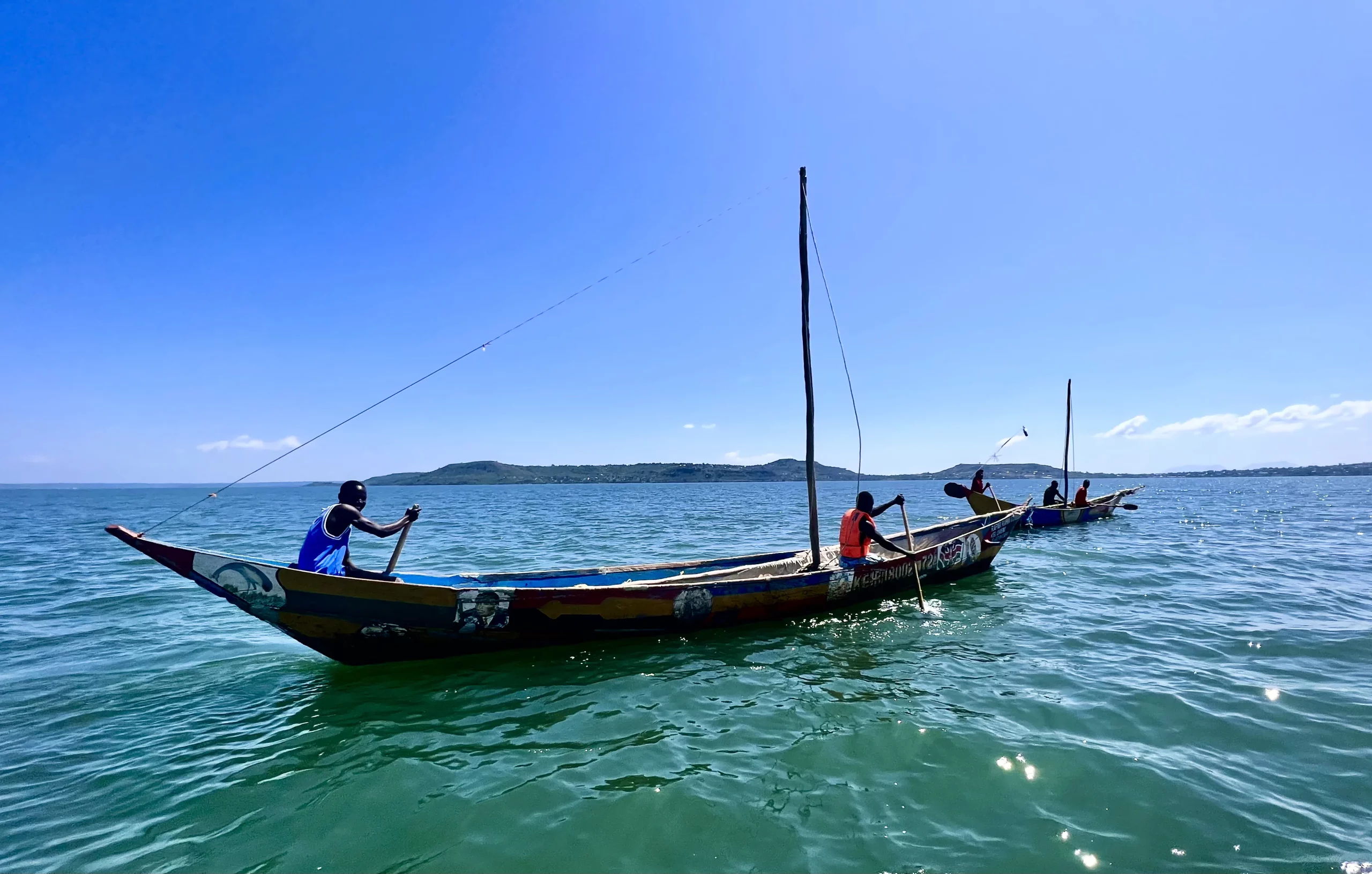
    Mfangano Island Fishermen Boats Fishing

    Over on Kenya’s Winam Gulf, Rusinga and Mfangano Islands serve up a rarer blend of history and culture along the fringes of Lake Victoria. Rusinga is accessible by causeway and famous in paleoanthropology circles—Mary Leakey discovered Miocene ape fossils here that rewrote human evolutionary timelines. These days, it’s better known for quiet waterfront lodges, fishing festivals, and vibrant cultural exchange.

    Mfangano, slightly wilder and more remote, is a place for those who want their island escape with a side of heritage. It’s home to the Suba people, whose language and traditions are still fiercely preserved. Guided hikes reveal ancient rock art etched into the cliffs, while evenings are best spent around a fire, sipping millet beer and learning about clan totems, lakeside myths, and how to drum in 6/8 time.

    You won’t find infinity pools or infinity Wi-Fi here, but you will find stories worth listening to and lakeside meals that make you question why you ever ate frozen fish fillets.

    Rubondo is Lake Victoria’s wild card. A national park on an island, it’s one of the few places where you can track chimpanzees by boat and spot forest elephants while sipping gin and tonic under an open-air tent. Getting here isn’t easy—flights from Mwanza or long boat transfers—but that’s part of the point.

    Ukerewe, Tanzania: The Big Island with a Small-Town Soul

    Tanzania’s Ukerewe is the largest island in Lake Victoria and yet somehow remains delightfully off the radar. Located a short ferry ride from Mwanza, it’s all red-dirt roads, bustling fish markets, and eucalyptus groves. Local guides offer cycle tours through sleepy fishing villages and farms growing cassava, coffee, and groundnuts.

    What makes Ukerewe special isn’t just its scenery—it’s the people. This is one of the few places in East Africa where you’ll hear open discussion about albinism and see communities that have worked to protect albino children from mainland persecution. Murals and community centers promote inclusion, and travelers are welcomed not as observers, but as participants.

    Stay in a locally run guesthouse, join in preparing coconut fish curry, and take a boat to neighboring Bwiro Island, where herons, pelicans, and spoonbills rule the mangroves.

    Rubondo Island, Tanzania: Wilderness with a Watery Border

    The park is home to giraffes, sitatunga antelope, and hundreds of bird species, but it’s the rewilded chimps that steal the show. Released here decades ago from European zoos and labs, they’ve adapted remarkably well, forming complex communities that researchers now study.

    Fishing is also big here—Rubondo is legendary among sportfishing circles for Nile perch the size of motorcycles (okay, scooters). Even if you don’t cast a line, cruising around the island by boat with a cool breeze and a cold beer is one of East Africa’s great underappreciated pleasures.

    Lakeside Towns and Cities: Culture, History, and Harbors

    Kisumu, Kenya: Fish Markets, Hippos, and Rooftop Bars

    Kisumu is where Lake Victoria meets city life with a grin. Kenya’s third-largest city hugs the lake’s northeastern shore, offering a perfect mix of access, authenticity, and occasional chaos. It’s the kind of place where herds of boda-bodas zip past colonial-era buildings, and hippos grunt just offshore from lakeside hotels.

    Start your day early with a walk down to Dunga Beach, where local fishermen haul in their catch under the watchful eyes of marabou storks. You can join a community canoe tour through Dunga Wetlands—ideal for bird lovers and anyone hoping to catch sight of the elusive sitatunga antelope. From there, head to Kibuye Market, one of East Africa’s largest open-air fish markets. It’s loud, it’s colorful, it smells like tilapia and tomatoes, and it’s glorious.

    Evenings in Kisumu are surprisingly stylish. Rooftop bars like The Spot or Kiboko Bay offer sundowner views over the water, while live bands serve Afro-fusion sets that thrum well past midnight. If you’re lucky, your evening may end on a floating barge where grilled perch meets Tusker beer under a sky filled with lake-scented breeze.

    Mwanza, Tanzania: Rock City with a Waterside Soul

    Mwanza Rock Tazania Lake Victoria
    Mwanza, Tanzania

    To the south, Mwanza clings to the Tanzanian shore like a city carved out of granite. Literally. Enormous boulders balance impossibly atop one another around Lake Victoria, giving Mwanza its nickname—Rock City.

    It’s a port town with personality: boda-bodas honk past roadside fish fry stalls, women in bright kitenge fabrics sell passion fruit by the handful, and ferries glide to and from Rubondo, Ukerewe, and the southern lake villages. Don’t miss Bujora Cultural Centre just outside town—here, you can dive into Sukuma history, watch traditional dances, and explore a replica chief’s hut the size of a village.

    Mwanza is also a prime launch pad for island adventures, whether you’re heading to Rubondo’s chimpanzees, Ukerewe’s cycling trails, or just hopping a boat to Saa Nane Island—a tiny national park home to birds, monkeys, and picnic-perfect views of Mwanza’s surreal skyline.

    Entebbe and Jinja, Uganda: From Botanical Beauty to River Source

    Entebbe, on the Ugandan north shore, is where many journeys begin. But don’t rush to the next place—Entebbe itself is a calm, garden-fringed introduction to lake life. Stroll through the century-old botanical gardens where velvet monkeys chase each other through fig trees and the lake whispers at the edge of your vision.

    It’s also the jumping-off point for the MV Kalangala ferry to the Ssese Islands, or for local boat tours around Lake Victoria’s small inlets. Add a cocktail at Goretti’s Beach or a seafood dinner at Faze 3, and you’ve got the perfect lakeside layover.

    A few hours east, Jinja sits where Lake Victoria officially gives birth to the Nile. Here, you can cruise across the lake’s bubbling source, zip-line through the forest canopy, or dive into the rapids downstream for some of Africa’s most thrilling white-water rafting. It’s the perfect fusion of serene lake vistas and adrenaline-soaked action.

    Water Sports and Aquatic Adventures on Lake Victoria

    Kayaking and Canoeing: Paddle-Powered Exploration

    Kayaking Lake Victoria is a revelation. In the early morning, the water is often so still it looks like liquid glass. In the wetlands around Kisumu and Kalangala, you can paddle silently through papyrus channels while kingfishers dart overhead and shoebills stomp around like prehistoric librarians.

    In Uganda, the Mabamba Bay wetlands near Entebbe offer some of the best birdwatching in East Africa—and the best way to experience them is in a traditional canoe, guided by a local fisherman who can spot a shoebill’s head from 200 meters away.

    On Mfangano and Rusinga, fishermen offer half-day paddling trips where you can learn traditional net-casting techniques and share a lakeside breakfast of fried omena and sweet chai after the morning haul.

    Sailing, Windsurfing, and Dhow Cruises: Let the Wind Take You

    The scale of Lake Victoria is oceanic, and in certain pockets like the Winam Gulf and Kalangala Channel, the wind blows strong enough for serious water sports. Kisumu Yacht Club rents out basic windsurfing gear and runs sailing classes on weekends for those wanting to tack across the bay. On calm days, it’s a tranquil way to explore; when the wind picks up, expect splashy excitement and unexpected dips.

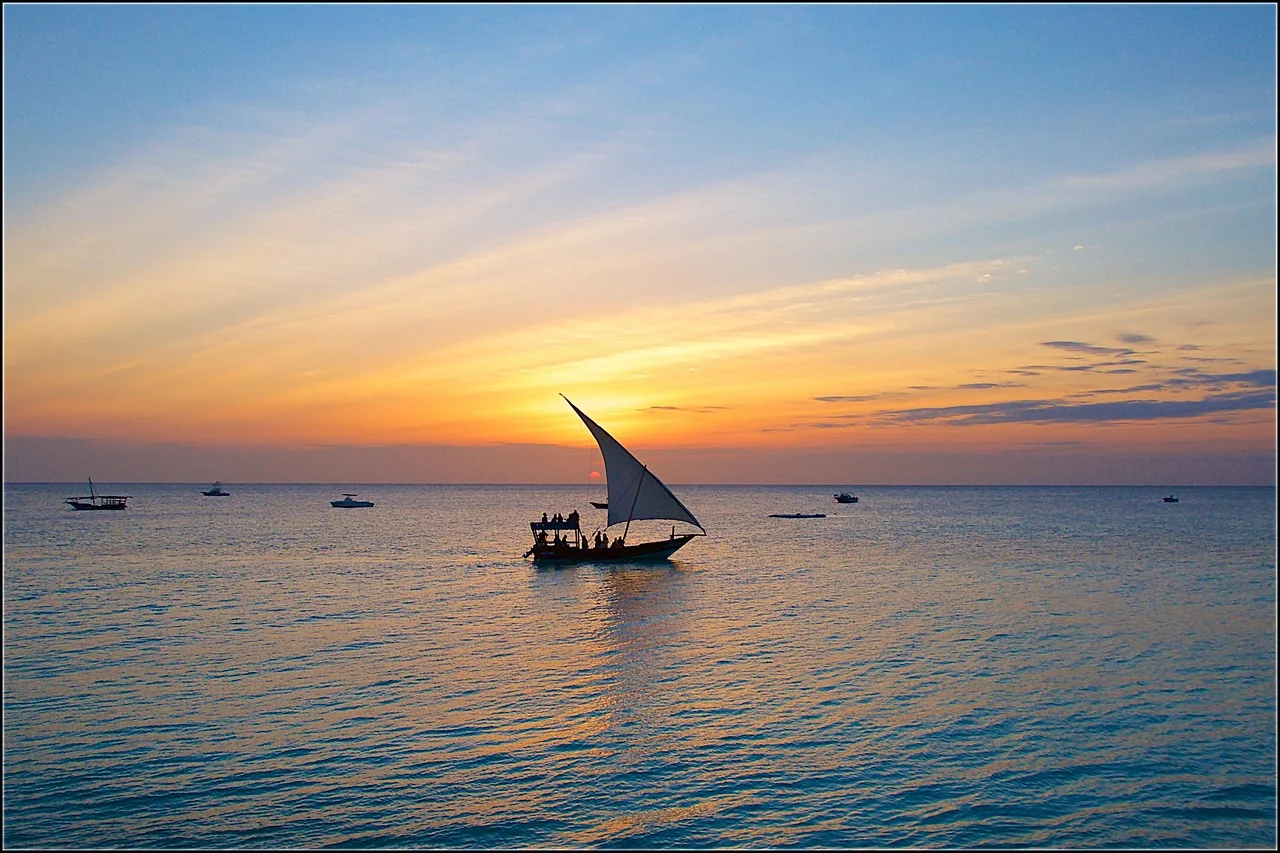
    But for the culturally inclined, nothing beats a dhow cruise. These graceful wooden boats, still used for fishing and transport, now moonlight as sunset-cruise chariots in Entebbe, Kisumu, and Musoma. Bring snacks, a bottle of local gin, and your camera. The photos may be stunning, but the memory of the wind-filled sail and the orange lake horizon is what will linger longest.

    Sport Fishing: Where the Nile Perch Are Legends

    Lake Victoria’s Nile perch are the stuff of legend. These freshwater behemoths can weigh over 100 kilograms and will test your stamina, your equipment, and your ego. The best spot to try your luck is Rubondo Island, where licensed sport-fishing guides know the best channels and ensure sustainable catch-and-release practices.

    If you’re not angling for giants, you can still fish alongside locals using traditional methods. In Ukerewe, for example, travelers can join overnight fishing trips on lantern-lit canoes. You’ll cast dagaa nets by moonlight, swap stories in Kiswahili and English, and return at dawn to share a breakfast of your catch cooked over driftwood coals.

    Swimming and Beach Life: Where the Water Is Safe and Sweet

    Despite the lake’s vastness, swimming should be done cautiously due to the risk of bilharzia in some areas. That said, many resorts around Bugala Island, Kalangala, and parts of Mwanza have treated or regularly monitored swimming zones. Always ask your host, and follow posted safety signs.

    Wherever you swim, bring a towel, some reef-safe sunscreen, and a good book. The lake’s white-sand beaches and shaded coves are tailor-made for those rare moments when doing nothing is everything.

    Sunset Cruises: The Golden Hour of East Africa’s Inland Sea

    As the sun sinks behind the papyrus reeds, there is only one right place to be: on the water. Sunset cruises around Lake Victoria are not about speed—they’re about soaking in the silence. You’ll drift slowly, motor turned off, listening to the slap of water against the hull and the occasional splash of a tilapia.

    In Kisumu, you can take a pontoon boat from Dunga Hill Camp, complete with beanbags, acoustic guitars, and icy Tuskers. In Entebbe, smaller wooden boats offer quieter rides, often accompanied by the distant echo of wedding music or village drums. In all cases, the colors of the lake transform before your eyes—gold, orange, purple, then the deep indigo of night.

    Culinary Traditions and Freshwater Flavors

    From Lake to Plate: The Trinity of Fish

    Lake Victoria cuisine is a celebration of the lake itself—fresh, bold, and unmistakably local. The big three in the lake’s culinary scene are Nile perch, tilapia, and dagaa (also known as omena or mukene, depending on the country).

    Nile perch is the heavyweight champion, a massive white-fleshed fish prized for its buttery texture. It’s often grilled or deep-fried at lakeside stalls, especially in Kisumu and Entebbe, where vendors swear their spice rub is “a family secret.”

    Tilapia is the everyday favorite: smaller, more delicate, and supremely versatile. You’ll find it everywhere—from deep-fried roadside snacks in Mwanza to banana-leaf steamed delicacies on Ukerewe.

    Dagaa, meanwhile, is the humble hero. These tiny silver fish are sun-dried on wide woven mats by the thousands, creating one of Lake Victoria’s most distinctive smells and tastes. Locals fry them with onions and tomatoes, sometimes add ground peanuts, and serve them with ugali, matoke, or posho—depending on where you are around the lake.

    If you’re a culinary traveler, seek out regional specialties:

    Tilapia Kachumbari

    Kisumu’s “tilapia na kachumbari” (grilled fish with fresh tomato-onion salad) is a must—especially when eaten at a roadside stall just meters from the lake, where the fish is caught, gutted, and cooked on the spot. The smoky-charred skin and zingy salad make it a local classic.

    In Entebbe, try fish luwombo, where freshwater fish is slow-cooked in rich groundnut sauce, carefully wrapped in banana leaves, and steamed until tender. It’s a traditional Ugandan dish that feels both comforting and ceremonial—often served during special occasions or feasts.

    On Mfangano Island, Suba families prepare a hearty coconut fish stew, infused with turmeric, lemongrass, and lake herbs. It’s typically paired with cassava or finger millet bread, offering a delicious contrast of creamy, spicy, and earthy flavors in every bite.

    And in Mwanza, don’t miss dagaa fritters—tiny sun-dried fish battered and fried into crisp, golden bites. Served with pili-pili sauce and a cold Serengeti Lager, they’re the perfect sundowner snack for travelers who like their lakeside experiences salty, crunchy, and deeply local.

    Culinary Experiences and Community Cooking

    Beyond eating, you can also cook—with locals. Several lodges and community tourism groups now offer hands-on culinary classes.

    In Banda Island, women-run cooperatives invite guests to help prep fish, grind peanut paste on stone slabs, and learn the fine art of cooking over a three-stone fire. The stories flow as easily as the palm wine, and by the time your tilapia is sizzling in the pan, you’ll feel more like family than a visitor.

    In Rusinga, a number of eco-lodges partner with Suba elders to host “fish to fire” experiences. You’ll learn how to scale and clean your catch, wrap it in banana leaves, and slow-roast it over coconut husk embers while stories of ancestral spirits and fishing gods are shared under the stars.

    For culinary travelers, Lake Victoria is not just a destination—it’s a dining table, a classroom, and a storybook.

    Wildlife, Ecosystems, and Wetland Wonders

    Shoebills, Hippos, and the Lake’s Feathered Royalty

    Lake Victoria is a haven for birders and wildlife enthusiasts alike. More than 500 bird species make their home around the lake, and its sprawling wetlands, inlets, and islands host a dynamic ecosystem unlike anywhere else in East Africa. Whether you’re gliding past reeds in a canoe or watching from a lakeside lodge, Lake Victoria offers front-row seats to some of the continent’s most remarkable aquatic biodiversity.

    The shoebill is the showstopper—an odd, almost prehistoric-looking bird that stalks papyrus swamps with slow-motion menace. You can spot one (if you’re lucky and very patient) around Mabamba Bay in Uganda or the Dunga Wetlands in Kenya.

    Other residents include African fish eagles, Goliath herons, sacred ibis, kingfishers, and hammerkops. Birders often find themselves chasing lifers before breakfast and adding dozens of species to their checklist by lunch.

    Hippos are everywhere—grunting, wallowing, snorting chunks of lake water out of their nostrils with comic timing. They’re mostly visible in places like Kisumu’s Hippo Point, the inlets around Kalangala, and even just offshore from Entebbe. Always keep your distance—they’re not as chill as they look.

    Crocodiles favor the more secluded coves and southern Tanzanian shores, especially around Musoma and Rubondo. Local guides know where it’s safe to swim and where to keep the boat moving.

    Papyrus Wetlands and Lake Ecology

    The papyrus wetlands of Lake Victoria aren’t just pretty—they’re vital. These dense aquatic forests act as natural filtration systems, breeding grounds for fish, and nurseries for birds. They also face growing threats from pollution, agriculture, and invasive species—especially water hyacinth, which chokes large swathes of the lake if left unchecked.

    In response, local conservationists have gotten creative. In Kisumu, for example, youth groups like the “Hyacinth Hackers” clear invasive species by hand and repurpose the plants into baskets, furniture, and even eco-friendly briquettes for cooking. Travelers can take part in these clean-ups, gaining firsthand insight into the balance between ecology and economy.

    On Rubondo, park authorities have implemented strict conservation zones, limiting fishing and managing wildlife carefully. It’s one of the lake’s few places where both tourism and biodiversity are in harmonious dialogue.

    Travel Tips for Curious Explorers

    When to Go

    Best months: June–August and December–February. These dry-season periods bring clear skies, calm waters, and excellent visibility for birding—ideal for exploring the islands and wetlands around Lake Victoria. Swimming conditions are generally safer too, especially at treated beaches.

    Avoid: March–May if you hate rain. The landscape turns lush and beautiful, but heavy downpours can make travel more challenging, especially for ferries and remote overland routes.

    Health and Safety

    Bilharzia: Swim only in marked safe zones. Around Lake Victoria, some resorts in Kalangala, Ukerewe, and Mwanza actively monitor and treat their beaches to ensure safe conditions—but always double-check with staff before taking a dip.

    Malaria: This is still East Africa, so be prepared. Take prophylaxis, sleep under a net, and use mosquito repellent, especially in the evenings.

    Hippos: They may look slow and sleepy, but they’re territorial and unpredictable. Always keep your distance at night, and never pitch your tent between a grazing area and the water’s edge. Local guides know the safest spots—listen to them.

    Transport Tips

    • Ferries: Book ahead for MV Kalangala, MV Victoria, and Lake Victoria ferries, especially on weekends.
    • Overland crossings: Mutukula (UG-TZ), Isebania (KE-TZ), and Busia (UG-KE) are the main border posts.
    • EAC Tourist Visa: A convenient option that covers Kenya, Uganda, and Rwanda (not Tanzania—apply separately).

    Connectivity and Money

    • SIM cards: Buy local in each country for cheap data. Safaricom, Airtel, and Vodacom rule Lake Victoria.
    • Cash: Carry cash in local currencies. Mobile money works, but not everywhere. ATMs are limited on islands.

    Responsible Travel

    • Ask before photographing people or their boats.
    • Eat local, stay local—community-run lodges and guides ensure your money supports lake families.
    • Carry a reusable water bottle and say no to single-use plastics.
    • Support eco-projects like hyacinth weaving, fish farming cooperatives, and birdwatching clubs.

    Lake Victoria – The Lake You Didn’t Know You Needed

    Lake Victoria is where East Africa’s heart beats a little slower, but more deeply. It’s the gentle slap of water against a canoe. It’s the hiss of a tilapia fillet hitting a hot pan. It’s the laugh of a market vendor offering you mango slices dipped in chili powder. It’s the roar of a Nile perch fighting the line and the whisper of reeds hiding a shoebill in wait.

    As the largest of the Great African Lakes—an awe-inspiring trio that includes the deep, brooding waters of Lake Tanganyika and the tropical clarity of Lake Malawi—Lake Victoria is the beating blue heart of the region. Unlike its thundering namesake, Victoria Falls, this lake doesn’t shout—it hums. Both were named after the same British regent, Queen Victoria, who never laid eyes on either. Yet while one dazzles with noise and spectacle, the other draws you in with stillness, mystery, and depth.

    You won’t find souvenir stalls or five-star resorts with imported caviar here. What you’ll find instead is something far more rewarding: authenticity, connection, wonder.

    So if you’ve wandered Africa’s plains, climbed its mountains, and danced on its beaches—come inland. Come to where the continent breathes between waves, and let Lake Victoria teach you the rhythm of slow adventure, story by story, ripple by ripple.

  • Axum Unveiled: Lost Obelisks, Sacred Legends, and the Soul of an Ancient Empire

    Axum Unveiled: Lost Obelisks, Sacred Legends, and the Soul of an Ancient Empire

    There are places that welcome you with cocktails and sunsets. And then there’s Axum.

    Set in Ethiopia’s far northern highlands, Axum isn’t your typical travel destination. It doesn’t seduce—it confronts. It doesn’t whisper—it chants. It’s dry, dusty, ancient, and soul-stirring. A place where history doesn’t just sit quietly in glass cases—it looms above you in stone, it echoes through monasteries, it hums in the prayers of barefoot priests.

    This was once the capital of the Axumite Empire—an ancient African superpower that traded with Rome and India, minted its own currency, and adopted Christianity in the 4th century CE. It’s a city wrapped in enduring legends: the Queen of Sheba, believed to have ruled from these hills; and the Ark of the Covenant, said to be kept under guard in a chapel beside its oldest church.

    The ruins of Axum—including its towering stelae, royal tombs, palace foundations, and archaeological treasures—were inscribed as a UNESCO World Heritage Site in 1980 for their outstanding historical and cultural value. These aren’t forgotten stones—they’re the bones of a civilization that shaped East Africa and beyond.

    Today, Axum is a pilgrimage site for believers, a goldmine for archaeologists, and a dream for travelers who like their adventure with a heavy side of myth, mystery, and lost grandeur.

    This is your full guide to Axum—not the Instagrammed version, but the real thing.

    Things to See and Do in Axum

    The Obelisks of Axum: Granite Giants of a Lost Era

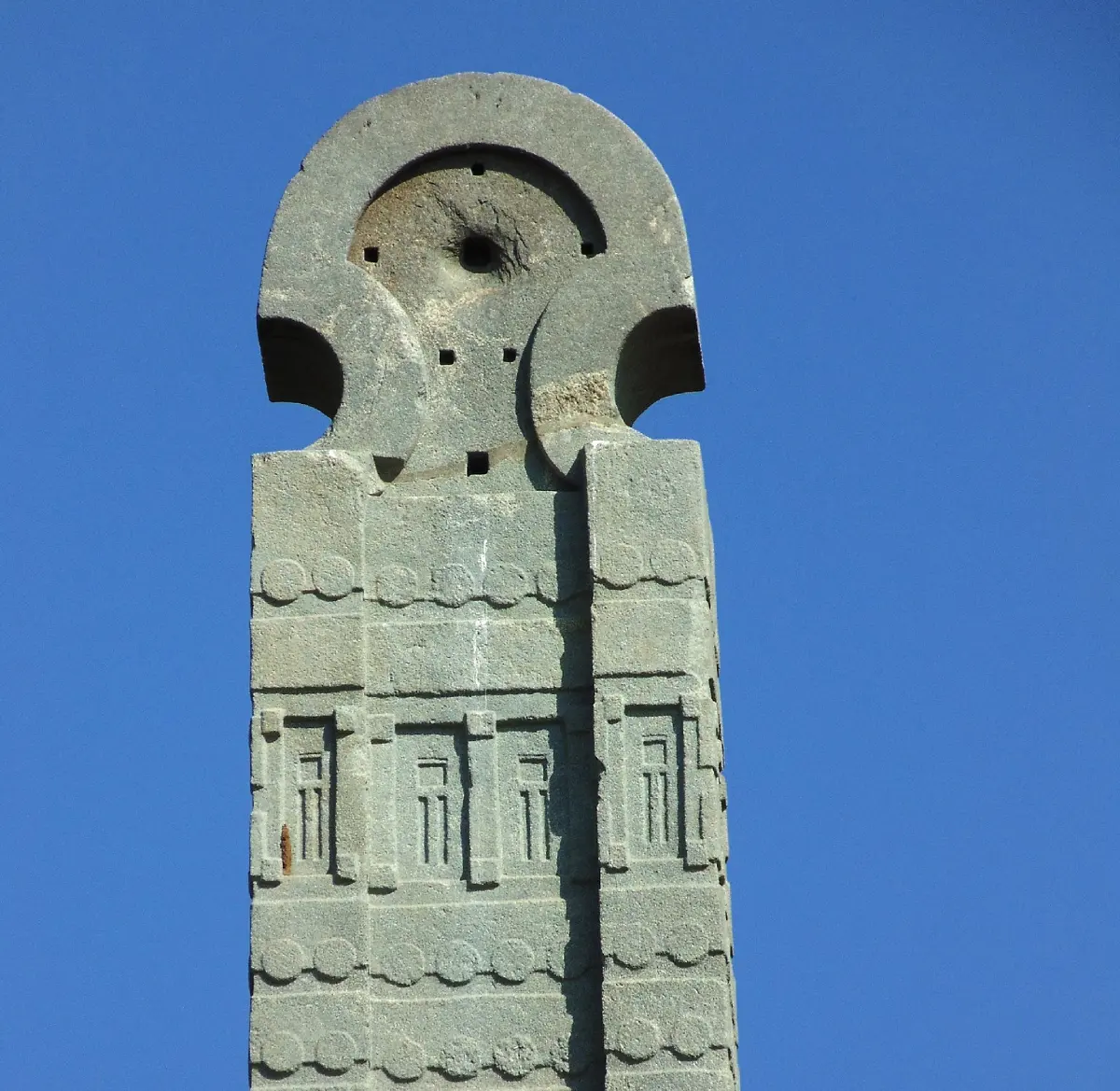
    Axum King Ezana Stele Obelisk Ethiopia
    King Ezana’s Stele (Obelisk) in Axum, Ethiopia

    The moment you step into the Northern Stelae Field, the scale of Axum’s ambition becomes obvious. Towering stone monoliths—some carved to resemble ancient high-rise buildings—shoot skyward in silence. The tallest one still standing is King Ezana’s Stele, a 24-meter-high masterpiece of Axumite engineering and symbolism. The largest of them all, now lying broken on the ground in colossal fragments, would have stood over 33 meters tall and weighed more than 500 tons—making it one of the largest monoliths ever attempted in human history.

    These obelisks aren’t just decorative. They were grave markers—lavishly carved tombstones for kings and nobles of the Axumite Empire, designed to impress both the living and the gods. Their facades mimic multi-storey palaces, complete with symbolic doors, windows, and even locks—all etched in stone with meticulous precision. One of the finest examples, stolen by Mussolini’s regime in 1937 and transported to Rome, became a painful symbol of imperial plunder. After decades of negotiation, it was finally returned to Ethiopia in 2005 and now stands once again in Axum, upright and proud—a monument not just to the past, but to cultural restitution.

    It’s not just their height that stuns—it’s their age, the unanswered questions, the sheer logistical insanity of how these were quarried, transported over kilometers, and erected using nothing but ancient tools and human determination. Even by global standards, these are some of the most impressive stone structures from antiquity—and King Ezana’s Stele remains their most iconic survivor, an enduring testament to a civilization that carved its legacy straight into the bedrock of time.

    The Fallen Stele: Axum’s Silent Colossus

    Axum Fallen Stele Obelisk Monolith
    The Fallen Stele (Obelisk). The Our Lady Mary of Zion Church in the background

    Lying solemnly beside the standing obelisks is the largest and arguably most haunting of them all—the Fallen Stele. Estimated to have stood over 33 meters tall and weighed more than 500 tons, it was the tallest monolith ever erected in the ancient world before it collapsed, likely shortly after its construction.

    Carved with intricate false doors and multiple floors, this was no crude marker—it was a monumental symbol of power. Yet its massive length now lies fractured on the ground, like the spine of a forgotten titan.

    Some say its collapse was due to engineering failure. Others suggest a ritualistic act. What’s undeniable is the eerie majesty it still commands in its broken state—a reminder that even the greatest empires eventually bow to time.

    If the standing stelae show Axum’s glory, the fallen one whispers its mortality. And that contrast is part of what makes the site unforgettable.

    The Church of Our Lady Mary of Zion: Keeper of the Ark?

    Axum Our Lady Mary of Zion Old Church Ark of the Covenant
    The Old Our Lady Mary of Zion Church

    Axum’s greatest mystery may not be towering in plain sight, but rather locked away in a small, heavily guarded chapel: the Ark of the Covenant. According to Ethiopian Orthodox tradition, the original Ark—the one said to contain the stone tablets of the Ten Commandments—was brought to Axum by Menelik I, the son of King Solomon and the Queen of Sheba, more than 3,000 years ago. This sacred object has never left Ethiopia since, protected by generations of faithful stewards and wrapped in centuries of myth and reverence.

    Today, that Ark of the Covenant is believed to reside in a modest, windowless chapel nestled within the compound of the Church of Our Lady Mary of Zion. Access is forbidden to all but a single chosen guardian monk, who dedicates his entire life to safeguarding the Ark. He speaks to no one, ventures nowhere, and lives in total spiritual isolation. His role is as much symbolic as it is sacred—an embodiment of unbroken tradition and divine secrecy.

    Axum Ark of the Covenant Temple Our Lady Mary of Zion Church Cathedral
    The building believed to contain the Ark of The Convenant – next to the Our Lady Mary of Zion Church

    Next to the chapel stands a newer cathedral commissioned by Emperor Haile Selassie in the 20th century. This modern sanctuary is open to visitors and contrasts starkly with the older church nearby, which remains closed to women and accessible only to men. Even from outside, its thick stone walls and hand-painted icons evoke centuries of prayer, pilgrimage, and unshakable belief.

    The church compound itself radiates solemnity. Pilgrims approach barefoot. Locals pause to kiss the outer walls. And in a small museum on-site, you’ll find treasures of royalty and ritual: imperial crowns once worn by Ethiopia’s emperors, gold-stitched capes, silver crosses, and manuscripts inked in ancient Ge’ez. These are not relics of a forgotten past—they’re tangible reminders of a civilization that merged monarchy and the divine with absolute conviction.

    Whether you arrive full of faith or simply driven by curiosity, standing within these sacred walls—just meters from what millions believe to be the most revered object in biblical history—is a rare kind of experience. The Ark of the Covenant in Axum is more than a claim or a curiosity. It’s a force. A belief carried through bloodlines, battles, and centuries. And in this quiet corner of northern Ethiopia, it’s still very much alive.

    Queen of Sheba’s Palace: Where Myth Meets Stone

    Axum Queen of Sheba Palace outskirts town
    The ruins of the presumed palace of the Queen of Sheba

    Travel just outside central Axum, and you’ll arrive at the ruins locals refer to as the Palace of the Queen of Sheba—known as Makeda in Ethiopian lore. Whether or not she actually lived here is debatable, but the legend runs deep, and the ruins themselves are compelling.

    A sprawling layout of basalt foundations, ceremonial steps, and underground water systems hint at the former grandeur of the structure. The site feels quiet, almost forgotten, yet undeniably powerful. It’s easy to imagine royal processions, diplomatic visitors, and ancient rituals playing out on this now-silent plateau.

    If the Queen of Sheba didn’t live here, someone very important certainly did.

    King Ezana’s Inscriptions and Tombs

    One of Axum’s most influential rulers, King Ezana presided over the empire in the 4th century CE and oversaw its conversion to Christianity. His reign marked a turning point, not just for Ethiopia, but for world history.

    Near the base of the obelisks is a trilingual stone inscription carved by Ezana in Ge’ez, Greek, and Sabaean. It documents his military victories and acknowledges the Christian God—making it Ethiopia’s Rosetta Stone and a cornerstone of Axumite archaeology.

    Nearby, you’ll find subterranean tombs traditionally attributed to Ezana and other rulers. These burial sites, with their perfectly stacked stone chambers and tunnel-like corridors, reflect the same architectural brilliance seen in the stelae. One tomb, known for its false door, adds a layer of symbolic mystery to Axumite burial traditions.

    Axum Archaeological Museum

    To truly piece together the layers of Axum’s past, the modest but informative archaeological museum near the stelae field is essential. Here you’ll find ancient coins—some with crosses, others with crescent moons—demonstrating how the Axumite economy and religious identity evolved over time.

    The collection includes ceremonial tools, pottery, carved tablets, models of the stelae, and Christian artifacts dating back more than a millennium. It’s not high-tech, and the lighting may be erratic, but the depth of content speaks volumes.

    This is where you go to fill in the gaps—to connect the ruins above ground with the world that once animated them.

    The Tomb of the False Door

    Tucked beside the main stelae park is one of Axum’s more curious archaeological finds: a tomb with a meticulously carved false door—symbolic of a gateway to the afterlife, but in reality, a dead end.

    Inside the tomb, accessible via stone steps, you’ll find multi-chambered vaults and signs of royal burials. No flashy decoration, just the raw elegance of solid stone laid in symmetry. The false door itself has puzzled scholars and visitors alike, but its presence adds one more layer of symbolism to Axum’s funerary culture—where the dead don’t just rest, they ascend.

    Debre Tesomat Abba Pantaleoni Monastery: A Forgotten Crown

    Debre Tesomat Abba Pantaleoni Monastery
    The Debre Tesomat Abba Pantaleoni Monastery. Reachable through an inspiring hike up a hill outside of town

    Another overlooked site lies just a short drive east of Axum: the Debre Tesomat Abba Pantaleoni Monastery. This monastery is believed to house the remains of Frumentius—known as Abba Selama—who introduced Christianity to Axum and served as its first bishop.

    Inside this hillside sanctuary, you’ll also find a piece of imperial regalia: the crown of King Kaleb, one of Axum’s most influential rulers. In the 6th century, Kaleb famously led a military campaign across the Red Sea to protect Christians facing persecution in Yemen—a rare example of an ancient humanitarian intervention.

    The monastery is quiet, rarely visited, and deeply atmospheric. For those interested in the overlap of faith, power, and historical memory, this spot delivers.

    Bonus Attractions Near Axum

    Debre Damo Monastery: Climbing into the Past

    Debre Damo Monastery Mountain Climb
    Debre Damo Monastery

    This isn’t your average monastery. Debre Damo, perched atop a flat-topped mesa about 85 kilometers east of Axum, can only be reached by climbing a sheer cliff face using a leather rope—hoisted up by a monk at the top. No stairs. No scaffolding. Just faith, friction, and forearms.

    The drive from Axum takes around two and a half hours via Adigrat on sometimes bumpy roads, so hiring a 4×4 and a local driver is wise. Once you arrive at the base, the climb is physical but rewarding. Women aren’t permitted to enter, as per Orthodox custom, but for male travelers, this is one of the most unique monastic experiences on the continent.

    Debre Damo dates back to the 6th century and still houses a small community of monks living a life largely unchanged by the modern world. Manuscripts line the walls. Hymns echo through ancient chambers. And from the top, the panoramic views stretch across the Ethiopian highlands like a biblical painting.

    Bring gloves. And humility.

    Yeha Temple: Echoes from Before Christianity

    About 50 kilometers from Axum lies Yeha, believed to be the capital of a pre-Axumite civilization. Its most impressive relic is the Temple of Yeha—Ethiopia’s oldest standing structure—built around 700 BCE.

    The limestone blocks, some weighing several tons, are stacked with such precision that no mortar was needed. This architectural style links Yeha to the Sabaean culture of ancient Yemen, hinting at trade and cultural exchanges across the Red Sea long before the Axumite Empire rose to power.

    Beside the ancient temple sits a functioning Orthodox church, simple and welcoming, where 3,000 years of spiritual tradition flow into the present. The juxtaposition is humbling—pagan temples and Christian chapels, coexisting in the same sacred soil.

    Yeha isn’t on every tourist’s radar. But for history buffs, it’s a must.

    The Battlefields of Adwa: Where Ethiopia Redefined Africa

    A short 25-kilometer drive northwest of Axum brings you to Adwa, a name etched into African history. In 1896, at the foot of these rugged mountains, Emperor Menelik II and Empress Taytu Betul led Ethiopian forces in a decisive victory against invading Italian troops.

    The Battle of Adwa wasn’t just a military triumph—it was a seismic political statement. Ethiopia became the only African nation to successfully repel European colonization during the Scramble for Africa.

    Today, visitors can walk the very hills where that battle unfolded, visit the Adwa Victory Monument, and tour small but meaningful museums preserving the legacy of resistance. For modern Pan-Africanists and history lovers alike, Adwa is a pilgrimage of pride.

    Experiencing Local Culture: Food, Traditions, and the Pulse of Axum

    Injera and Identity

    Food in Axum isn’t complicated—but it is rich in flavor, ritual, and cultural meaning.

    Every meal begins with injera, the tangy, spongy flatbread made from teff flour. It’s both your plate and your utensil. Piled high with lentils, cabbage, spiced meat, and shiro (chickpea stew), it’s hearty and communal—meant to be shared.

    Order t’ibs if you like your beef or goat sizzling with chili. Or try doro wat, Ethiopia’s most beloved chicken stew, slow-cooked in berbere spice and served with a hard-boiled egg. You’ll probably eat with your hands. That’s the point.

    You’re not just feeding your stomach—you’re being welcomed into the rhythm of Ethiopian life.

    Tej, Buna, and the Ritual of Hospitality

    Don’t skip the drinks—especially if you’re invited into a home.

    Tej is a home-brewed honey wine, traditionally served in round-bottomed flasks that look like lab equipment but hit like rum. Each batch is different. Each host has their own secret.

    Then there’s the buna—the coffee ceremony. Ethiopia is the birthplace of coffee, and in Axum, the preparation is ceremonial. Beans are roasted in front of you, ground by hand, brewed over coals, and served in three rounds. It’s social. It’s spiritual. And yes, it’s strong.

    Axumites won’t rush this. You shouldn’t either.

    Faith in Daily Life

    Axum Sunday Church Crowd Faith
    Outdoor church service on a Sunday: Axum is an intensely religious place!

    Religion in Axum isn’t a once-a-week affair—it’s a way of life. Churches open before dawn. Priests walk barefoot through town. White-robed pilgrims light candles beside ancient tombs. You’ll hear chanting in Ge’ez before sunrise and incense curling through the air by noon.

    Time your visit with Timkat (Epiphany), and you’ll witness something unforgettable. Tabots—sacred replicas of the Ark—are carried through the streets. Crowds follow in procession, singing, clapping, and dancing with unfiltered joy. It’s a mass expression of faith—and for a few days, the entire town becomes a stage of devotion.

    Even outside of festivals, Axum’s sacred pulse is felt in its rhythm. In its silence. In its songs. And especially in the eyes of the people who’ve carried this spiritual legacy through centuries of change.

    Getting There and Getting Around

    Flying to Axum

    The most reliable way to reach Axum is by air. Ethiopian Airlines offers regular domestic flights from Addis Ababa to Axum Airport (AXU), typically taking under two hours. The airport is located just outside town, and taxis or hotel shuttles can get you to your accommodation in under 15 minutes.

    Given that overland routes from the south pass through regions that were affected by conflict, air travel is strongly recommended unless you have up-to-date intelligence and an experienced guide.

    Flights book up quickly during religious holidays like Timkat, so reserve early if you plan to visit in January or during major feasts.

    Getting Around Town

    Axum is compact. Most major sites — including the stelae fields, the churches, and the museum — are within walking distance of the town center. For farther excursions (such as to Yeha, Adwa, or Debre Damo), hire a private driver or go through your hotel or local guide.

    Three-wheeled tuk-tuks (bajajs) operate throughout the town and offer a cheap, quick way to get around. Expect to pay in Ethiopian birr, and have small bills ready.

    English is spoken by some guides and younger locals, but Ge’ez and Tigrinya dominate here. A few well-placed words in Amharic — or even a smile and a respectful demeanor — go a long way.

    Safety in Axum

    Axum lies in the Tigray region, which saw intense conflict between 2020 and 2022. Since a peace agreement was reached, the situation in Axum has stabilized. The town itself is now calm, sites are open, and locals are welcoming travelers again.

    You will still see the traces of recent hardship—damaged infrastructure, humanitarian activity, and a slower pace of recovery—but the atmosphere is peaceful and dignified.

    If you fly into Axum, stay within the central and eastern zones of Tigray, and avoid the Eritrean border and western regions. The town is safe, but this is still a post-conflict environment. Remain aware, stay respectful, and listen to your local hosts.

    Travelers who’ve visited recently report not only feeling safe, but deeply moved by the resilience and generosity of the people they met.

    Carved in Granite, Etched in Memory: Why Axum Endures

    Some places are destinations. Axum is a declaration.

    It doesn’t offer luxury. It dares you to seek meaning. It won’t hand you comfort on a silver platter—it hands you questions carved in granite. You won’t find beach loungers or curated cocktail menus here. What you’ll find is something much older, heavier, and harder to shake: a civilization that speaks in stone, silence, and sacred memory.

    You’ll stand beneath a 24-meter obelisk that’s outlived kings and conquerors. You’ll descend into underground tombs, climb into cliffside monasteries by rope, and walk through ruined palaces whispered to belong to the Queen of Sheba. You’ll sip tej in a smoky tavern where the walls lean with time, and you’ll watch the sunrise through incense smoke and chanting echoing in ancient Ge’ez.

    And at the heart of it all, you’ll stand just meters from a chapel that, for centuries, has guarded what many believe to be the Ark of the Covenant—not as myth, but as living faith. That presence—silent, unseen, and utterly magnetic—shapes everything around it.

    This isn’t a photo-op. This is an immersion. A test. A journey for those who crave more than the brochure. It’s part expedition, part pilgrimage, part soul-search.

    And if that’s the kind of traveler you are—if you measure your journeys in meaning, not just miles—then Axum isn’t just worth the detour. It’s the reason to go.

  • Lalibela: Ethiopia’s Rock-Hewn Enigma – A Pilgrimage for the Intrepid Explorer

    Lalibela: Ethiopia’s Rock-Hewn Enigma – A Pilgrimage for the Intrepid Explorer

    There are places that exist on the fringes of imagination—destinations so unique, so inexplicably carved into the Earth and history alike, that even the most seasoned globetrotter is left humbled. Lalibela is one of those places.

    Perched high in the Lasta Mountains of northern Ethiopia, Lalibela is a town that punches far above its weight in mystery, sanctity, and sheer architectural audacity. This is no ordinary destination. It’s not for the casual beach-seeker or checklist tourist. This is for the adventurer, the explorer, the seeker of legends and ancient whispers. For those who’ve braved Machu Picchu and wandered Petra, Lalibela offers a rarer, less-traveled path—one that’s still alive with incense smoke, monastic chants, and the soft scrape of pilgrims’ feet on ancient stone.

    It’s a place where time folds in on itself. Where you don’t just see history—you walk through it, barefoot, behind a robed priest holding a cross carved a millennium ago.

    And yes, we’ll get to the security situation, but first, let’s do what travelers do best: immerse ourselves.

    The Visionary Behind the Rock: A King’s Divine Ambition

    Gebre Meskel Lalibela Negus
    Negus (King) Gebre Meskel Lalibela

    The story of Lalibela doesn’t begin with stone—it begins with exile, prophecy, and one king’s audacious plan to outdo history itself. In the late 12th century, Gebre Meskel Lalibela, a member of the Zagwe dynasty, was born into a kingdom marked by both spiritual fervor and dynastic friction. According to tradition, his birth was heralded by a swarm of bees—interpreted by priests as a sign of divine favor. His name, “Lalibela,” means “the bees recognize his sovereignty.”

    But his path to power was hardly smooth. After surviving political exile—possibly in Jerusalem itself—Lalibela returned not just with a claim to the throne, but with a vision: to build a new Jerusalem in the heart of the Ethiopian highlands. The timing was no coincidence. In 1187, Saladin’s armies captured Jerusalem, making pilgrimage to the Holy Land nearly impossible for Christians across North Africa and beyond. Lalibela’s response was bold: if his people could no longer journey to Jerusalem, he would bring Jerusalem to them.

    His vision wasn’t a symbolic gesture—it was a literal, monumental endeavor. Instead of raising churches from the earth, he ordered them to be carved into it. What followed was one of the most extraordinary construction feats of the medieval world: eleven churches hewn directly from the volcanic rock of the Lasta mountains. No scaffolding. No blocks. Just hammer, chisel, and faith. The churches were carved from the top down, exposing their forms as workers descended deeper into the bedrock—some historians estimate this took no more than two and a half decades.

    How was it done so quickly? Legend has an answer. While skilled Ethiopian artisans toiled by day, angels were said to work through the night. Even skeptics find themselves wondering—because the scale, precision, and volume of work remain difficult to explain, even with modern tools.

    The layout of the complex wasn’t random. The churches are divided into two main clusters—symbolizing earthly and heavenly Jerusalem—and connected by narrow passageways, carved trenches, and ceremonial tunnels. Some routes descend into darkness before opening into light-filled courtyards, echoing the journey from death to resurrection. Others lead to hidden hermit cells and chambers used for prayer, fasting, or burial. This wasn’t just a religious complex—it was a spiritual city designed for movement, reflection, and devotion.

    Centuries later, the churches of Lalibela still function as sacred spaces. They’re not ruins. They’re not reconstructions. They’re living monuments—still used by priests, pilgrims, and worshippers who chant in Ge’ez, the liturgical language of Ethiopia, just as they did in the 13th century.

    In 1978, UNESCO designated the Rock-Hewn Churches of Lalibela as a World Heritage Site, calling them a “living heritage” of exceptional spiritual and architectural significance. But that label, while deserved, barely captures the gravity of the place. Lalibela isn’t a relic. It’s a defiant testament to what belief can build—out of rock, out of memory, and out of the very bones of the Earth.

    The Churches: 11 Stones of Faith

    Lalibela’s eleven rock-hewn churches are not simply historical artifacts—they’re an enduring, functional sacred complex, built with both symbolic intent and staggering technical skill. Carved between the late 12th and early 13th centuries during the reign of King Lalibela, these churches were designed to serve as a New Jerusalem for Ethiopian Christians unable to reach the Holy Land. The layout of the site reflects this goal, divided into three main sections: the northern cluster (symbolizing earthly Jerusalem), the eastern cluster (symbolizing heavenly Jerusalem), and the standalone western church, Bet Giyorgis, positioned like a divine epilogue.

    These aren’t cave churches or façades carved into cliff faces—they are fully freestanding or semi-monolithic structures, meticulously excavated from the bedrock itself. Carved top-down into volcanic tuff, the churches required both architectural mastery and an almost surreal commitment of labor. Narrow passageways, drainage trenches, and ceremonial tunnels connect them, forming a subterranean labyrinth that was—and still is—used for liturgical movement, prayer, and pilgrimage.

    Most of the churches remain active, staffed by priests and deacons who carry out daily services, baptisms, and festivals using liturgical traditions passed down for centuries. And despite their age, many of the structures still contain functioning water systems, acoustic chambers, and sacred relics central to the Ethiopian Orthodox faith.

    Bet Medhane Alem – The House of the Savior of the World

    Bet Medhane Alem is the largest of Lalibela’s churches—and, by many measures, the largest monolithic church in the world. Measuring 33.5 meters in length and 23.5 meters in width, the structure is entirely detached from the surrounding rock and stands within a massive sunken courtyard. Its design, featuring 34 external columns and 72 internal pillars, is often compared to the ancient basilicas of Aksum and may have been modeled after the Church of St. Mary of Zion.

    The church is home to one of Lalibela’s most treasured relics: a large golden processional cross believed by many to be over 800 years old. Inside, the cool, column-lined interior is vast and intentionally austere. Light seeps in from carved windows high in the stone, illuminating priests and pilgrims as they move quietly through the shadowed space.

    Bet Medhane Alem plays a central role in religious life in Lalibela. During major feasts like Timkat (Epiphany), the courtyard fills with chanting pilgrims, processions of clergy, and traditional music echoing off stone walls unchanged since the 13th century.

    Bet Maryam – The Oldest and Most Beloved

    Believed to be the oldest of the churches, Bet Maryam holds special significance as a personal favorite of King Lalibela. Its placement in the center of the northern cluster reinforces its spiritual and symbolic importance. The name, meaning “House of Mary,” reflects the central role of the Virgin Mary in Ethiopian Orthodoxy.

    Architecturally, Bet Maryam is more intimate than Bet Medhane Alem, with a cross-shaped floor plan and detailed decorative elements, including bas-reliefs of crosses, rosettes, and geometric motifs. Its interior also features one of the few surviving examples of early Christian Ethiopian wall painting—faint but still visible depictions of biblical figures adorn the plaster-covered stone.

    The church’s courtyard includes a small pool believed to have curative properties, particularly for women seeking fertility—a tradition that continues to draw pilgrims today.

    Bet Giyorgis – St. George’s Cross from Heaven

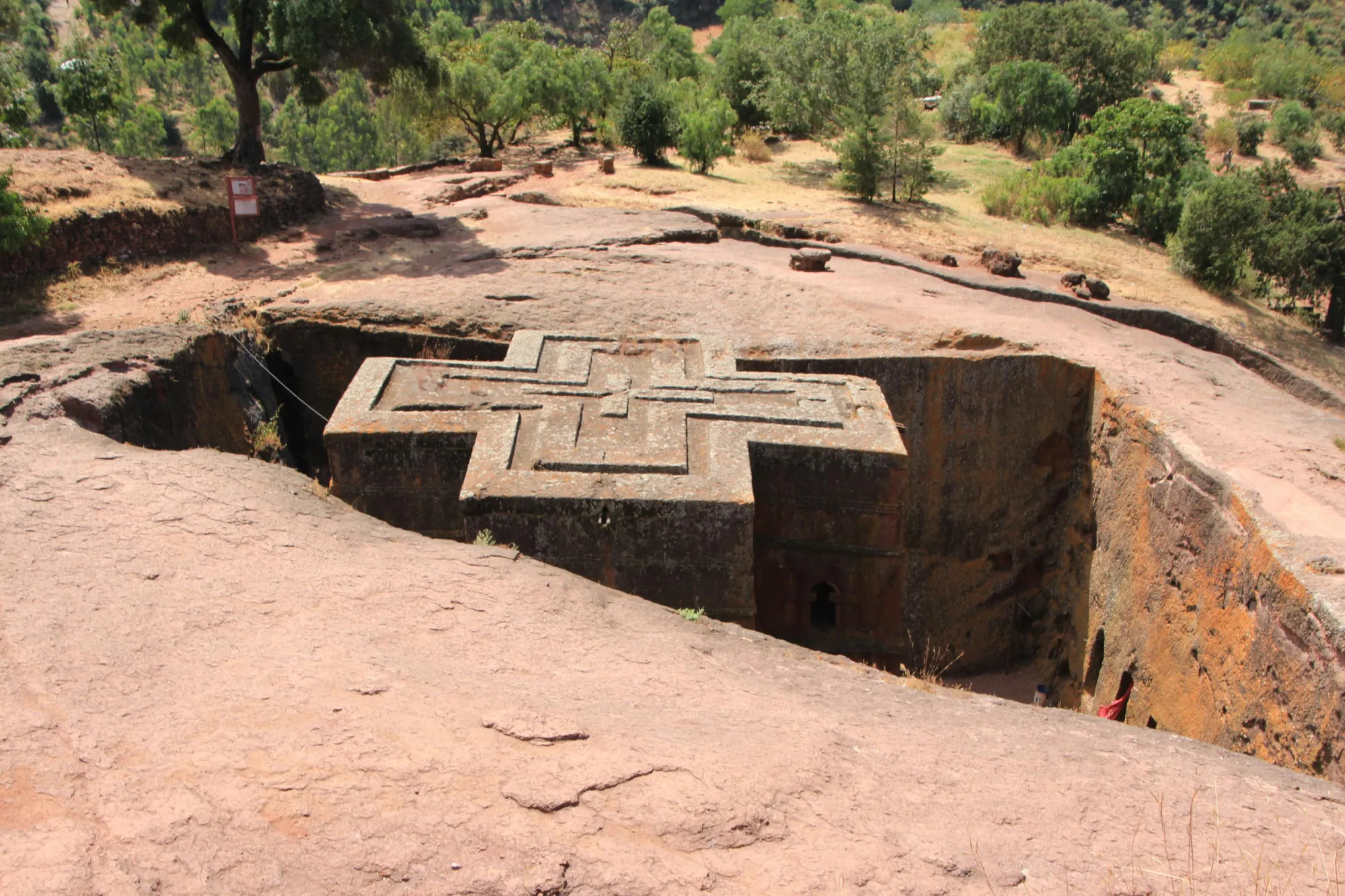
    Standing entirely apart from the main clusters, Bet Giyorgis is the best preserved and most visually iconic of the eleven churches. Carved in the shape of a perfectly symmetrical Greek cross, the structure sits at the bottom of a 12-meter-deep trench, its form only visible from above until you descend into the hollowed pit that surrounds it.

    Unlike some of the more complex, multi-roomed churches, Bet Giyorgis is clean and singular in design—a reflection of its role as a final statement in the religious landscape of Lalibela. Oral tradition holds that after completing the other ten churches, King Lalibela had a vision of St. George, who expressed disappointment at not having a church dedicated in his name. The king responded by creating this masterpiece.

    Accessed by a winding path carved through the surrounding rock, the approach is almost ceremonial. First-time visitors often glimpse the roof from a cliffside vantage point, the cross emerging slowly into view like a revelation. It’s an image that’s become synonymous with Lalibela itself—and with good reason. The preservation, simplicity, and spiritual gravity of Bet Giyorgis make it one of the most powerful sacred spaces in Africa, if not the world.

    Let me know if you’d like the same treatment applied to the remaining churches (e.g. Bet Golgotha, Bet Gabriel-Rufael, Bet Amanuel), or want to keep the focus tight on the three major ones.

    Still Beating: A Living, Breathing Heritage

    Unlike many historic monuments reduced to mere museum pieces, Lalibela is alive.

    These aren’t relics. These are active, consecrated places of worship—functioning today much as they did 800 years ago. Ethiopian Orthodox priests live in monastic dwellings carved into the surrounding cliffs. They rise before dawn, perform daily liturgies, and tend to their churches with the same rhythms passed down for generations. Services are held every morning, often beginning before sunrise. Incense smolders from hand-carved censers, drums beat in slow, solemn cadence, and chants in Ge’ez—the liturgical language of Ethiopia since the 4th century—resonate through stone chambers built to amplify them.

    Pilgrims still journey to Lalibela on foot, many from across the Ethiopian highlands. Some travel hundreds of kilometers barefoot, sleeping in churchyards or under trees, carrying only their faith and a walking stick. For many, this is a once-in-a-lifetime journey—undertaken not as sightseeing, but as spiritual obligation.

    Come during a major festival—Genna (Ethiopian Christmas) on January 7th, or Timkat (Epiphany) twelve days later—and Lalibela transforms. Tens of thousands of worshippers descend on the town. Priests in crimson and gold robes lead processions beneath velvet canopies. Sacred icons are paraded through torch-lit trenches. Pilgrims chant and sway, pressed shoulder to shoulder, while priests sing from raised platforms carved centuries ago.

    And through it all, the churches remain exactly where they’ve always been—cut from stone, worn by devotion, still holding the sacred weight of centuries.

    This isn’t just tourism. This is time travel—with incense, chanting, and barefoot faith.

    Security in Lalibela: What You Need to Know Before You Go

    Let’s not pretend Ethiopia’s been all sunshine and coffee ceremonies in recent years. The Tigray conflict that erupted in late 2020 rippled across northern Ethiopia, dragging the Amhara region—and Lalibela with it—into intermittent instability. For a time, Lalibela found itself under alternating control by government forces and Tigrayan rebels. Not exactly the kind of detour you’d want between hotel check-in and your afternoon church crawl.

    So where do things stand now? As of early 2025, Lalibela is open, accessible, and much safer than it was during the height of the conflict. Government forces reasserted control, flights have resumed, and tourism has cautiously restarted. Hotels, guides, and restaurants are back in business. It’s not exactly business as usual—but for Ethiopia, it’s a solid step forward.

    Should you go? Yes. Should you go now? That depends on your risk appetite and travel style. If your idea of adventure ends at delayed room service, this might not be the time. But if you’re the kind of traveler who seeks the real, the raw, and the reverent—and does so with eyes wide open—then Lalibela is absolutely worth it.

    Fly, Don’t Drive

    Ethiopia Scenic Mountain Highlands Road Safety Security
    Roadtrips in the Ethiopian highlands: Scenic, but too risky at the moment

    Skip the romantic notions of road trips through the highlands. Overland travel from towns like Dessie, Bahir Dar, or Gondar might look plausible on a map, but the reality is far less inspiring, especially right now. Road conditions vary wildly depending on weather, maintenance schedules (read: none), and the occasional military checkpoint or unofficial toll collector. Given recent tensions and unpredictable flare-ups in the Amhara region, ground travel can quickly turn from scenic to stressful.

    Flying from Addis Ababa to Lalibela is faster, safer, and far more dignified than arriving rattled and covered in red dust. Ethiopian Airlines gets you there in just over an hour—no drama, no dicey mountain passes.

    Use Trusted Local Operators

    In Lalibela, local knowledge isn’t a luxury—it’s your compass. The right guide will know which trails are flooded, which churches are closed for fasting, and when a quiet monastery opens its doors just for the devout. Operators like Lalibela Eco Trekking and Simien Image Tour & Travel are your backstage pass to the region’s rhythms. Book with them, and you travel smarter—and deeper.

    Stay Alert, Not Paranoid

    The vibe in Lalibela today is peaceful, even welcoming. But this is still a country in recovery. News can shift quickly, and what’s true on Monday may not hold by Friday. Ask your host. Talk to your driver. They’ll know if things are fine—or if it’s best to skip that side trip into the hills.

    Respect Local Tensions

    This isn’t the place to quiz strangers about politics. The scars of recent conflict may not be visible, but they linger. Keep conversations light, observe more than you opine, and lean into the universal language of food, faith, and hospitality.

    Travel Smart, Stay Curious

    Lalibela is open, but it rewards the prepared. Show up with situational awareness, cultural respect, and a thirst for something real. This isn’t easy travel—it’s meaningful travel. And that makes all the difference.

    Beyond the Rock-Hewn Churches: Other Wonders Around Lalibela

    Sceneries Beyond Lalibela - Terraced Hills of Ethiopia
    The spectacular terraced hills of Ethiopia’s highlands

    You could easily spend two full days soaking up the 11 churches of Lalibela—and still feel like you’ve only scratched the surface. But venture just a little beyond, and you’ll find some of Ethiopia’s lesser-known treasures perched in the hills and caves around town.

    Yimrehane Kristos: Before Lalibela Was Cool

    Some 20 kilometers northeast of town lies Yimrehane Kristos, a stunning pre-Lalibela cave church built in the Axumite style—centuries before King Lalibela ever swung a pickaxe. Constructed inside a natural cavern using alternating layers of wood and stone, it houses intricately decorated interiors, ancient relics, and something decidedly more macabre: the skeletal remains of an estimated 5,000 pilgrims who died after completing their lifelong journey here.

    The road there is rough and narrow. You’ll need a four-wheel drive, a strong stomach for hairpin turns, and hiking boots for the final stretch. But once you reach the cave entrance and hear the echo of ancient chants off stone walls? Worth every bump and bruise.

    Asheten Maryam Monastery: High Altitude, Higher Reward

    If you want a mix of mountain trail and medieval devotion, make the climb (or donkey ride) up to Asheten Maryam. This hilltop monastery looms over Lalibela from nearly 3,000 meters above sea level, offering jaw-dropping views and a look at one of the earliest Christian strongholds in the region.

    The church itself is simple, even austere, but the real magic is the journey—past monks hauling water in jerrycans, past kids sprinting uphill as if altitude were a myth, and past scenes of daily Ethiopian life unfolding on terraced slopes far below.

    Bring water, bring patience, and bring an extra layer. It gets chilly up there—spiritually and meteorologically.

    Village Life, Markets, and Moments in Between

    Lalibela isn’t just its churches. It’s a living town, home to about 20,000 people. Between your sacred site visits, take time to wander the Friday market, sip buna (coffee) with locals in hole-in-the-wall cafés, and peek into workshops where artisans still carve wooden crosses by hand.

    In town, stop by the Lalibela Art Gallery for locally crafted souvenirs, or swing through the market to pick up honey, spices, and woven baskets. Ask your guide or host to take you to a traditional tej bet—an Ethiopian honey wine house—if you’re up for an evening that gets sweeter and fuzzier with every sip.

    Getting There and When to Go

    Lalibela sits at approximately 2,500 meters above sea level, offering cooler nights and breathtaking panoramas. The altitude means thinner air, so it’s advisable to give yourself a day or two to acclimate.

    Timing is Everything

    The best months to visit are from October to March, when the highland air is crisp, dry, and ideal for both trekking and temple-hopping. January 7th, Ethiopian Christmas (Genna), is the single most atmospheric time to be in Lalibela. Expect tens of thousands of white-clad pilgrims, candlelit processions, and the unmistakable feeling that you’ve stepped into a parallel spiritual dimension.

    How to Get There

    By Air: There are daily flights from Addis Ababa to Lalibela Airport (LLI). From the airport, it’s a 30-minute drive to the town.

    Overland Travel: While possible, overland travel is not recommended currently due to security concerns.

    Where to Stay

    Mountain View Hotel: Perched on a promontory above Lalibela, this hotel offers stunning views and comfortable amenities.

    Mezena Resort & Spa: An upscale option featuring traditional tukul-style architecture, a year-round outdoor pool, and serene surroundings.

    Top Twelve Hotel – Lalibela: Known for its spacious rooms, exceptional staff, and panoramic views from private balconies.

    Zan-Seyoum Hotel – Lalibela: Offers clean, comfortable rooms with beautiful gardens and proximity to the rock-hewn churches.

    Honey Land Hotel Lalibela: A budget-friendly choice with friendly staff, clean accommodations, and a convenient location.

    Amba Lodge Lalibela: Provides spacious rooms with excellent views, traditional hospitality, and a peaceful atmosphere.

    Where to Eat

    Ben Abeba: A unique restaurant with quirky architecture, offering spectacular views and a fusion of Ethiopian and international cuisine.

    Ma’ed Lalibela Restaurant: Known for its authentic Ethiopian dishes, warm hospitality, and cozy ambiance.

    Kana Restaurant and Bar: Offers a variety of traditional Ethiopian meals in a relaxed setting with attentive service.

    Unique Restaurant: Serves delicious local cuisine with a focus on fresh ingredients and traditional recipes.

    Sora Lodge Lalibela: Combines accommodation and dining, providing guests with authentic Ethiopian meals and stunning views.

    Segenet Cafe and Restaurant: A charming spot for traditional Ethiopian dishes, known for its friendly staff and inviting atmosphere.

    These options cater to various preferences and budgets, ensuring a comfortable and enriching experience during your visit to Lalibela.

    Essential Travel Tips for the Lalibela-Bound Explorer

    Acclimatize or Regret It

    Lalibela sits at 2,500 meters (8,200 feet). Altitude sickness is real. If you’re coming straight from sea level, pace yourself. Day one should be light: check into your hotel, stroll through town, breathe deep, hydrate. Don’t go straight into full Indiana Jones mode.

    What to Pack

    • Slip-on shoes or sandals (you’ll be taking them off at every church)
    • Thick socks for cold, sometimes bird-poop-dusted floors
    • Layers (mornings are cold, afternoons are warm)
    • Headlamp or torch for dimly lit interiors
    • Lightweight scarf or shawl for modesty and sun protection
    • USD or Ethiopian birr in cash (ATMs are few, and international cards unreliable)

    Hire a Local Guide

    This isn’t just about supporting the community—it’s about making the experience exponentially richer. A good local guide will unlock the symbolism behind the carvings, explain the difference between Bet Maryam and Bet Golgotha, and maybe even take you to parts of the churches not every tourist sees. Plus, they’ll help you avoid stepping into 800-year-old baptismal pools. (It happens.)

    Lalibela for the Bold: A Spiritual Journey Unlike Anywhere Else

    Lalibela isn’t an add-on. It’s not the cherry on your Ethiopian sundae—it’s the whole damn dessert. This is a place where spiritual devotion, ancient artistry, and pure human grit meet in the most unexpected ways. It’s history with calloused hands and dust on its feet. It doesn’t ask to be marveled at—it demands to be felt.

    It’s not an easy journey. But it’s not supposed to be. Lalibela wasn’t built for comfort—it was built for faith, resilience, and transcendence. The churches weren’t meant to wow tourists or dazzle Instagram feeds. They were meant to glorify God, to defy the passage of time, and to hold their ground through invasions, famines, revolutions, and wars. And they have. They always have.

    Somehow, they’re still here—stoic, silent, echoing with ancient hymns and the shuffle of barefoot pilgrims. The scent of incense still hangs in the air. The shadows still flicker with candlelight. And the stones, cold and solid under your feet, still hum with a thousand years of prayer.

    So come for the architecture. Stay for the altitude, the stories, the soul. Come with reverence, curiosity, and a strong pair of lungs. Let the town’s rhythm guide you—from misty sunrise services to honey-wine evenings. Let the silence in those churches speak louder than any guidebook ever could.

    And when you walk barefoot into the shadow of a church carved straight into the Earth a thousand years ago, you’ll know one thing for sure:

    You’ve never been anywhere like Lalibela. And you probably never will again. And that’s exactly why you came.

  • 7 Astonishing Secrets of Pemba Island: Discover Zanzibar’s Untamed Paradise

    7 Astonishing Secrets of Pemba Island: Discover Zanzibar’s Untamed Paradise

    Pemba Island is one of East Africa’s best-kept secrets—a stunning retreat that offers travelers a unique blend of natural splendor, rich history, and genuine local culture. While it is part of the Zanzibar Archipelago, Pemba stands apart from Unguja, the island that houses the famous Stone Town. With a mere 30-minute flight from Stone Town or from Dar es Salaam, Pemba promises an escape that is both conveniently accessible and incredibly secluded, offering a refreshing contrast to the bustling urban energy of Zanzibar’s main island.

    In this comprehensive guide, we’re revealing 7 incredible secrets that make Pemba Island the ultimate getaway for adventurers, history buffs, and culture enthusiasts alike. We’ll dive into its mesmerizing underwater world, explore ancient ruins, and share insider tips on local cuisine, eco-friendly accommodations, and the best ways to navigate this off-the-beaten-track destination. Whether you’re planning to experience the dynamic heritage of Stone Town or seeking a tranquil retreat in nature, read on to discover why this Island is calling your name.

    1. Dive into an Underwater Wonderland

    Pemba Zanzibar Starfish

    Pemba Island’s surrounding waters are a diver’s dream come true. The island is enveloped by the deep blue expanse of the Pemba Channel, renowned for its dramatic coral walls, clear waters, and vibrant marine ecosystems that make every dive a spectacular adventure.

    World-Class Diving and Snorkeling

    Imagine plunging into crystal-clear waters where vibrant coral reefs teem with life. Pemba’s dive sites—such as Swiss Reef, Njao Gap, and Emerald Reef—are famous for their steep drop-offs and intricate coral formations. Each dive offers an intimate glimpse into an underwater world where manta rays, whale sharks, and schools of tropical fish create a living mosaic of colors and movement. Even if you’re not a certified diver, you can enjoy snorkeling excursions to Misali Island—a nearby marine sanctuary where the shallow reefs burst with color and life.

    The Manta Resort’s Underwater Room

    One of the island’s most iconic experiences is offered at The Manta Resort. Here, guests can indulge in a one-of-a-kind stay in the Underwater Room—a floating suite with a submerged bedroom that lets you drift off to sleep as tropical fish glide by outside your window. This unique accommodation offers an unparalleled perspective of Pemba’s marine environment, making it a must-try for adventurers seeking an extraordinary experience near Zanzibar.

    2. Unearth the Mysteries of Pemba’s Rich History

    Pemba Zanzibar Ruins

    Pemba Island is not just about natural beauty—it’s also steeped in history and culture. Wander among ancient ruins and discover the tales of old that have shaped this secluded paradise.

    Ancient Ruins and Historic Sites

    History comes alive on Pemba through its well-preserved ancient ruins. Sites like the weathered remnants of Ras Mkumbuu and Mkame Ndume offer a window into a bygone era when this island was a bustling hub for Swahili, Arab, and Persian traders. These historic sites echo with stories of commerce and cultural exchange, much like the narrow, labyrinthine alleys of Stone Town, or of Lamu in Kenya. Each crumbling wall and ancient pathway tells a tale of resilience and legacy—a testament to the island’s vibrant past.

    Cultural Immersion in Local Villages

    For travelers eager to delve deeper into local traditions, guided tours of traditional Swahili villages are an absolute must. These immersive experiences allow you to interact with friendly locals, witness centuries-old customs, and sample authentic meals prepared with locally sourced spices. The cultural vibrancy you encounter here resonates with the historic ambiance of Stone Town, offering a nuanced understanding of how Pemba’s diverse heritage continues to thrive on this remote island.

    3. Savor the Flavors of Pemba

    While Zanzibar’s Stone Town boasts a dynamic culinary scene, Pemba Island offers its own modest yet memorable gastronomic experiences that celebrate the rich flavors of Swahili cuisine.

    Local Eateries That Wow

    Beyond the gourmet dining offered at upscale hotels, Pemba is home to a few standout local restaurants that provide a true taste of the island’s culinary heritage. Establishments like Pemba Moonlight Guesthouse, Gecko Nature Restaurant in Makangale, and Pemba Sunset Restaurant serve dishes that highlight the best of local flavors. Whether it’s freshly caught seafood simmered in aromatic coconut sauces or traditional spice-infused stews reminiscent of Zanzibar’s own culinary traditions, every meal here is a celebration of local ingredients and time-honored recipes.

    A Feast for the Senses

    Dining in Pemba is an immersive experience that goes beyond the palate. Enjoy your meal under the stars on a quiet beach or in a charming, rustic setting that mirrors the island’s relaxed pace. As you savor dishes such as octopus in coconut sauce or Zanzibari pilau, you’re not just eating—you’re partaking in a culinary journey that mirrors Pemba’s deep roots in spice cultivation and trade. Each bite is a delicious reminder of the island’s storied past and its connection to the greater Zanzibar region.

    4. Experience the Lush Landscapes and Natural Wonders

    Pemba Island is a haven for nature lovers, offering breathtaking landscapes that range from verdant spice farms to serene beaches and mystical mangrove forests.

    The Green Island’s Enchanting Flora and Fauna

    Nicknamed “The Green Island,” Pemba is celebrated for its lush vegetation, fertile hills, and dense forests. Wander through spice plantations where the air is rich with the aroma of cloves, cinnamon, and nutmeg—a living testament to Pemba’s status as one of the world’s top clove producers. These plantations not only nourish the local economy but also offer a sensory experience that ties the island’s agricultural heritage to the broader legacy of Zanzibar’s spice trade. Similar to the famed spice markets in Stone Town or Mombasa, these plantations evoke a sense of wonder and authenticity.

    Wildlife Encounters in the Ngezi Forest Reserve

    For wildlife enthusiasts, the Ngezi Forest Reserve is an unmissable destination. This pristine rainforest is home to an array of endemic species, including the magnificent Pemba Flying Fox—a giant fruit bat with an impressive wingspan that can reach up to 1.6 meters. As you trek through the forest, keep your eyes peeled for red colobus monkeys, bush babies, and a vibrant assortment of birds. The reserve provides a peaceful escape, where each step deeper into the forest reveals the raw beauty of Pemba’s natural world.

    Mangrove Kayaking and Secluded Beaches

    Pemba’s diverse ecosystems extend to its coastal areas, where mangrove forests and secluded beaches create an idyllic backdrop for adventure. Rent a kayak and paddle through intricate mangrove waterways, where you can spot hidden wildlife and experience the tranquility of these unique ecosystems. When it’s time to relax, head to secluded beaches such as Vumawimbi or the pristine shores of Shamiani Island. These untouched stretches of white sand and turquoise water offer an oasis of calm—a stark contrast to the lively, crowded beaches near Stone Town on Unguja.

    5. Stay in Exclusive Eco-Lodges and Boutique Hotels

    Due to its remote nature and commitment to preserving its natural beauty, Pemba Island offers fewer accommodation options than Zanzibar’s main island. However, each property is designed to provide an intimate and immersive experience, ensuring that every stay is as exclusive as it is memorable.

    Top Accommodations on Pemba

    • The Manta Resort: Renowned for its iconic Underwater Room, The Manta Resort offers a unique way to experience the marine environment of Pemba. In addition to its underwater suite, the resort provides Seafront Villas and Garden Rooms that blend luxury with nature, creating an extraordinary retreat near the waters of the Pemba Channel.
    • The Aiyana Resort & Spa: Inspired by the timeless elegance of Zanzibar’s architecture, The Aiyana Resort & Spa features 30 spacious villas, an infinity pool, rejuvenating spa, and gourmet dining. This boutique resort is perfect for travelers looking for refined tranquility, just a short flight away from the bustling heart of Stone Town.
    • Fundu Lagoon: Accessible exclusively by boat, Fundu Lagoon offers 18 tented safari-style bungalows that overlook the ocean. This off-grid retreat is ideal for diving enthusiasts and nature lovers who desire an intimate connection with the island’s rugged, unspoiled landscapes.
    • Pemba Lodge: Located on the quieter Shamiani Island, Pemba Lodge is an eco-friendly haven comprised of just five rustic bungalows. Emphasizing sustainability and simplicity, it provides a peaceful setting for those who wish to disconnect from the modern world and reconnect with nature.
    • Emerald Bay Resort: Set on one of East Africa’s largest natural sandbanks, Emerald Bay Resort is a sanctuary for beach lovers. With private beach access and stunning coastal views, this resort offers a barefoot luxury experience where you can enjoy the simple pleasures of island life.

    Limited But Unforgettable

    Because Pemba’s accommodation options are limited compared to the island’s vast natural expanse, every stay is a rare and exclusive experience. This scarcity means that each hotel or lodge is meticulously designed to provide guests with an intimate encounter with Pemba’s beauty, ensuring that your visit is both personal and unforgettable. Whether you opt for the underwater marvel of The Manta Resort or the eco-chic vibe of Pemba Lodge, your accommodation will be a key part of the magic that defines your journey.

    6. Navigate Pemba Like a Local

    Pemba Zanzibar Village

    Traveling around Pemba Island requires a bit of extra planning due to its remote location and limited infrastructure. However, embracing the island’s unique pace and local customs is part of the adventure.

    Transportation Tips

    • Pre-Book Your Transfers: Since Pemba is separate from Unguja—the main island where Stone Town is located—advance planning is essential. Domestic flights via airlines such as Coastal Aviation or Auric Air can get you here in about 30 minutes, and boat transfers are necessary for reaching some of the more secluded spots.
    • Car Rental with a Driver: For exploring Pemba’s rugged terrain, renting a 4×4 vehicle with a local driver is recommended. This option not only ensures safe travel over unpaved roads but also provides insights from locals who know the hidden gems of the island.
    • Local Minibuses (Dala Dalas): For a true taste of local life, consider taking a dala dala. These local minibuses offer an authentic, albeit slow and crowded, way to get around. Embrace the “pole pole” (slowly, slowly) lifestyle that defines Pemba.
    • Boat Adventures: Many of the island’s most breathtaking spots—such as Misali Island and Fundo Island—are accessible only by boat. Arrange these trips through your hotel or a trusted local tour operator for a safe and enjoyable experience.

    Embrace the Local Culture

    • Respect Traditions: Pemba is predominantly Muslim, so dressing modestly in local communities is essential. Whether you’re wandering through a bustling market or exploring a quiet village, respecting local customs will enrich your experience.
    • Learn Basic Swahili: Picking up a few simple phrases in Swahili, such as “Jambo” (hello) or “Asante” (thank you), can go a long way in forging connections with the friendly locals and enhancing your cultural experience.

    7. Combine Your Pemba Experience with the Best of Zanzibar & Stone Town

    A journey through the Zanzibar Archipelago is incomplete without experiencing both the dynamic energy of Stone Town and the serene seclusion of Pemba Island. Although the island is separate from Unguja—the home of Stone Town—it remains an integral part of the region’s vibrant tapestry.

    A Tale of Two Destinations

    • Stone Town’s Urban Energy: Stone Town captivates visitors with its winding alleys, historic mosques, and bustling bazaars. As a UNESCO World Heritage site, it offers a rich cultural experience that reflects centuries of African, Arab, Indian, and European influences. Wander through the narrow streets, explore ancient buildings, and shop for spices that have long been a symbol of Zanzibar’s storied trade legacy.
    • Pemba’s Natural Serenity: In contrast, Pemba Island offers a tranquil retreat. Here, you can dive into mesmerizing underwater worlds, relax on pristine, uncrowded beaches, and immerse yourself in nature’s undisturbed beauty. This seclusion makes Pemba the perfect antidote to the energetic pace of Stone Town, giving you a well-rounded taste of the Zanzibar Archipelago’s diverse offerings.

    Crafting the Perfect Itinerary

    For many travelers, the ideal journey involves a blend of both experiences. Start your adventure in Stone Town, absorbing its historical richness and lively atmosphere, then take a quick 30-minute flight to Pemba Island for a few days of serene exploration and relaxation. This combination offers the best of both worlds—an urban cultural feast followed by a rejuvenating escape into nature.

    Final Thoughts: Why Pemba Island Will Captivate You

    Pemba Zanzibar Baobab Trees

    Pemba Island is not just a destination; it’s an experience that resonates on a deeper level. From the thrill of exploring its underwater wonderlands to the quiet reflection offered by ancient ruins and lush spice farms, every moment spent on this secluded island is a reminder of nature’s splendor and history’s enduring legacy. The exclusive accommodations, authentic local cuisine, and untouched landscapes make Pemba a rare gem that offers a deeply personal connection with the Zanzibar Archipelago.

    Whether you’re marveling at the intricate coral reefs during a diving adventure, dining under the starlit sky while savoring traditional Swahili dishes, or simply enjoying a quiet moment on a pristine beach far from the crowds of Stone Town, Pemba Island invites you to experience the true essence of East Africa. Its remote, off-the-beaten-track nature ensures that every encounter is intimate, every experience authentic, and every memory unforgettable.

    If you’re ready to break away from the conventional tourist trail and explore a destination that offers both cultural depth and natural wonder, Pemba Island should be at the top of your travel list. Embrace the “pole pole” (slowly, slowly) lifestyle, dive into the deep blue, and let the quiet charm of this hidden paradise transform the way you travel.

    Pack your bags, plan your itinerary, and prepare to be captivated by Pemba Island—a secluded haven that is just a 30-minute flight away from the historic heart of Stone Town and the vibrant allure of Zanzibar. Your next adventure awaits on an island where every secret is an invitation to explore, and every moment promises to be a journey into the extraordinary.

    Whether you’re an intrepid explorer, a history enthusiast, or a lover of natural beauty, Pemba Island offers an experience unlike any other. From the timeless corridors of Stone Town to the untouched beaches of this secluded paradise, let your journey through the Zanzibar Archipelago be one of discovery, relaxation, and adventure. Welcome to Pemba Island—where nature, history, and culture converge to create memories that will last a lifetime.

    More about Pemba Island

  • Discover the Timeless Charm of Stone Town: 15 Unforgettable Experiences in Zanzibar

    Discover the Timeless Charm of Stone Town: 15 Unforgettable Experiences in Zanzibar

    Stone Town, Zanzibar, is not merely a destination—it’s an immersive journey through time. Nestled on the shores of the Indian Ocean, this UNESCO World Heritage Site is renowned for its labyrinthine streets, intricately carved wooden doors, and a legacy that blends African, Arab, Persian, Indian, and European influences. Whether you are a history buff, a food lover, or a traveler seeking authentic cultural experiences, Stone Town offers a wealth of treasures waiting to be explored. In this ultimate guide, we invite you to discover the magic of Stone Town through its historic landmarks, culinary delights, and diverse accommodations that together paint a vivid portrait of Zanzibar.

    1. A Glimpse Into the Rich History of Stone Town

    Every stone, every door, and every alley in Stone Town whispers a story from the past. This ancient town has witnessed centuries of triumphs, turmoil, and cultural exchange that have left an indelible mark on its very soul.

    The House of Wonders and the Old Fort

    Zanzibar Stone Town Sultan Palace House of Wonders
    The House of Wonders (Beit al-Ajaib) in Stone Town, Zanzibar

    At the heart of Stone Town stands the House of Wonders (Beit al-Ajaib), a monumental building that once heralded modernity in East Africa. Constructed in 1883 by Sultan Barghash, this architectural marvel was the first building in the region to be equipped with electricity, running water, and an elevator. Today, even as it undergoes restoration, the House of Wonders remains a symbol of Zanzibar’s innovative spirit and historical grandeur.

    Not far from the House of Wonders is the Old Fort (Ngome Kongwe). Originally built by the Omanis in the late 17th century to fend off Portuguese invaders, the Old Fort has evolved into a lively cultural center. Its sturdy walls now house art exhibitions, local performances, and bustling markets where the present meets the past. Walking through its ancient corridors, you can almost hear echoes of history whispering through the stone walls.

    A Dark Chapter: The Slave Trade and Remembrance

    Stone Town’s history is not without its darker chapters. Once a central hub of the Indian Ocean slave trade, the town played a significant role in the enslavement of Africans who were captured and sold across the region. Today, the former slave market has been transformed into a place of remembrance. The Anglican Cathedral, built on the very site of the old slave market, stands as a moving memorial dedicated to those who suffered during those turbulent times. This powerful monument reminds visitors of the resilience of the human spirit and the importance of honoring the past.

    Stone Town Zanzibar Slave Monument

    The Omani Legacy and the Birth of a Legend

    Zanzibar’s transformation into a global trading powerhouse is closely linked to the era of the Omani Sultanate. In the 19th century, Sultan Said bin Sultan moved his capital from Muscat to Zanzibar, turning the island into a bustling center for the spice, ivory, and slave trades. The influence of Omani culture is still palpable in Stone Town’s ornate architecture, the intricate designs of its wooden doors, and the lingering aromas of exotic spices.

    Adding another layer to Stone Town’s colorful history is the story of Freddie Mercury, born Farrokh Bulsara in Zanzibar in 1946. The legendary frontman of Queen is celebrated not only through his music but also by local establishments like Mercury’s Restaurant & Bar. For decades, Mercury’s has been a beloved landmark in Stone Town, symbolizing the fusion of history and modern culture that defines Zanzibar.

    Surprising Tidbits of History

    Did you know that Stone Town gets its name from the coral stone used in the construction of its buildings? Over time, the soft coral stone weathers to a distinctive golden-brown hue that gives Stone Town its characteristic charm. Moreover, the island of Zanzibar was once known as the “Spice Island” due to its prolific production of cloves, nutmeg, cinnamon, and other aromatic spices. Even the 38-minute Anglo-Zanzibar War of 1896—the shortest war in history—adds to the fascinating mosaic of Stone Town’s past, making it a treasure trove for history enthusiasts.

    2. Culinary Adventures with a Historic Flair

    Stone Town’s culinary scene is a delightful blend of tradition and innovation. The flavors here are as diverse as the cultures that have influenced Zanzibar over the centuries. Dining in Stone Town is not just about eating; it’s about experiencing a vibrant heritage through every bite.

    Iconic Dining Destinations

    • Taarab Restaurant & Rooftop Bar:
      Imagine savoring a fusion of Swahili, Indian, and Mediterranean cuisines while gazing at a panoramic view of the Indian Ocean. Taarab Restaurant offers just that—an unforgettable culinary experience where every dish is a celebration of Zanzibar’s rich heritage. As the sun sets over Stone Town, the gentle strains of Taarab music add an enchanting soundtrack to your meal.
    • Cape Town Fish Market Zanzibar:
      Located along the scenic waterfront, this restaurant is a haven for seafood enthusiasts. The open-air terrace offers spectacular views of the ocean, making it the perfect spot to enjoy freshly caught seafood, innovative sushi creations, and Swahili-spiced grilled fish. Whether you’re dining under a starlit sky or a radiant sunset, every meal here is a feast for the senses.
    • Emerson on Hurumzi:
      Housed within a beautifully restored Swahili palace, Emerson on Hurumzi offers an immersive dining experience that is as much about culture as it is about cuisine. Enjoy a multi-course Swahili tasting menu, where traditional flavors are reimagined with modern flair. Live Taarab music fills the air, transporting you to another era as you dine in an ambiance steeped in history.
    • Mercury’s Restaurant & Bar – A Stone Town Legend:
      For decades, Mercury’s has been a beloved institution in Stone Town. Named after the legendary Freddie Mercury, this restaurant and bar is renowned for its eclectic mix of seafood, grills, and international dishes. With its mesmerizing ocean views, live music, and a legacy that spans generations, Mercury’s is a must-visit for anyone wanting to taste the spirit of Zanzibar.

    Local Favorites and Hidden Gems

    Stone Town Zanzibar Forodhani Food Market

    Beyond the well-known landmarks, Stone Town is dotted with charming eateries that capture the essence of local life. Lukmaan Restaurant is celebrated for its authentic Swahili dishes, serving up hearty plates of octopus curry, pilau rice, and chapati in a bustling, no-frills setting. Meanwhile, The Tea House Restaurant offers a refined high tea experience, complete with spiced teas, local pastries, and a serene ambiance that perfectly complements the historic surroundings.

    Cafés such as Zanzibar Coffee House and Lazuli Café provide a cozy retreat for travelers. Whether you’re in the mood for a rich, locally roasted coffee or a light, refreshing smoothie, these spots offer the perfect blend of flavor and culture—ideal for a leisurely break as you wander through the storied streets of Stone Town.

    3. Rest and Relaxation: Where to Stay in Stone Town

    After a day of exploring history and savoring sumptuous meals, the perfect sanctuary awaits in Stone Town. Accommodation here ranges from luxurious hotels steeped in heritage to charming mid-range options that offer both comfort and authenticity.

    Luxury & Boutique Options

    • Park Hyatt Zanzibar:
      For travelers seeking the pinnacle of elegance and luxury, Park Hyatt Zanzibar delivers an unrivaled oceanfront experience. Set against the backdrop of the Indian Ocean, this top-tier hotel combines Swahili-inspired decor with modern amenities. The spacious rooms, infinity pool, and gourmet dining options create a setting where every moment is steeped in opulence.
    • Emerson on Hurumzi:
      More than just a hotel, Emerson on Hurumzi is a cultural experience in itself. Nestled in a restored palace, this boutique hotel offers uniquely decorated rooms that reflect the rich heritage of Stone Town. Guests can indulge in the celebrated rooftop restaurant, where live Taarab music and multi-course Swahili tasting menus provide an unforgettable dining experience.

    Mid-Range Marvels

    • DoubleTree by Hilton Hotel Zanzibar – Stone Town:
      Ideally located in the heart of Stone Town, this hotel strikes the perfect balance between modern comfort and traditional charm. With well-appointed, air-conditioned rooms and amenities like a fitness center and rooftop dining, DoubleTree by Hilton is an excellent choice for both leisure and business travelers. Its proximity to major attractions, such as the House of Wonders and Forodhani Gardens, makes it a convenient and stylish base for your Stone Town adventures.
    • Tembo House Hotel:
      Step into history at Tembo House Hotel, where a historic building meets modern-day comforts. Located right on the beachfront, this hotel enchants guests with antique furnishings, traditional Swahili decor, and a refreshing courtyard pool. The unique beach access in Stone Town is a rarity, offering guests the luxury of both land and sea.
    • Zanzibar Serena Hotel:
      Overlooking the mesmerizing ocean, Zanzibar Serena Hotel is an upscale boutique option that exudes elegance and warmth. With its beautifully landscaped garden courtyard and a sparkling beachfront pool, this hotel offers a refined yet comfortable stay that captures the essence of Zanzibari hospitality.
    • Maru Maru Hotel & Kisiwa House:
      For those who prefer a more intimate setting, Maru Maru Hotel and Kisiwa House are two charming boutique accommodations that offer picturesque rooftop views and personalized service. These hotels are perfect for couples and solo travelers looking to experience the local flavor in a tranquil, yet stylish environment.

    Budget-Friendly & Authentic Guesthouses

    For travelers on a more modest budget who still want to experience the true essence of Stone Town, authentic guesthouses provide a welcoming home away from home. The Swahili House and Stone Town Café & Bed & Breakfast offer cozy, budget-friendly accommodations where traditional Zanzibari decor meets warm local hospitality. These guesthouses provide not only a comfortable place to rest but also a deeper connection to the local community and culture.

    4. Explore and Immerse: Must-Do Activities and Attractions

    Stone Town is a treasure trove of experiences that bring its rich history to life. Whether you’re a seasoned explorer or a curious traveler, the following activities offer a glimpse into the soul of Zanzibar:

    Wander the Labyrinthine Streets

    Stone Town Zanzibar Street Alley

    One of the simplest yet most captivating experiences in Stone Town is the act of wandering its narrow, winding alleys, similar to those found in Mombasa Old Town or Lamu. Here, every carved wooden door tells a story—each one a unique blend of Arab, Indian, and African artistry. As you meander through these ancient pathways, you’ll stumble upon hidden courtyards, vibrant artisan shops, and centuries-old mosques. It is a living museum where the past and present coexist in a dynamic dance of color, sound, and scent.

    Local Cultural Hotspots

    • Jaws Corner:
      Immerse yourself in local life at Jaws Corner, a bustling gathering spot where residents converge over strong, aromatic coffee. This open-air hub is a microcosm of Stone Town’s social fabric—filled with animated conversations, impassioned debates, and a sense of community that is both infectious and genuine.
    • Spice Tours and the Essence of Zanzibar:
      Just beyond the narrow streets of Stone Town lies the aromatic legacy of Zanzibar—the Spice Island. Venture on a spice tour to explore lush plantations where cloves, nutmeg, cinnamon, and vanilla are grown. These tours are not only a sensory delight but also a window into the historical trade that once made Zanzibar one of the richest spice producers in the world.
    • Prison Island Adventure:
      A short boat ride from Stone Town takes you to Prison Island, a serene retreat that offers a mix of history and nature. Originally used as a prison for rebellious slaves, this island is now a sanctuary for ancient giant tortoises, some of which are over a century old. Snorkeling in the crystal-clear waters surrounding the island adds a splash of adventure to this cultural excursion.

    Discover Cultural Landmarks

    Stone Town’s many museums and historic sites offer deeper insights into its multifaceted past:

    • Sultan’s Palace Museum:
      Once the residence of Omani sultans, the Sultan’s Palace Museum is a treasure trove of royal artifacts, ornate furnishings, and historical documents. A visit here allows you to step back into a world of regal opulence and learn about the intricate history of Zanzibar’s ruling elite.
    • Hamamni Persian Baths and Maruhubi Palace Ruins:
      Explore the exquisite remnants of the Persian Baths and the ruins of Maruhubi Palace. These sites speak to the lavish lifestyles and architectural prowess of Zanzibar’s past rulers, inviting you to imagine the splendor that once graced these ancient walls.
    • The Anglo-Zanzibar War Memorial:
      History enthusiasts will be intrigued by the tale of the 38-minute Anglo-Zanzibar War—the shortest war in history. Though brief, this conflict in 1896 left an indelible mark on Zanzibar’s narrative, serving as a reminder of the island’s complex colonial past.

    5. Embracing the Local Spirit: Art, Music, and Handicrafts

    No visit to Stone Town is complete without engaging with its vibrant cultural scene. The town is a hub for local artisans, musicians, and craftspeople who keep age-old traditions alive while adding their own modern twists.

    The Art of the Carved Doors

    Perhaps one of the most iconic symbols of Stone Town is its elaborately carved wooden doors. These masterpieces are a visual testament to the town’s rich heritage. Ranging from the simple elegance of Swahili designs to the intricate floral patterns of Arab-inspired doors, each door reflects the wealth, status, and cultural pride of the family that once resided behind it. As you photograph these stunning works of art, you become part of a centuries-old tradition that celebrates beauty and craftsmanship.

    Music That Tells a Story

    Music is the heartbeat of Zanzibar, and nowhere is this more evident than in the haunting melodies of Taarab. This unique musical genre—a blend of Arabic, African, and Indian influences—fills the air at many of Stone Town’s rooftop restaurants and cultural centers. Whether you’re enjoying a meal at Taarab Restaurant & Rooftop Bar or being serenaded at Emerson on Hurumzi, the music of Zanzibar adds an irreplaceable layer of authenticity to your experience.

    Handicrafts and Souvenirs

    Stone Town’s bustling markets are a paradise for shoppers seeking authentic souvenirs. From handmade textiles and intricate beadwork to locally produced spices and artisanal ceramics, the markets here offer a glimpse into the everyday artistry of Zanzibar. The Darajani Market, in particular, is a sensory overload where every stall tells a story of tradition, skill, and community.

    Final Thoughts: Your Unforgettable Zanzibar Adventure Awaits

    Stone Town, Zanzibar, is a destination where every experience is steeped in history and every moment is a chance to create lasting memories. Its unique blend of ancient landmarks, vibrant culinary experiences, and diverse accommodations create a canvas rich with color, culture, and endless possibilities.

    Imagine waking up in a heritage hotel like Park Hyatt Zanzibar or Emerson on Hurumzi, where every detail tells a story of tradition and modern elegance. Spend your mornings exploring centuries-old forts, bustling markets, and secret alleys that lead to hidden treasures. Savor a lunch of freshly caught seafood at Cape Town Fish Market, followed by an afternoon wandering through spice plantations that have defined Zanzibar’s identity for generations. As the sun sets, the air fills with the soulful strains of Taarab music, inviting you to dine under the stars at Mercury’s Restaurant & Bar—an institution that has captivated locals and visitors alike for decades.

    This is the magic of Stone Town, Zanzibar—a place where the past and present coalesce into a vibrant mosaic of experiences. Whether you’re fascinated by history, in love with food, or simply seeking a destination that feels authentically alive, Stone Town promises an adventure that is as timeless as it is unforgettable.

    So pack your bags, set your spirit free, and prepare to be enchanted by the endless wonders of Stone Town, Zanzibar. Your unforgettable journey awaits in this island paradise where every moment is a story, and every story is a treasure.

    See Also

    https://hellozanzibar.com/stone-town-zanzibar-to-do-explore-mji-mkongwe/
  • 25 Timeless Reasons Lamu Will Transport You Back in Time – Discover Kenya’s Hidden Swahili Paradise!

    25 Timeless Reasons Lamu Will Transport You Back in Time – Discover Kenya’s Hidden Swahili Paradise!

    Introduction: A Journey to a Timeless Paradise

    Imagine a place where modernity takes a back seat, where the hum of car engines is replaced by the gentle clop of donkey hooves, and where the only vehicles navigating the ancient streets are dhows and foot travelers. Welcome to Lamu, an enchanting island on Kenya’s northern coast, where history and culture breathe through every stone, every alley, and every smile of its warm, welcoming inhabitants.

    Lamu isn’t just another beach destination—it is a living museum of the Swahili world. Here, time seems to stand still, transporting visitors to an era when Arab traders, Persian navigators, and Swahili settlers forged a unique culture that has endured for centuries. In this blog post, we’ll explore the rich tapestry of Lamu’s historic setting, uncover its hidden treasures, and reveal the myriad experiences that make it a must-visit destination for those seeking an authentic taste of Africa’s cultural heritage.

    The Unique Historic Setting of Lamu

    A World Without Cars

    Lamu Shela Donkeys in the street

    One of the most striking features of Lamu is its commitment to preserving a way of life that has remained virtually unchanged for centuries. The narrow, labyrinthine streets of Lamu Old Town are car-free, with the only modes of transport being the steady trot of donkeys and the slow, graceful glide of dhows along the shoreline. This ban on motor vehicles not only preserves the historical ambiance but also ensures that the island retains its unique, tranquil charm.

    Walking along these ancient streets feels like stepping into a living history book. Each corner reveals centuries-old architecture adorned with intricately carved wooden doors, ornate balconies, and faded murals that tell tales of bygone eras. The gentle pace of life here invites visitors to slow down, breathe deeply, and fully absorb the serene beauty that surrounds them.

    The Authenticity of the Swahili Cultural Experience

    Lamu is more than just an island—it is a repository of Swahili culture. Its people are descendants of Arab traders, Persian settlers, and indigenous Africans, whose interwoven histories have created a vibrant, unique cultural mosaic. The Swahili language, with its melodic cadence and rich vocabulary, echoes through the narrow lanes, while local traditions are celebrated with pride during vibrant festivals and community events.

    The authenticity of Lamu’s cultural experience is palpable in every aspect of daily life. From the traditional dhow races that mark the beginning of a new season to the heartfelt recitations of ancient Swahili poetry, the island pulses with a timeless energy that captivates the soul. Whether you are sampling the flavors of local cuisine or listening to the soft strains of taarab music in a centuries-old courtyard, you cannot help but feel that you are part of something extraordinary—an experience that transcends the ordinary and connects you with a living legacy.

    Historic Fortresses, Castles, and Ruins: The Story of Lamu

    Lamu Old Town: A UNESCO World Heritage Site

    Lamu Old Town is a labyrinth of history, recognized by UNESCO as one of the oldest and best-preserved Swahili settlements in East Africa. The town is a testament to the flourishing trade networks and cultural exchanges that once linked the East African coast with the Arabian Peninsula, Persia, India, and beyond. Strolling through its narrow, winding streets, you will encounter architectural marvels that speak of a rich, storied past.

    Key Highlights of Lamu Old Town:

    • Ancient Houses: Crafted from coral stone and mangrove timber, the houses of Lamu Old Town are architectural treasures. Their intricately carved wooden doors, some dating back to the 16th century, serve as a reminder of the town’s prosperous past.
    • Courtyards and Mosques: Scattered throughout the town are serene courtyards and majestic mosques that have served as centers of community life for generations. These sites are not only places of worship but also communal spaces where local history is celebrated and preserved.
    • Bazaars and Markets: The bustling markets of Lamu offer a sensory overload of colors, sounds, and scents. Here, you can purchase handcrafted jewelry, woven baskets, and traditional textiles, each piece telling a story of Swahili artistry and heritage.

    Fortresses and Castles: Guardians of the Past

    Lamu Takwa Ruins

    While Lamu itself is a mosaic of historic sites, the surrounding islands also harbor ruins that speak of a once-thriving civilization deeply connected to the Indian Ocean trade network. On Manda Island, for instance, lie the Takwa Ruins—a ghost town of coral-stone houses, a well-preserved mosque, and pillar tombs dating back to the 15th century.

    These ruins are a testament to the Swahili people who once flourished here, engaging in trade with merchants from Arabia, Persia, India, and even China. The remnants of ancient fortresses and castles, such as those on Pate Island, were strategically constructed to protect these profitable trade routes from pirates and rival empires vying for control of the East African coast. Today, these crumbling structures—weathered by centuries of monsoon winds and sea spray—stand as silent sentinels over the turquoise waters, evoking a time when Lamu was not only a cultural crossroads but a powerful maritime hub.

    Notable Historic Structures:

    • The Lamu Fort: Originally constructed by the Portuguese in the 16th century, Lamu Fort is an imposing structure that has witnessed centuries of conflict and trade. Though partially in ruins, its robust walls and battlements provide a tangible connection to the island’s turbulent history.
    • Castle Ruins on Siyu and Manda Islands: A visit to the Lamu archipelago isn’t complete without exploring its ancient ruins that echo the splendor of Swahili civilization. Siyu Island offers a secluded glimpse into the past with its coral stone structures, intricate wooden carvings, and remnants of mosques that hint at a once-bustling trading hub. A short boat ride away, the Takwa Ruins reveal a hidden legacy where weathered mosaics and subtle carvings tell stories of a sophisticated community, inviting quiet reflection away from the crowds. Meanwhile, Manda Island stands as a testament to Swahili urban ingenuity, with ruins of mosques, tombs, and residential quarters that highlight its role in the historic Indian Ocean trade network. Together, these sites capture the enduring spirit of the Swahili coast, offering travelers a concise journey back in time to explore Kenya’s rich maritime heritage.

    Cultural Festivals and Rich Events

    Celebrating Swahili Heritage

    Lamu is a cultural treasure trove, where festivals and events are celebrated with unbridled enthusiasm and a deep sense of pride. The island’s cultural calendar is filled with events that showcase its rich heritage and provide visitors with an immersive experience into Swahili traditions.

    Lamu Dhow Festival

    Key Festivals and Events:

    • Lamu Cultural Festival: This annual event is one of the highlights of the year, drawing visitors from across the globe. The festival is a vibrant celebration of Swahili music, dance, poetry, and art. Traditional dhow races, camel processions, and street parades bring the island’s history to life, while local artisans display their crafts in bustling markets.
    • Maulidi Festival: Celebrated in honor of the birth of the Prophet Muhammad, the Maulidi Festival is marked by recitations of sacred verses, communal prayers, and sumptuous feasts. This deeply spiritual event is a profound expression of the island’s Islamic heritage.
    • Local Craft Fairs and Art Exhibitions: Lamu’s artistic community thrives on local craftsmanship and contemporary expressions of tradition. Throughout the year, various fairs and exhibitions offer a glimpse into the creative spirit of the island, showcasing handmade jewelry, paintings, and textiles that capture the essence of Swahili culture.

    Unique Experiences: Dhow Dinners, Floating Restaurants, and Mangrove Cruises

    Lamu offers a plethora of unique experiences that go beyond the typical tourist fare. Here are some of the most memorable activities that allow visitors to truly connect with the island’s magic:

    Dhow Dinners: A Feast on the Waves

    Imagine dining under a canopy of stars, with the gentle lapping of the ocean as your soundtrack. Dhow dinners in Lamu are an unforgettable experience where you board a traditional wooden dhow and set sail along the pristine coastline. As you glide over the calm waters, you are treated to a sumptuous meal featuring freshly caught seafood, local vegetables, and aromatic spices. The setting is magical—romantic, relaxed, and steeped in tradition—offering a taste of what life was like for generations of Swahili sailors.

    Floating Restaurant: Dining with a View

    For a dining experience that is as unique as it is luxurious, the floating restaurant in Lamu is a must-visit. Anchored just off the coast, this innovative venue allows guests to enjoy gourmet meals while taking in panoramic views of the Indian Ocean. With its sleek design and modern amenities, the floating restaurant blends contemporary flair with the timeless charm of the sea, offering an unparalleled culinary adventure.

    Mangrove Cruises: Nature’s Secret Pathways

    The coastal waters of Lamu are fringed with extensive mangrove forests—mysterious, labyrinthine ecosystems that are home to an astonishing variety of wildlife. A mangrove cruise is a serene and educational journey, where you glide through narrow channels, spotting colorful birds, playful dolphins, and curious marine creatures. These cruises offer a unique perspective on Lamu’s natural beauty, providing insight into the ecological importance of the mangroves and the role they play in protecting the coastline.

    Lamu Mangrove Bridge

    Luxury Hotels and Boutique Guesthouses: Your Home Away from Home

    Lamu is home to an impressive selection of accommodations that cater to discerning travelers seeking both comfort and authenticity. Whether you’re drawn to luxurious resorts or charming boutique guesthouses, Lamu’s hospitality scene is designed to make you feel at home in this timeless paradise.

    Luxury Hotels

    Peponi Hotel

    Perched on the edge of the Indian Ocean, Peponi Hotel is a beacon of luxury and elegance in Lamu. With its expansive verandas, beautifully landscaped gardens, and meticulously decorated rooms, Peponi offers an oasis of tranquility. Guests can indulge in world-class dining, rejuvenating spa treatments, and a range of recreational activities, all set against a backdrop of stunning coastal vistas. Peponi’s commitment to service and its deep connection to Lamu’s heritage make it an unforgettable choice for travelers seeking the ultimate in coastal luxury.

    Majlis Resort

    Majlis Resort combines modern sophistication with Swahili charm, offering a refined retreat for those looking to immerse themselves in Lamu’s unique ambiance. The resort features spacious, elegantly furnished suites, an inviting infinity pool, and multiple dining options that celebrate both international and local flavors. With its tranquil setting and personalized service, Majlis provides the perfect blend of comfort and cultural immersion.

    Shela Private Castle Hotel

    For those seeking an experience steeped in history and luxury, Shela Private Castle Hotel is an extraordinary destination. Located in the picturesque village of Shela, this boutique hotel is housed in a beautifully restored traditional Swahili building that dates back centuries. The hotel seamlessly marries old-world charm with modern amenities, offering guests a glimpse into the storied past of Lamu while providing all the comforts of contemporary living. With its intimate setting and exceptional service, Shela Private Castle Hotel is ideal for romantic getaways and cultural explorations.

    Boutique Guesthouses in Shela

    In addition to luxury hotels, Shela boasts a number of charming boutique guesthouses that offer a more personal, homely experience. These guesthouses are often run by local families who are eager to share their culture, history, and culinary traditions with visitors. Staying in one of these intimate accommodations allows you to experience the true heart of Lamu—a place where every guest is treated as part of the family, and where the slow pace of life lets you savor every moment.

    Culinary Experiences: A Feast for the Senses

    Authentic Swahili Seafood and Local Delicacies

    No visit to Lamu is complete without indulging in its legendary culinary offerings. The island is renowned for its abundance of fresh seafood, prepared using time-honored Swahili recipes that have been passed down through generations. From succulent grilled fish to spicy seafood stews, Lamu’s food scene is a delightful exploration of flavors, aromas, and textures.

    Seafood Restaurants Galore

    • Local Favorites: The narrow streets of Lamu Old Town are lined with eateries where you can savor freshly caught fish, prawns, and lobsters, all prepared with a generous mix of local spices. These humble restaurants offer an authentic taste of the coast, often served with a side of ugali (a maize-based staple) and kachumbari (a tangy tomato and onion salad).
    • Beachfront Dining: In the sun-dappled alleys of Lamu’s coastal resorts, beach restaurants provide the perfect setting to enjoy a meal while gazing out at the shimmering sea. These establishments blend Swahili flavors with international culinary influences, offering a varied menu that caters to every palate.

    Yoga and Wellness: Finding Balance in Paradise

    Lamu is not only a feast for the senses but also a sanctuary for the mind and soul. The island’s serene environment and unhurried pace of life make it an ideal destination for yoga enthusiasts and wellness seekers. Several yoga hotels and retreats offer daily classes, workshops, and even annual yoga festivals that attract participants from around the globe.

    Yoga Festivals and Classes

    Imagine starting your day with a gentle yoga session on the beach, the first light of dawn reflecting off the calm waters as you breathe in the salty air. Lamu’s yoga retreats provide this and more, offering a range of classes tailored to all levels. Whether you’re a seasoned yogi or a curious beginner, these sessions help you reconnect with your inner self and find balance amid the island’s natural beauty.

    Cultural Culinary Festivals

    In addition to its everyday culinary delights, Lamu also hosts cultural culinary festivals that celebrate the island’s rich gastronomic heritage. These events bring together local chefs, food artisans, and culinary experts who showcase traditional recipes, cooking techniques, and innovative interpretations of Swahili cuisine. It’s an immersive experience where you can learn about local ingredients, sample authentic dishes, and even participate in cooking demonstrations that reveal the secrets behind Lamu’s famed flavors.

    Lamu: A Discreet Yet Coveted Destination

    One of Lamu’s most compelling aspects is its ability to remain relatively under the radar. While other coastal destinations in Kenya may be bustling with tourists, Lamu exudes an air of discretion and exclusivity. Its preservation of the old ways, from the absence of cars to the preservation of ancient traditions, creates a haven for those who seek a more authentic and intimate travel experience.

    This quiet charm has made Lamu a favorite destination for celebrities, European royals, and discerning travelers who appreciate the island’s unique blend of history, culture, and natural beauty. The allure of Lamu lies in its untouched authenticity—an unspoiled gem where time seems to slow down, inviting you to fully immerse yourself in a journey that transcends the ordinary.

    Conclusion: Step into a Timeless World in Lamu

    Lamu is not just a destination—it’s a journey back in time. It’s where narrow, winding streets and ancient stone houses whisper the stories of generations past. It’s where the rhythmic clop of donkey hooves and the gentle sway of dhows on the turquoise sea remind you that history is alive here, waiting to be discovered.

    From its majestic historic sites like ancient fortresses and UNESCO-recognized Swahili ruins, to its vibrant cultural festivals and mouthwatering culinary experiences, Lamu invites you to explore a world untouched by the relentless pace of modern life. Whether you’re enjoying an intimate dhow dinner under the stars, exploring the labyrinthine alleys of Old Town, or simply relaxing at a luxurious beachfront hotel, every moment in Lamu is a celebration of heritage, beauty, and the enduring spirit of the Swahili coast.

    So, pack your bags, leave the modern chaos behind, and step into the timeless embrace of Lamu. Discover why this enchanting island remains one of Kenya’s best-kept secrets—a place where every corner holds a story, every meal is a celebration, and every experience is a journey into the heart of Africa’s cultural soul.

    In Lamu, every moment is a step back in time—a chance to experience a world where tradition meets tranquility, and where history lives on in every stone, every smile, and every wave that laps the ancient shores. Come, lose yourself in the magic of Lamu, and let this timeless haven on Kenya’s coast enchant you like never before.

    More about Lamu

  • 7 Unforgettable Secrets of Kilwa: Discover Tanzania’s Timeless Coastal Gem!

    Along Tanzania’s southeastern coast lies Kilwa, a region steeped in history and cultural significance that captivates every traveler. Once a thriving center of Swahili trade and civilization, Kilwa offers a rare glimpse into a bygone era where majestic ruins stand side-by-side with modern coastal life. Today, visitors encounter well-preserved relics, bustling local markets, and scenic beaches that create an atmosphere of timeless beauty and warm hospitality.

    Historical Legacy

    Kilwa Kisiwani Gereza

    Kilwa’s story began over a thousand years ago. In the 10th century, Kilwa Kisiwani emerged as a bustling port city founded by the Persian prince Ali ibn al-Hasan Shirazi. This island quickly became the heart of an influential trading empire, flourishing on commerce in gold, ivory, and spices. Today, Kilwa Kisiwani is recognized as a UNESCO World Heritage Site, its ancient ruins offering a window into a time when powerful rulers and dynamic trade routes connected Africa with far-off lands.

    Key Highlights at Kilwa Kisiwani:
    The Great Mosque: Once among the largest mosques in sub-Saharan Africa, its massive walls and intricate design stand as a testament to early Islamic influence.
    Husuni Kubwa Palace: The ruins of this grand palace complex hint at the opulence enjoyed by Kilwa’s ruling elite, where splendor and wealth once converged.
    Ancient Walls and Tombs: Wandering among these remnants reveals the legacy of a sophisticated society; every stone and carved detail tells the story of cultural fusion among Arab, Persian, and African traditions.

    Each structure in Kilwa Kisiwani serves as a silent storyteller, inviting visitors to step back in time and imagine a world where commerce and culture intermingled to create one of the most influential civilizations on the East African coast.

    Kilwa Masoko – The Modern Coastal Hub

    Just a short distance from the ancient island lies Kilwa Masoko, the region’s contemporary heartbeat. Kilwa Masoko is where modern life unfolds amid a backdrop of history. The town’s bustling local markets offer an array of fresh produce, handmade crafts, and vibrant textiles that capture the artistic soul of the Swahili people. In the lively streets, vendors greet visitors with warm smiles and share stories passed down through generations.

    Dining in Kilwa Masoko is a celebration of coastal flavors. Seaside restaurants serve freshly caught fish and other seafood dishes seasoned with a blend of regional spices. The fusion of modern amenities and traditional charm in Kilwa Masoko creates an authentic experience that perfectly complements the ancient grandeur of Kilwa Kisiwani. Whether you are exploring the town on foot or relaxing at a local café, Kilwa Masoko provides an intimate look into contemporary Tanzanian coastal life.

    Top Experiences and Attractions in Kilwa

    Exploring the Ancient Ruins

    No journey here is complete without exploring the ancient ruins of Kilwa Kisiwani. Guided tours led by knowledgeable local experts allow you to uncover the secrets hidden in each stone. As you walk through the remnants of the Great Mosque and Husuni Kubwa Palace, you gain insights into the cultural and economic forces that shaped this once-mighty city. The textures of weathered walls, the delicate carvings on ancient tombs, and the remnants of long-forgotten public spaces create a mesmerizing tableau that draws history enthusiasts and casual visitors alike.

    Photographers will find an abundance of visual treasures here. The interplay of light and shadow across ancient surfaces, framed by the lush greenery of the island and the vast blue expanse of the Indian Ocean, creates a perfect canvas for capturing memories that transcend time.

    Relaxing on the Pristine Beaches

    After immersing yourself in history, the soft, golden sands of Kilwa Masoko’s beaches offer a soothing retreat. The gentle rhythm of the waves provides a natural lullaby that enhances your sense of peace. Imagine starting your morning with a refreshing swim in the clear waters or spending your afternoon snorkeling among vibrant coral reefs. Whether you prefer a leisurely kayak ride along the coast or simply lounging under a palm tree with a good book, the beaches of Kilwa Masoko present an ideal setting for relaxation and rejuvenation.

    As the day draws to a close, the sunsets here are nothing short of spectacular. The sky transforms into a kaleidoscope of oranges, pinks, and purples, casting a magical glow over the shoreline—a moment that invites quiet reflection and deep appreciation for the natural beauty that surrounds you.

    Savoring the Flavors of Coastal Cuisine

    A key highlight of any visit to Kilwa is its remarkable culinary scene. The local coastal cuisine is an enticing blend of Arab, Persian, and indigenous flavors. Local eateries—from bustling market stalls to elegant seaside restaurants—serve dishes that feature freshly caught seafood, locally grown produce, and a medley of aromatic spices.

    Picture yourself enjoying a dish of grilled fish, its flavors enhanced by a tangy marinade and served alongside coconut rice. Or imagine sampling a hearty octopus stew, slow-cooked to perfection, that warms you from the inside out. For those eager to immerse themselves further, several establishments offer cooking classes where you can learn to prepare traditional recipes. These experiences not only satisfy your taste buds but also provide a deeper understanding of the culinary heritage that defines Kilwa.

    Boat Tours and Coastal Exploration

    Exploring the area from the water is an adventure not to be missed. A boat tour offers a unique perspective on the interplay between land and sea. As you glide along the coast, you will encounter winding waterways bordered by dense mangrove forests—a vital ecosystem that protects the shoreline and nurtures diverse marine life.

    For the more adventurous, deep-sea fishing trips provide an exhilarating challenge. Whether you are angling for marlin, tuna, or sailfish, the abundant waters promise excitement and memorable experiences. Even if fishing isn’t your passion, a leisurely boat ride can reveal hidden coves and pristine beaches that are otherwise inaccessible by land.

    Furthermore, a boat tour can serve as a gateway to other coastal gems. A short ride from Kilwa may bring you to Mafia Island, renowned for its incredible diving and snorkeling opportunities, or even to Zanzibar, with its historic Stone Town and breathtaking beaches. The chance to explore multiple destinations in one trip adds layers of adventure and diversity to your journey along Tanzania’s coast.

    Discovering Kilwa Kivinje

    A brief drive from Kilwa Masoko takes you to Kilwa Kivinje, a town that offers another unique perspective on the region’s layered history. Once a prominent trading hub during the era of the slave trade, Kilwa Kivinje is home to a fascinating blend of colonial-era architecture and traditional Swahili design. Walking through its streets, you will notice the subtle yet enduring influences of different cultures that have left their mark over centuries.

    Local markets in Kilwa Kivinje are vibrant and full of life. Here, artisans display their exquisite handicrafts—intricately woven fabrics, hand-forged jewelry, and beautifully crafted souvenirs. Engaging with the friendly locals, you may hear captivating stories that shed light on the town’s past and the traditions that continue to thrive today. Kilwa Kivinje, with its intimate scale and rich history, adds depth to your overall understanding of Kilwa’s cultural tapestry.

    Embracing Local Festivals and Cultural Events

    The true spirit of of the place comes alive during its local festivals and cultural events. Throughout the year, seasonal celebrations bring the community together in a vibrant display of music, dance, and storytelling. These events provide a wonderful opportunity to witness traditional performances that blend modern rhythms with age-old customs, creating an atmosphere of joyous celebration.

    Whether you join in a spirited street festival or attend a more intimate cultural gathering, these experiences offer an immersive insight into the communal soul of Kilwa. The lively energy, combined with the beauty of traditional arts, creates moments of pure enchantment that stay with you long after the festivities have ended.

    Shopping in Local Markets and Artisan Shops

    No trip here would be complete without a visit to its bustling local markets. These vibrant centers are the heartbeat of the community, where local vendors sell handmade crafts, textiles, and fresh produce. Wandering through the markets, you’ll have the chance to pick up unique souvenirs that reflect the rich artistic heritage of the region.

    Every interaction in these markets is a personal connection to Kilwa’s culture. Friendly vendors are eager to share the stories behind their crafts, and the art of bargaining adds a playful element to the shopping experience. The local markets are not just about commerce—they are living galleries that celebrate creativity, resilience, and the enduring traditions of the Swahili people.

    Where to Stay: Top Accommodations in Kilwa

    Choosing the right place to stay can elevate your experience, and the region offers an array of lodgings that blend modern comfort with traditional charm.

    Kilwa Beach Lodge
    Located in Kilwa Masoko, this lodge features traditional beachfront bandas (huts) with private verandas. Its prime location allows you easy access to historical sites, local markets, and the sparkling coastline. The natural decor and relaxed ambiance provide the perfect retreat after a day filled with exploration.

    Kimbilio Lodge
    Set along Jimbiza Beach, Kimbilio Lodge offers rooms decorated in authentic Swahili style, complete with breathtaking ocean views. The personalized service and intimate setting create an inviting atmosphere that encourages you to unwind and fully absorb the coastal vibes.

    Kilwa Dreams Beach Resort
    For travelers seeking upscale comfort, Kilwa Dreams Beach Resort provides tranquil beachfront accommodations with private patios. Emphasizing local cuisine and cultural tours, the resort offers a comprehensive immersion into Kilwa’s heritage, ensuring that every day is a blend of relaxation and discovery.

    Kilwa Pakaya Hotel
    Located in the heart of Kilwa Masoko, Kilwa Pakaya Hotel offers contemporary rooms and modern amenities. Its central location makes it easy to explore both the ancient ruins and the vibrant daily life of the town, giving you the best of both worlds.

    Each of these accommodations is designed to reflect the rich local cultural heritage while ensuring a comfortable and rejuvenating stay. Whether you choose a rustic beachfront retreat or a modern hotel, your lodging will be an integral part of your overall experience.

    Practical Travel Tips for a Smooth Journey

    Getting There and Getting Around

    Kilwa is situated about 300 kilometers south of Dar es Salaam. The journey by bus or private taxi typically takes between 6 to 8 hours, depending on road conditions. For those who prefer flexibility and the chance to savor the scenic coastal drive, renting a car is an excellent option. Although flights to Kilwa Masoko Airport are available, they tend to run on a limited schedule. It is advisable to check with local carriers like Coastal Aviation for the most current flight options.

    Once you arrive, local transportation is both accessible and affordable. Motorcycle taxis and tuk-tuks are popular choices for short trips between markets, beaches, and historical sites. For longer excursions or private tours, your hotel can often arrange a reliable car service with a trusted local provider.

    Health, Safety, and Comfort

    When traveling in Kilwa, it is essential to prioritize your health and comfort. Always carry bottled or filtered water, as tap water is not safe for consumption. Insect repellent, long-sleeved clothing in the evenings, and malaria prophylaxis are recommended to protect against the region’s health risks. Additionally, the strong tropical sun calls for a hat, sunglasses, and sunscreen. With ATMs relatively scarce, carrying sufficient Tanzanian Shillings and purchasing a local SIM card from providers such as Vodacom or Airtel will help ensure smooth transactions and reliable connectivity.

    Embracing Local Etiquette

    Respecting local customs enriches your experience. The community is predominantly Muslim, so dressing modestly—especially when visiting historical sites or local villages—is greatly appreciated. Learning a few basic Swahili phrases, such as “Jambo” (hello) and “Asante” (thank you), can foster warm interactions with locals. Always ask permission before taking photographs of people, particularly in traditional settings, as this simple courtesy demonstrates respect for their privacy and cultural norms. Supporting locally owned accommodations, eateries, and tour operators not only enhances your experience but also contributes to the preservation of Kilwa’s unique heritage.

    Extending Your Tanzanian Adventure

    Kilwa is an exceptional destination in its own right, but it also serves as an ideal gateway to a broader East African journey. A short boat ride can take you to Mafia Island—a haven renowned for its excellent diving, snorkeling, and even whale shark encounters during the right season. The vibrant marine life and pristine underwater landscapes of Mafia Island offer a dynamic contrast to Kilwa’s historical charm. Similarly, Zanzibar, with its famed Stone Town and idyllic beaches, presents a bustling urban counterpoint that further enriches your coastal adventure. Combining Kilwa with visits to Mafia Island and Zanzibar creates a multifaceted itinerary that showcases the diverse beauty of Tanzania’s coastal region.

    Final Thoughts

    Kilwa is not merely a destination—it is a journey into the past where ancient echoes blend seamlessly with the vibrant rhythms of modern life. The historic ruins of Kilwa Kisiwani, the bustling energy of Kilwa Masoko, and the heartfelt hospitality of the local community together form an immersive experience that stays with you long after you leave. Whether you are uncovering secrets among ancient stones, unwinding on a serene beach at sunset, or savoring the flavors of freshly prepared seafood, every moment in Kilwa connects you to the enduring spirit of the Swahili coast.

    Enhance your adventure by extending your trip to nearby destinations like Mafia Island and Zanzibar. Each stop offers unique experiences—from underwater escapades and cultural celebrations to the dynamic energy of historic urban centers—that complement Kilwa’s rich heritage and natural beauty. Together, these destinations form a complete picture of Tanzania’s coastal allure, inviting you to embark on an unforgettable East African escape.

    Plan your journey today, and let its timeless charm captivate your heart. Embrace the adventure, support local traditions, and discover why Kilwa remains one of Tanzania’s most alluring destinations—a place where history, culture, and coastal splendor unite to create memories that will last a lifetime. Enjoy every step of your journey into the heart of Tanzania, where the past and present blend harmoniously to offer an experience unlike any other.

    More about Kilwa Kisiwani

  • 10 Unforgettable Secrets of Rusinga Island: Discover the Hidden Magic of Africa’s Best-Kept Gem

    10 Unforgettable Secrets of Rusinga Island: Discover the Hidden Magic of Africa’s Best-Kept Gem

    Nestled on the tranquil waters of Lake Victoria, Rusinga Island is one of Kenya’s best-kept secrets. Spanning roughly 65 square kilometers and home to a close-knit community of 30,000 to 50,000 residents, this island is steeped in history, culture, and natural splendor. Known for its archaeological significance and fossil discoveries that shed light on early human evolution, Rusinga Island invites travelers to step into a world where ancient heritage meets everyday island life.

    Rusinga Island’s lush landscapes, abundant birdlife, and authentic Swahili traditions create an immersive escape from the well-trodden tourist paths. Here, the gentle rhythms of lake life and the vibrant pulse of local culture offer an experience that is both enriching and deeply relaxing. This journey through Rusinga Island also reveals its unique connection to Lake Victoria—a lifeblood of the region that supports diverse ecosystems and sustains local livelihoods.

    The Allure of Rusinga Island

    A Treasure Trove of History and Culture

    Lake Victoria Rusinga Island Sailing Boat

    Rusinga Island is more than just a picturesque destination—it’s a living repository of history. The island has garnered attention from archaeologists worldwide, thanks to significant fossil discoveries that have provided insights into early human evolution. Ancient relics and artifacts discovered here stand as silent witnesses to the rich tapestry of human life that has unfolded along the shores of Lake Victoria.

    Local traditions are deeply rooted in the island’s cultural fabric. The residents celebrate their heritage with vibrant music, traditional dances, and a culinary scene that fuses indigenous flavors with influences brought by Arab, Persian, and even European traders over the centuries. This blend of ancient history and living culture creates an atmosphere that is both captivating and authentic.

    Unspoiled Natural Landscapes

    Rusinga Island is renowned for its unspoiled natural beauty. Dense vegetation, scenic wetlands, and open grasslands form a stunning backdrop to the shimmering blue waters of Lake Victoria. The island is a biodiversity hotspot, particularly for bird enthusiasts who flock here to witness a dazzling array of native and migratory species. Early mornings are a symphony of bird calls, offering a peaceful start to the day for anyone exploring the island’s winding trails or serene shores.

    The island’s lush environment is complemented by its tranquil pace of life. Unlike more commercialized destinations, Rusinga remains largely untouched by modern development, providing visitors with an authentic glimpse into a way of life that has endured for generations.

    Discovering Ngodhe Island

    Lake Victoria Ngodhe Island
    The Ngodhe Island near Rusinga Island in Lake Victoria

    Adding another layer to the region’s allure is Ngodhe Island—a nearby gem that enhances the cultural and natural mosaic of Lake Victoria. Often visited on day trips from Rusinga, Ngodhe Island offers additional exploration opportunities with its own unique blend of history and scenic beauty. The island’s quieter pace and rich local lore make it an ideal complement to a broader tour of the Lake Victoria region.

    Getting There and Around

    Reaching Rusinga Island is an adventure in itself. Most visitors arrive via a scenic boat ride from Kisumu or Mbita, enjoying the gentle sway of the lake and panoramic views of the expansive waters of Lake Victoria. Once you land on Rusinga, exploring the island is best done on foot, by bicycle, or with local motorbike rentals.

    Rusinga Island’s strategic location adds to its appeal. It lies within reasonable reach of renowned destinations like the Maasai Mara, with the Kilgoris-Kisii route serving as a vital connection between the inland safari adventures and the tranquil waters of Lake Victoria.

    The Living Legacy of Lake Victoria

    A Vital Ecological Hub

    Lake Victoria, Africa’s largest lake by surface area, is the magnificent setting for Rusinga Island. Covering approximately 68,800 square kilometers, Lake Victoria is more than just a scenic backdrop—it’s a critical ecological and economic resource for the region. The lake supports over 500 species of fish, including the iconic Nile perch and a diverse array of endemic cichlids that sustain local livelihoods and contribute to the region’s culinary traditions.

    A Melting Pot of Cultures

    Lake Victoria has long been a hub of cultural exchange. It has attracted traders, explorers, and settlers from across Africa, the Middle East, and beyond. This exchange of ideas and traditions is evident on Rusinga Island, where the local Swahili culture is interwoven with influences from Arab, Persian, and European encounters. The result is a unique blend of language, food, music, and customs that continues to thrive today.

    Embracing Local Traditions and Cuisine

    Authentic Flavors of the Island

    Omena - Lake Victoria traditional food
    Omena – Lake Victoria traditional food

    Rusinga Island offers a culinary journey that truly reflects its rich cultural heritage and connection to Lake Victoria. The local cuisine is a vibrant blend of traditional Swahili dishes, freshly caught fish, and indigenous ingredients that have sustained the community for generations. One of the island’s signature delicacies is omena—small, dried fish that are typically sautéed with onions, tomatoes, and local spices. Omena is a staple on the island, celebrated for its bold flavor and nutritional value, and it perfectly encapsulates the essence of the local diet.

    In addition to omena, visitors can savor a variety of other authentic dishes. Freshly caught tilapia, often grilled to perfection and served with a side of ugali (a maize-based staple), highlights the bounty of Lake Victoria. Local stews enriched with coconut milk and infused with fragrant spices such as cardamom and cloves provide a comforting taste of Swahili heritage. Seasonal fruits, wild greens, and locally baked chapati add further layers to the island’s gastronomic story. Each meal on Rusinga Island is not only a feast for the taste buds but also a window into the traditions and lifestyles that have evolved along Africa’s largest lake.

    Cultural Celebrations

    Local festivals and cultural events are a cornerstone of Rusinga Island’s community life. These celebrations bring together traditional music, dance, and storytelling, offering an immersive experience into the Swahili way of life. Engaging with the community at these events provides travelers with a deeper understanding of the island’s rich cultural legacy.

    A Warm Welcome

    The genuine warmth and hospitality of the local residents are among Rusinga Island’s greatest treasures. Interactions with the community—whether through casual conversations in local markets or during cultural festivals—offer insights into a lifestyle that has remained remarkably unchanged over centuries. This authentic human connection enriches the travel experience, making every visit to Rusinga more than just a scenic escape.

    Discovering the Archaeological Treasures

    Fossil Discoveries and Ancient Relics

    Rusinga Island has played a significant role in our understanding of early human evolution. The island’s archaeological sites have yielded important fossil discoveries that highlight its historical significance. These findings provide a tangible link to the past, allowing researchers and visitors alike to appreciate the deep roots of human history on the shores of Lake Victoria.

    A Testament to Swahili Heritage

    The archaeological treasures on Rusinga Island also speak to the rich cultural heritage of the Swahili people. The interplay of ancient artifacts and local traditions creates a living narrative that continues to influence the island’s identity today. Every artifact uncovered and every historical site preserved adds depth to the story of Rusinga Island and the broader Swahili coast.

    Practical Travel Tips for Rusinga Island

    Planning Your Visit

    Rusinga Island is an ideal destination for those seeking an off-the-beaten-path adventure. When planning your trip, consider the following tips to ensure a smooth and enriching experience:

    • Boat Travel: Plan your boat ride from Kisumu or Mbita in advance, and be prepared for a scenic journey across Lake Victoria.
    • Local Transportation: Once on the island, travel by foot or consider renting a bicycle or motorbike to explore the quaint roads and local sites.
    • Cash and Connectivity: Carry sufficient cash, as digital payment options may be limited, and expect a relaxed pace of life with less emphasis on modern conveniences.

    Respecting Local Customs

    Understanding and respecting local customs is key to a rewarding visit. Learning a few basic Swahili phrases can enhance interactions with residents and show respect for their culture. Embrace the local way of life—whether it’s savoring traditional dishes, participating in cultural festivals, or simply taking time to listen to local stories—and you’ll find that every moment on Rusinga Island becomes more meaningful.

    What to Pack

    Be sure to pack the essentials for a comfortable island experience:

    • Clothing: Light, breathable clothing suitable for warm days, with a few layers for cooler evenings.
    • Sun Protection: Sunscreen, a hat, and sunglasses are vital to protect against the tropical sun.
    • Insect Repellent: Given the natural environment, insect repellent is a must to safeguard against mosquitoes.
    • Camera/Smartphone: Capture the stunning landscapes, vibrant culture, and memorable moments that define Rusinga Island.

    The Broader Impact of Lake Victoria on Rusinga Island

    Sustaining Life and Culture

    Lake Victoria is not only a stunning natural wonder but also a critical resource that sustains the livelihoods of communities around its shores. The lake supports fishing, agriculture, and trade—activities that have shaped the way of life on Rusinga Island for centuries. The fresh, abundant fish found in local markets are a culinary staple, and the lake’s waters provide both beauty and sustenance to the island’s residents.

    Environmental Challenges and Conservation

    Like many natural ecosystems, Lake Victoria faces environmental challenges such as overfishing, invasive species, and pollution. Efforts are underway to conserve this vital resource, ensuring that the ecological balance of the lake is maintained for future generations. Visitors to Rusinga Island can appreciate the delicate interplay between human activity and nature, and are encouraged to support sustainable practices during their stay.

    The Unique Appeal of Rusinga Island and Ngodhe Island

    A Dual Island Experience

    While Rusinga Island offers a wealth of history, culture, and natural beauty, its nearby neighbor, Ngodhe Island, adds an extra layer of allure to the Lake Victoria experience. Ngodhe Island, often visited as a day-trip destination, provides quieter, less commercialized settings for exploration. Together, these islands offer travelers a comprehensive insight into the region’s rich heritage and unspoiled landscapes.

    A Haven for the Curious Traveler

    For those looking to escape the crowded tourist trails, Rusinga Island and Ngodhe Island provide a peaceful retreat where authentic experiences abound. Whether it’s delving into archaeological sites, enjoying the calm waters of Lake Victoria, or simply soaking in the local culture at a leisurely pace, these islands are perfect for travelers who appreciate both adventure and tranquility.

    Conclusion

    Rusinga Island is a hidden gem on the shores of Lake Victoria that offers a unique blend of ancient history, vibrant culture, and unspoiled natural beauty. From its significant archaeological treasures and the warm embrace of local traditions to the tranquil rhythms of island life and the stunning backdrop of Africa’s largest lake, Rusinga Island promises an unforgettable journey. The island’s rich heritage and connection to the expansive waters of Lake Victoria create an immersive experience that invites travelers to slow down, explore, and truly savor every moment.

    Coupled with its proximity to notable destinations like Maasai Mara via the Kilgoris-Kisii route and the added allure of Ngodhe Island, Rusinga Island stands as a testament to the enduring beauty and cultural wealth of Kenya. Embrace the adventure, respect the local customs, and let the serene landscapes and historical treasures of Rusinga Island ignite your wanderlust—a true off-the-beaten-path escape in one of Africa’s most captivating regions.

    More about Lake Victoria and Rusinga Island