Blog

  • 7 Unforgettable Secrets of Kilwa: Discover Tanzania’s Timeless Coastal Gem!

    Along Tanzania’s southeastern coast lies Kilwa, a region steeped in history and cultural significance that captivates every traveler. Once a thriving center of Swahili trade and civilization, Kilwa offers a rare glimpse into a bygone era where majestic ruins stand side-by-side with modern coastal life. Today, visitors encounter well-preserved relics, bustling local markets, and scenic beaches that create an atmosphere of timeless beauty and warm hospitality.

    Historical Legacy

    Kilwa Kisiwani Gereza

    Kilwa’s story began over a thousand years ago. In the 10th century, Kilwa Kisiwani emerged as a bustling port city founded by the Persian prince Ali ibn al-Hasan Shirazi. This island quickly became the heart of an influential trading empire, flourishing on commerce in gold, ivory, and spices. Today, Kilwa Kisiwani is recognized as a UNESCO World Heritage Site, its ancient ruins offering a window into a time when powerful rulers and dynamic trade routes connected Africa with far-off lands.

    Key Highlights at Kilwa Kisiwani:
    The Great Mosque: Once among the largest mosques in sub-Saharan Africa, its massive walls and intricate design stand as a testament to early Islamic influence.
    Husuni Kubwa Palace: The ruins of this grand palace complex hint at the opulence enjoyed by Kilwa’s ruling elite, where splendor and wealth once converged.
    Ancient Walls and Tombs: Wandering among these remnants reveals the legacy of a sophisticated society; every stone and carved detail tells the story of cultural fusion among Arab, Persian, and African traditions.

    Each structure in Kilwa Kisiwani serves as a silent storyteller, inviting visitors to step back in time and imagine a world where commerce and culture intermingled to create one of the most influential civilizations on the East African coast.

    Kilwa Masoko – The Modern Coastal Hub

    Just a short distance from the ancient island lies Kilwa Masoko, the region’s contemporary heartbeat. Kilwa Masoko is where modern life unfolds amid a backdrop of history. The town’s bustling local markets offer an array of fresh produce, handmade crafts, and vibrant textiles that capture the artistic soul of the Swahili people. In the lively streets, vendors greet visitors with warm smiles and share stories passed down through generations.

    Dining in Kilwa Masoko is a celebration of coastal flavors. Seaside restaurants serve freshly caught fish and other seafood dishes seasoned with a blend of regional spices. The fusion of modern amenities and traditional charm in Kilwa Masoko creates an authentic experience that perfectly complements the ancient grandeur of Kilwa Kisiwani. Whether you are exploring the town on foot or relaxing at a local café, Kilwa Masoko provides an intimate look into contemporary Tanzanian coastal life.

    Top Experiences and Attractions in Kilwa

    Exploring the Ancient Ruins

    No journey here is complete without exploring the ancient ruins of Kilwa Kisiwani. Guided tours led by knowledgeable local experts allow you to uncover the secrets hidden in each stone. As you walk through the remnants of the Great Mosque and Husuni Kubwa Palace, you gain insights into the cultural and economic forces that shaped this once-mighty city. The textures of weathered walls, the delicate carvings on ancient tombs, and the remnants of long-forgotten public spaces create a mesmerizing tableau that draws history enthusiasts and casual visitors alike.

    Photographers will find an abundance of visual treasures here. The interplay of light and shadow across ancient surfaces, framed by the lush greenery of the island and the vast blue expanse of the Indian Ocean, creates a perfect canvas for capturing memories that transcend time.

    Relaxing on the Pristine Beaches

    After immersing yourself in history, the soft, golden sands of Kilwa Masoko’s beaches offer a soothing retreat. The gentle rhythm of the waves provides a natural lullaby that enhances your sense of peace. Imagine starting your morning with a refreshing swim in the clear waters or spending your afternoon snorkeling among vibrant coral reefs. Whether you prefer a leisurely kayak ride along the coast or simply lounging under a palm tree with a good book, the beaches of Kilwa Masoko present an ideal setting for relaxation and rejuvenation.

    As the day draws to a close, the sunsets here are nothing short of spectacular. The sky transforms into a kaleidoscope of oranges, pinks, and purples, casting a magical glow over the shoreline—a moment that invites quiet reflection and deep appreciation for the natural beauty that surrounds you.

    Savoring the Flavors of Coastal Cuisine

    A key highlight of any visit to Kilwa is its remarkable culinary scene. The local coastal cuisine is an enticing blend of Arab, Persian, and indigenous flavors. Local eateries—from bustling market stalls to elegant seaside restaurants—serve dishes that feature freshly caught seafood, locally grown produce, and a medley of aromatic spices.

    Picture yourself enjoying a dish of grilled fish, its flavors enhanced by a tangy marinade and served alongside coconut rice. Or imagine sampling a hearty octopus stew, slow-cooked to perfection, that warms you from the inside out. For those eager to immerse themselves further, several establishments offer cooking classes where you can learn to prepare traditional recipes. These experiences not only satisfy your taste buds but also provide a deeper understanding of the culinary heritage that defines Kilwa.

    Boat Tours and Coastal Exploration

    Exploring the area from the water is an adventure not to be missed. A boat tour offers a unique perspective on the interplay between land and sea. As you glide along the coast, you will encounter winding waterways bordered by dense mangrove forests—a vital ecosystem that protects the shoreline and nurtures diverse marine life.

    For the more adventurous, deep-sea fishing trips provide an exhilarating challenge. Whether you are angling for marlin, tuna, or sailfish, the abundant waters promise excitement and memorable experiences. Even if fishing isn’t your passion, a leisurely boat ride can reveal hidden coves and pristine beaches that are otherwise inaccessible by land.

    Furthermore, a boat tour can serve as a gateway to other coastal gems. A short ride from Kilwa may bring you to Mafia Island, renowned for its incredible diving and snorkeling opportunities, or even to Zanzibar, with its historic Stone Town and breathtaking beaches. The chance to explore multiple destinations in one trip adds layers of adventure and diversity to your journey along Tanzania’s coast.

    Discovering Kilwa Kivinje

    A brief drive from Kilwa Masoko takes you to Kilwa Kivinje, a town that offers another unique perspective on the region’s layered history. Once a prominent trading hub during the era of the slave trade, Kilwa Kivinje is home to a fascinating blend of colonial-era architecture and traditional Swahili design. Walking through its streets, you will notice the subtle yet enduring influences of different cultures that have left their mark over centuries.

    Local markets in Kilwa Kivinje are vibrant and full of life. Here, artisans display their exquisite handicrafts—intricately woven fabrics, hand-forged jewelry, and beautifully crafted souvenirs. Engaging with the friendly locals, you may hear captivating stories that shed light on the town’s past and the traditions that continue to thrive today. Kilwa Kivinje, with its intimate scale and rich history, adds depth to your overall understanding of Kilwa’s cultural tapestry.

    Embracing Local Festivals and Cultural Events

    The true spirit of of the place comes alive during its local festivals and cultural events. Throughout the year, seasonal celebrations bring the community together in a vibrant display of music, dance, and storytelling. These events provide a wonderful opportunity to witness traditional performances that blend modern rhythms with age-old customs, creating an atmosphere of joyous celebration.

    Whether you join in a spirited street festival or attend a more intimate cultural gathering, these experiences offer an immersive insight into the communal soul of Kilwa. The lively energy, combined with the beauty of traditional arts, creates moments of pure enchantment that stay with you long after the festivities have ended.

    Shopping in Local Markets and Artisan Shops

    No trip here would be complete without a visit to its bustling local markets. These vibrant centers are the heartbeat of the community, where local vendors sell handmade crafts, textiles, and fresh produce. Wandering through the markets, you’ll have the chance to pick up unique souvenirs that reflect the rich artistic heritage of the region.

    Every interaction in these markets is a personal connection to Kilwa’s culture. Friendly vendors are eager to share the stories behind their crafts, and the art of bargaining adds a playful element to the shopping experience. The local markets are not just about commerce—they are living galleries that celebrate creativity, resilience, and the enduring traditions of the Swahili people.

    Where to Stay: Top Accommodations in Kilwa

    Choosing the right place to stay can elevate your experience, and the region offers an array of lodgings that blend modern comfort with traditional charm.

    Kilwa Beach Lodge
    Located in Kilwa Masoko, this lodge features traditional beachfront bandas (huts) with private verandas. Its prime location allows you easy access to historical sites, local markets, and the sparkling coastline. The natural decor and relaxed ambiance provide the perfect retreat after a day filled with exploration.

    Kimbilio Lodge
    Set along Jimbiza Beach, Kimbilio Lodge offers rooms decorated in authentic Swahili style, complete with breathtaking ocean views. The personalized service and intimate setting create an inviting atmosphere that encourages you to unwind and fully absorb the coastal vibes.

    Kilwa Dreams Beach Resort
    For travelers seeking upscale comfort, Kilwa Dreams Beach Resort provides tranquil beachfront accommodations with private patios. Emphasizing local cuisine and cultural tours, the resort offers a comprehensive immersion into Kilwa’s heritage, ensuring that every day is a blend of relaxation and discovery.

    Kilwa Pakaya Hotel
    Located in the heart of Kilwa Masoko, Kilwa Pakaya Hotel offers contemporary rooms and modern amenities. Its central location makes it easy to explore both the ancient ruins and the vibrant daily life of the town, giving you the best of both worlds.

    Each of these accommodations is designed to reflect the rich local cultural heritage while ensuring a comfortable and rejuvenating stay. Whether you choose a rustic beachfront retreat or a modern hotel, your lodging will be an integral part of your overall experience.

    Practical Travel Tips for a Smooth Journey

    Getting There and Getting Around

    Kilwa is situated about 300 kilometers south of Dar es Salaam. The journey by bus or private taxi typically takes between 6 to 8 hours, depending on road conditions. For those who prefer flexibility and the chance to savor the scenic coastal drive, renting a car is an excellent option. Although flights to Kilwa Masoko Airport are available, they tend to run on a limited schedule. It is advisable to check with local carriers like Coastal Aviation for the most current flight options.

    Once you arrive, local transportation is both accessible and affordable. Motorcycle taxis and tuk-tuks are popular choices for short trips between markets, beaches, and historical sites. For longer excursions or private tours, your hotel can often arrange a reliable car service with a trusted local provider.

    Health, Safety, and Comfort

    When traveling in Kilwa, it is essential to prioritize your health and comfort. Always carry bottled or filtered water, as tap water is not safe for consumption. Insect repellent, long-sleeved clothing in the evenings, and malaria prophylaxis are recommended to protect against the region’s health risks. Additionally, the strong tropical sun calls for a hat, sunglasses, and sunscreen. With ATMs relatively scarce, carrying sufficient Tanzanian Shillings and purchasing a local SIM card from providers such as Vodacom or Airtel will help ensure smooth transactions and reliable connectivity.

    Embracing Local Etiquette

    Respecting local customs enriches your experience. The community is predominantly Muslim, so dressing modestly—especially when visiting historical sites or local villages—is greatly appreciated. Learning a few basic Swahili phrases, such as “Jambo” (hello) and “Asante” (thank you), can foster warm interactions with locals. Always ask permission before taking photographs of people, particularly in traditional settings, as this simple courtesy demonstrates respect for their privacy and cultural norms. Supporting locally owned accommodations, eateries, and tour operators not only enhances your experience but also contributes to the preservation of Kilwa’s unique heritage.

    Extending Your Tanzanian Adventure

    Kilwa is an exceptional destination in its own right, but it also serves as an ideal gateway to a broader East African journey. A short boat ride can take you to Mafia Island—a haven renowned for its excellent diving, snorkeling, and even whale shark encounters during the right season. The vibrant marine life and pristine underwater landscapes of Mafia Island offer a dynamic contrast to Kilwa’s historical charm. Similarly, Zanzibar, with its famed Stone Town and idyllic beaches, presents a bustling urban counterpoint that further enriches your coastal adventure. Combining Kilwa with visits to Mafia Island and Zanzibar creates a multifaceted itinerary that showcases the diverse beauty of Tanzania’s coastal region.

    Final Thoughts

    Kilwa is not merely a destination—it is a journey into the past where ancient echoes blend seamlessly with the vibrant rhythms of modern life. The historic ruins of Kilwa Kisiwani, the bustling energy of Kilwa Masoko, and the heartfelt hospitality of the local community together form an immersive experience that stays with you long after you leave. Whether you are uncovering secrets among ancient stones, unwinding on a serene beach at sunset, or savoring the flavors of freshly prepared seafood, every moment in Kilwa connects you to the enduring spirit of the Swahili coast.

    Enhance your adventure by extending your trip to nearby destinations like Mafia Island and Zanzibar. Each stop offers unique experiences—from underwater escapades and cultural celebrations to the dynamic energy of historic urban centers—that complement Kilwa’s rich heritage and natural beauty. Together, these destinations form a complete picture of Tanzania’s coastal allure, inviting you to embark on an unforgettable East African escape.

    Plan your journey today, and let its timeless charm captivate your heart. Embrace the adventure, support local traditions, and discover why Kilwa remains one of Tanzania’s most alluring destinations—a place where history, culture, and coastal splendor unite to create memories that will last a lifetime. Enjoy every step of your journey into the heart of Tanzania, where the past and present blend harmoniously to offer an experience unlike any other.
    More about Kilwa Kisiwani

  • Swahili Food: A Culinary Journey Along the East African Coast

    Swahili Food: A Culinary Journey Along the East African Coast

    Swahili food is the edible embodiment of centuries of connection—an aromatic, spice-infused reflection of Africa’s Indian Ocean coast and the people who’ve shaped it. Stretching from southern Somalia through Kenya and Tanzania to northern Mozambique, the Swahili coast has long served as a cultural and commercial bridge between Africa, the Middle East, India, and beyond. That history simmers in every pot of rice, crackles in every street-side grill, and bursts from every coconut-scented stew.

    More than just sustenance, Swahili cuisine is storytelling in edible form. It’s food with memory, migration, and music in its bones. The dishes that define this region are shaped not just by ingredients, but by centuries of trade, waves of Islamic influence, and the uniquely East African blend of agricultural and maritime abundance. For food lovers, it’s one of the most compelling and layered culinary traditions on the continent—at once deeply African and unmistakably cosmopolitan.

    From Lamu to Zanzibar: How Swahili Food Varies With the Tides

    Mombasa: The Cultural and Culinary Heart of Swahili Cooking in Kenya

    Mombasa Street Food Local Dish Mshikaki Grilled Meat Skewers
    Mshikaki – a steet food staple of Mombasa

    Mombasa is where Swahili food becomes a way of life. This ancient port city has been a melting pot of culture, language, and commerce for over a thousand years, and its kitchens reflect that complexity. Walk through Old Town and the air is heavy with the scent of cumin, frying garlic, cardamom, and occasionally grilled octopus sizzling over open flames.

    Swahili cuisine here is generous, celebratory, and cooked with deep intention. Dishes like pilau and biryani are not merely popular—they’re sacred, especially during weddings and religious holidays. Pilau, in particular, is often cooked in large sufurias over charcoal for family gatherings, each grain of rice infused with beef stock, cloves, cinnamon, cumin, and black pepper.

    Coastal Mombasa also has a strong street food culture, where flavors are fast, bold, and meant to be eaten with your hands. Viazi vya rojo—potatoes fried and coated in a spicy tomato sauce—are an after-school staple. Mshikaki, grilled beef skewers marinated in garlic, chili, and lime, are found at night markets and outside football matches.

    But perhaps nothing sums up Swahili food in Mombasa better than the classic breakfast of mahamri (slightly sweet, cardamom-infused coconut bread) and mbaazi wa nazi (pigeon peas in coconut milk). It’s creamy, hearty, subtly spiced, and just the right mix of savory and sweet to start the day.

    Malindi and Lamu: Tradition, Ceremony, and Local Depth

    Further up the coast, Swahili food in towns like Malindi and Lamu retains its rich character while showcasing some local nuances. Malindi is deeply rooted in Swahili tradition, even though it has absorbed light Italian influences over the past few decades. While pizzas and pastas are available thanks to a wave of Italian expats and tourists since the 1960s, the heart of Malindi’s kitchens still beats with coconut stews, grilled seafood, and rice-based classics.

    In Lamu, culinary tradition runs even deeper. A UNESCO World Heritage Site and one of the oldest continually inhabited towns in Kenya, Lamu has preserved Swahili culture in a way that few other places have. Cooking here is slow, ceremonial, and connected to religious practice. Dishes like mkate wa sinia (fermented rice bread) and tambi (sweet vermicelli with cardamom and coconut) are carefully prepared during Islamic festivals and special occasions.

    Fish is central in both towns—usually caught the same morning and cooked by afternoon. It’s grilled, stewed, or fried, often seasoned simply with turmeric, garlic, and lime. In Lamu, communal cooking is still common, especially during Ramadan or Maulidi celebrations, where entire streets come alive with the smell of food being prepared for hundreds.

    Zanzibar: Spice, Seafood, and Street Food Magic

    Stone Town Zanzibar Forodhani Food Market
    The Forodhani Gardens Street Food market in Stone Town, Zanzibar

    Zanzibar is often called the “Spice Island,” and it’s not just a romantic nickname. For centuries, Zanzibar was a hub of the global spice trade, exporting cloves, nutmeg, cinnamon, and black pepper across the world. Today, those same spices define the core of Swahili cuisine on the island, giving its dishes a uniquely perfumed depth that is both comforting and exotic.

    In Stone Town, the beating heart of Zanzibar, food is everywhere. Street vendors sell urojo (a tangy, turmeric-based soup) topped with potato fritters, chutney, boiled eggs, and crunchy bhajias. It’s chaotic in the best possible way—a textural and flavorful assault that somehow works. Nearby, others flip Zanzibar pizzas, savory-sweet stuffed flatbreads with meat, vegetables, cheese, and egg fried on a sizzling griddle.

    Seafood in Zanzibar is unmatched. Freshly caught snapper, lobster, squid, and octopus are grilled or curried with coconut milk and tamarind. A dish like pweza wa nazi (octopus in coconut sauce) captures the island’s coastal essence: creamy, spicy, slightly sour, and unmistakably Zanzibari.

    Restaurants range from roadside stalls to refined rooftops like Emerson on Hurumzi, where traditional Swahili dishes are served beneath the stars, accompanied by taarab music and panoramic views of the old town. It’s not just a meal—it’s theatre, culture, and flavor in one.

    Pemba Island: Simplicity and Seasonality

    Pemba, Zanzibar’s lesser-visited sister island, offers a more rustic, agrarian take on Swahili food. Here, you won’t find fancy menus or curated rooftop dining experiences. Instead, you’ll encounter hearty, seasonal dishes shaped by the rhythms of fishing and farming.

    Cassava is a major staple—boiled, mashed, or turned into flour. Green bananas are stewed with coconut and turmeric. Smoked and salted fish are common, especially inland. While the spice usage is less layered than in Zanzibar, the cooking is no less satisfying. Meals are grounded, honest, and reflective of place and people.

    Market days on Pemba are a crash course in Swahili ingredients: coconut, tamarind, mangoes, chilies, pigeon peas, and dozens of leafy greens with no English names. Local cooks rely on memory and instinct, often blending ingredients in the hand rather than with measuring cups.

    In its own quiet way, Pemba shows that Swahili food doesn’t need opulence to shine. It just needs good ingredients, fire, and time.

    Northern Mozambique: Swahili Flavors with Portuguese Notes

    While not always included in standard discussions about Swahili cuisine, the northern coast of Mozambique shares many similarities with its neighbors to the north. The Muslim communities of Cabo Delgado and Nampula speak Swahili dialects and maintain similar culinary traditions—coconut-rich stews, rice-based dishes, and spice-forward cooking.

    But Mozambique brings something extra to the table: a legacy of Portuguese colonial rule that introduced cassava, maize, and European-style breads. The result is a coastal cuisine that blends Swahili food with Lusophone sensibilities.

    Matapa, a dish made from cassava leaves cooked in coconut with garlic and peanuts, is a good example. So is piri-piri fish, which combines Indian Ocean seafood with fiery Portuguese chili sauce. The flavor profile is bolder and hotter, but the foundations—coconut, rice, seafood—remain distinctly Swahili.

    Iconic Swahili Dishes That Define a Coastline

    Swahili food is built on a handful of timeless dishes—simple in ingredients but rich in depth, history, and regional variation. These are not just meals, but milestones in the culinary story of the East African coast.

    Pilau: Fragrant Rice With Roots in Ritual

    Pilau is one of the most beloved staples in Swahili cuisine. Cooked in stock and seasoned with a precise blend of spices—cumin, cardamom, cloves, cinnamon, garlic, and black pepper—this rice dish is both comforting and festive. Pilau is more than a weeknight meal; it’s ceremonial. Weddings, Eid celebrations, and family milestones all call for a steaming sufuria of it, usually cooked over charcoal in massive quantities, with neighbors and relatives gathering around in anticipation.

    Unlike Indian pilaf, Swahili pilau is subtly spiced and less oily, letting the aroma of the spices shine through rather than overwhelm. Traditionally made with beef or goat, it can also be adapted for vegetarians, often paired with slow-cooked beans or root vegetables. It’s commonly served with kachumbari—a tangy, refreshing tomato-onion salad—and a squeeze of lime, which cuts through the richness and ties the whole plate together.

    Biryani: A Celebration in Every Layer

    Swahili culinary tradition chicken biriyani
    Biriyani, an Indian-inspired flagbearer of Swahili culinary traditions

    Biryani on the Swahili coast is a labor of love. Prepared during holidays and large gatherings, it features marinated meat—often goat or chicken—slow-cooked separately from rice and then layered, sometimes baked, with saffron, caramelized onions, and boiled eggs. Unlike the drier Indian version, Swahili biryani is moist, coconut-forward, and usually accompanied by a rich gravy.

    The cooking process itself is a family affair, often involving multiple people stirring, layering, and seasoning to perfection. It’s a dish that tells you how much the cook cares about the guests.

    Mshikaki: Street-Side Grilling With a Kick

    No coastal evening is complete without mshikaki—skewers of marinated meat grilled slowly over charcoal. The marinade typically includes garlic, ginger, chili, vinegar, and a touch of sugar. The result is meat that’s juicy, tangy, and just spicy enough to warrant a second skewer.

    Mshikaki is Swahili food at its most accessible—found at roadside grills, market corners, beach parties, and late-night hangouts from Mombasa to Dar es Salaam.

    Pweza wa Nazi: Swahili Octopus in Coconut Sauce

    Pweza wa Nazi Octopus Coconut Curry Traditional Swahili Dish
    Pweza wa Nazi, aka. Octopus in Coconut Curry. A classic Swahili dish with strong traditions

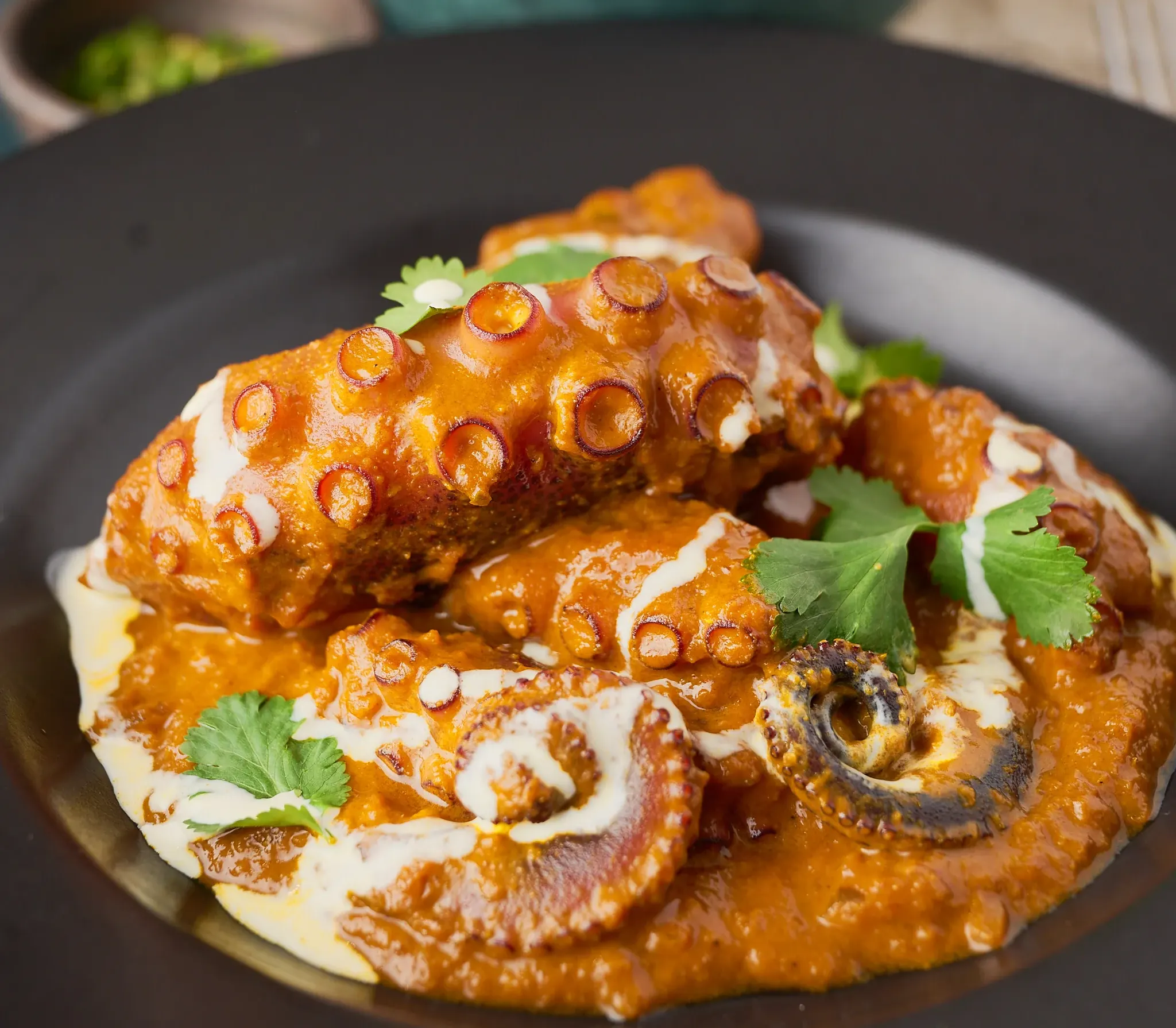
    Pweza wa nazi is a staple of Swahili coastal cooking—tender octopus simmered in a gently spiced coconut milk sauce. Common across Zanzibar and Kenya’s coast, it’s rich without being heavy, with layers of garlic, ginger, turmeric, and just enough chili to give it depth. Served with rice or chapati, it’s a dish that captures the Indian Ocean in every bite.

    A popular variation is mchuzi wa pweza, where the octopus is stewed in a tomato-based sauce instead of coconut milk. This version leans spicier and tangier, often with notes of pili pili or tamarind, and is especially common around the Kenyan coast. Both dishes speak to the region’s love of seafood—and the Swahili knack for coaxing deep flavor out of simple, fresh ingredients.

    Mbaazi wa Nazi: Creamy Comfort in a Bowl

    Pigeon peas in coconut milk is a classic breakfast dish, often eaten with mahamri. It’s warm, mild, and protein-packed—a perfect start to a busy day. The peas are simmered until tender in a coconut broth seasoned with onions, salt, and sometimes curry leaves.

    This is Swahili cooking at its most nurturing: humble, satisfying, and deeply tied to domestic life.

    Samaki wa Kupaka: Flame-Kissed Fish With Coconut and Tamarind

    Swahili Food Fish in Coconut Sauce Samaki wa Kupaka
    Samaki wa Kupaka aka. Fish in Coconut Sauce – one of the most-famed traditional Swahili dishes

    This dish literally means “fish for slathering,” and that’s exactly what happens. Samaki wa kupaka begins with a whole fish—usually snapper or kingfish—grilled over open flames until the skin crisps and the flesh begins to flake. Then comes the signature move: the fish is generously “pasted” with a thick, fragrant sauce made from coconut milk, lime juice, tamarind, garlic, and chili, often brushed on mid-grill and again just before serving.

    The flavor is bold and layered—smoky from the char, creamy from the coconut, bright with citrus, and just spicy enough to leave a tingle. It’s a balance of fire and finesse, with each element enhancing the next. Typically served with plain rice, wali wa nazi (coconut rice), or chapati, samaki wa kupaka is one of the most definitive and craveable expressions of Swahili coastal cooking.

    Kaimati and Vitumbua: Sweet Treats With Street Cred

    Vitumbua, rice flour pancakes with a crispy edge and soft center, are spiced with cardamom and coconut and cooked on cast-iron pans. Kaimati, on the other hand, are sweet, fried dough balls soaked in syrup and often sold during Ramadan or festive seasons.

    These snacks are everywhere—on school break tables, at weddings, in open-air markets—and are essential to the full Swahili food experience.

    Urojo: Chaos in a Bowl, Zanzibar’s Street Food Crown Jewel

    Part soup, part salad, and fully glorious, urojo is a uniquely Zanzibari creation. A thin, spicy turmeric broth forms the base, into which vendors pile potatoes, crispy bhajias, boiled eggs, mango chutney, coconut sauce, fried cassava chips, and a squeeze of lime.

    It sounds like too much. It is. And yet, somehow, it all works—creating a dish that’s savory, tangy, crunchy, soft, and unforgettable.

    Influences That Shaped Swahili Cuisine

    Swahili coast dhow culture tradition

    Swahili food, like the people who created it, is shaped by centuries of movement, trade, and cultural exchange along the Indian Ocean coast. Spanning more than a thousand years of interaction with Arabs, Persians, Indians, and Europeans, it has absorbed diverse flavors and techniques into a uniquely East African identity. No other African culinary tradition integrates such a global array of influences while remaining so deeply rooted in local ingredients, culture, and everyday life.

    Arab and Persian Spice Routes

    Arab traders were among the earliest foreign arrivals on the East African coast, bringing not just Islam, but a wide variety of spices and food techniques. Cardamom, cinnamon, cloves, dried fruits, and dates became staples. Techniques like slow-cooking meat with rice and using fruit in savory dishes trace back to the Arabian Peninsula.

    Indian Migrant Waves

    Swahili food samosas East Africa

    From as early as the 10th century, and more significantly during the colonial period, Indian communities added a new layer of complexity to Swahili cuisine. They brought with them biryani, chapatis, samosas, spiced lentil dishes, and a deep mastery of masala blending and frying techniques. These additions not only expanded the Swahili kitchen but also reshaped its flavor profiles—introducing new ways to combine heat, aroma, and texture. Today, Indian influence is so fully absorbed it’s hard to imagine Swahili food without it; dishes like pilau, bhajias, and even spiced teas carry unmistakable Indian DNA, woven seamlessly into the coastal culinary fabric.

    Portuguese and European Contributions

    The Portuguese brought new crops to the region: maize, cassava, tomatoes, and chili peppers. These ingredients were absorbed into the local diet and have become essential in many Swahili dishes. In places like northern Mozambique, Portuguese cooking styles—especially in grilling and sauce-making—continue to shape the Swahili table.

    The Bantu Foundation

    At the heart of Swahili cuisine is Bantu culinary tradition: plantains, yams, millet, cassava, leafy greens, and the original fire-based stews. This foundation provides the earthy balance to all the spices and imported techniques that arrived later. Without it, Swahili food would be flashy but hollow. With it, the cuisine has both soul and substance.

    Swahili Cuisine Reimagined: Heritage Dishes Meet Upscale Dining

    Tradition-inspired Swahili fine dining at Emerson in Zanzibar
    Tradition-inspired Swahili fine dining at Emerson in Zanzibar

    A new wave of culinary consciousness is transforming Swahili food from street stalls and family kitchens into the spotlight of Africa’s fine-dining scene. Across the continent, chefs are treating traditional dishes with the same reverence and precision usually reserved for French sauces or Italian pastas. What was once considered humble, everyday fare is now being reimagined through tasting menus, seasonal concepts, and curated storytelling—without losing the essence of the original. This shift isn’t just about presentation; it’s a reclaiming of heritage and a celebration of African flavor on its own terms.

    Embark in Nairobi: A Story on Every Plate

    In Nairobi, Embark offers a set-menu fine dining experience that digs deep into East African food memory. Here, kisamvu (cassava leaves) is slow-cooked with intention, mbuzi choma is aged and plated with artistry, and Swahili classics are reinterpreted for the modern palate—without losing their roots.

    The focus isn’t fusion—it’s elevation through technique and respect for heritage.

    Emerson on Hurumzi: Stone Town with a View and a Mission

    Atop one of Zanzibar’s oldest hotels, Emerson on Hurumzi curates nightly Swahili tasting menus paired with poetry, taarab music, and panoramic views of Stone Town. The coconut, clove, and tamarind flavors remain bold—but are presented with balance and elegance.

    This is tradition, dressed up for the world stage.

    A Wider Trend: Local Food With Luxury Legs

    From Marcus Addis in Ethiopia to 4Roomed eKasi Culture in South Africa, African chefs are reclaiming traditional foodways and presenting them with the dignity they’ve long deserved. The message is clear: Swahili food, and African cuisine at large, belongs in the global fine-dining conversation—not as novelty, but as equal.

    Swahili Food on the Global Table

    The Swahili diaspora is small but mighty. Across the UK, U.S., Gulf States, and parts of Europe, families have carried their food traditions abroad—often adapting recipes to fit local ingredients while keeping the soul intact.

    In Washington D.C., Swahili Village serves biryani, samaki, and ugali to a growing fanbase of East Africans and curious foodies. London has seen Swahili supper clubs pop up, while in Dubai and Doha, street-food style cafés sell mshikaki and vitumbua next to shawarma stands.

    And with the rise of global culinary tourism, more travelers are seeking out authentic food experiences in places like Zanzibar, Lamu, and Mombasa. Swahili food is no longer hidden—it’s rising.

    From Couscous to Jollof: Swahili Food in Africa’s Culinary Mosaic

    Swahili cuisine is one of Africa’s most distinct culinary traditions, and while it shares some elements with other regional cuisines, its uniqueness stands out.

    West African Cuisine

    West African food is bold, oily, and spicy—palm oil, hot peppers, fermented locust beans, and heavy starches dominate the plate. Both West and East Africa love rice and stews, but Swahili food leans lighter, more aromatic, and coconut-based rather than oil-heavy.

    North African Cuisine

    North African cooking—think Morocco, Tunisia, Algeria—is also spice-driven, with shared ingredients like cinnamon and cloves. But where North Africans build around couscous, harissa, and dried fruits, Swahili dishes rely more on rice, fresh herbs, coconut, and seafood.

    Southern African Cuisine

    Southern African food, especially in countries like South Africa, Zimbabwe, and Botswana, focuses on maize, grilled meats, and dairy. It’s more meat-centric and less spice-forward. Swahili food, by contrast, uses seafood liberally and has stronger external flavor influences from Indian Ocean trade.

    Swahili Food – a Journey Worth Tasting

    Swahili food is the story of a coast told through flavor. It’s rice and seafood, fire and spice, memory and celebration. Whether you’re dipping a piece of mahamri into creamy pigeon peas in Mombasa or sipping spiced tea after a rooftop feast in Zanzibar, you’re not just eating—you’re participating in something ancient, ongoing, and deliciously human.

    So come hungry, come curious. Swahili food is waiting—and the pot is still warm.

    Culinary Captivation – More about Swahili Food and Culture

  • The Untamed Majesty of the Aberdares: Hiking, Wildlife, and Mountain Mystique in Kenya’s Highlands

    The Untamed Majesty of the Aberdares: Hiking, Wildlife, and Mountain Mystique in Kenya’s Highlands

    There are places in Kenya where nature feels like it’s still writing its own story—raw, wild, and beautifully unfiltered. The Aberdare Range, tucked quietly in the central highlands of Kenya, is one such place. Often overshadowed by the fame of the Maasai Mara or Mount Kenya, the Aberdares remain a secret whispered among those who love solitude, steep climbs, and the kind of wildlife encounters that feel entirely unscripted.

    For hiking enthusiasts, this place is a paradise of moss-draped forests, misty moorlands, and craggy peaks. Wildlife lovers will find themselves in quiet awe of forest elephants crashing through the underbrush or elusive leopards padding silently along muddy trails. And for those seeking off-the-beaten-track adventure, the Aberdares offer raw terrain, hidden waterfalls, and paths that rarely meet another bootprint.

    This is not just a hike. It’s an immersion into a world where forest and mountain meet sky—and where every trail seems to lead somewhere wild.

    Geography and Climate of the Aberdares

    From Bamboo Zones to Afro-Alpine Heath

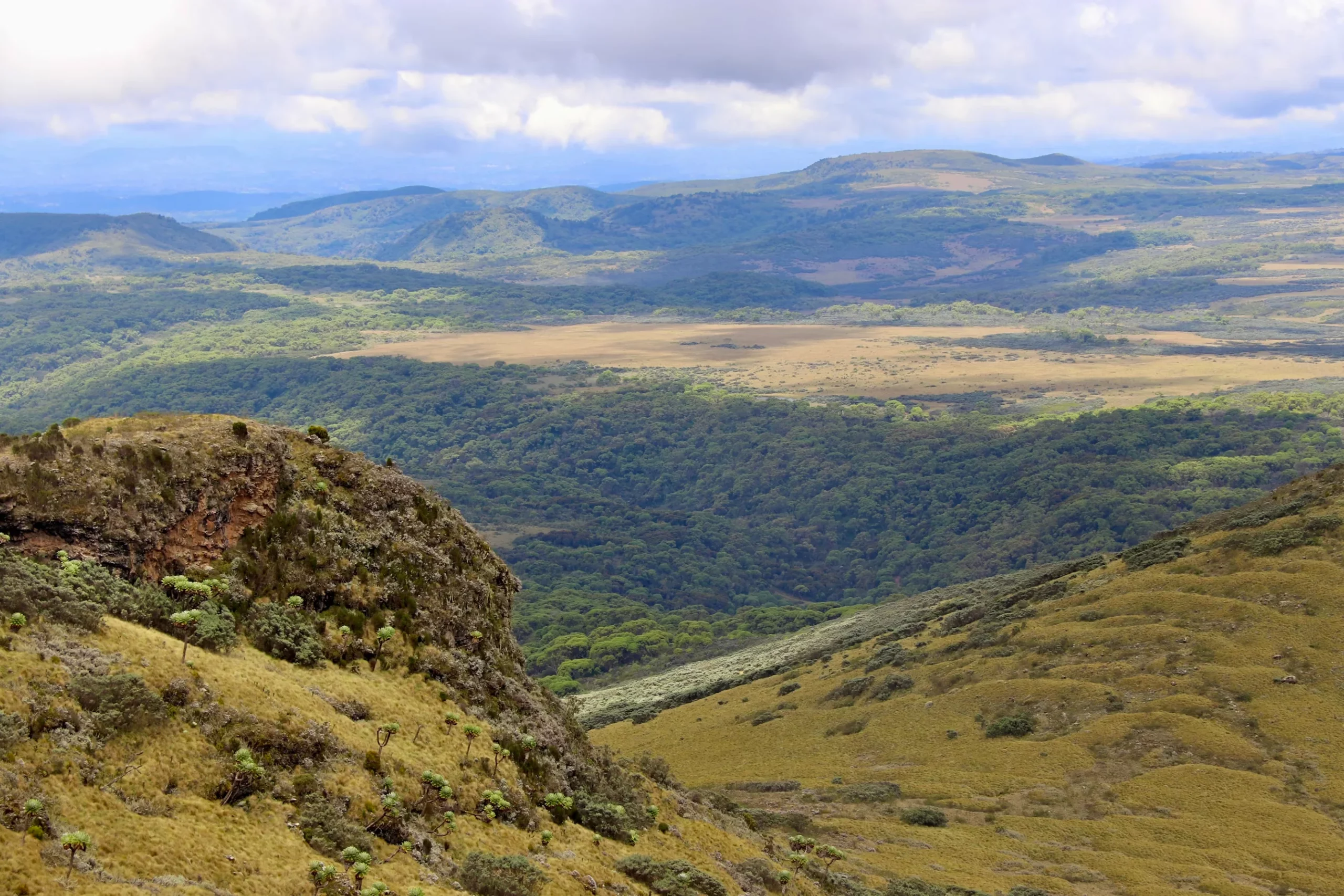
    Stretching over 160 kilometers north to south, the Aberdare Range forms a natural spine running parallel to the eastern escarpment of the Great Rift Valley. Altitudes soar from 2,100 meters to over 4,000 meters, peaking at Mount Satima in the north and Mount Kinangop in the south.

    What makes the Aberdares special isn’t just the elevation—it’s the astonishing shift in ecosystems. Hike through dense montane forests filled with cedar and podo trees, break into bamboo thickets that clatter with every gust of wind, and finally emerge into the surreal world of afro-alpine moorlands, where giant lobelias and senecios dominate the skyline like something out of a prehistoric dream.

    Rainfall Patterns and Trekking Seasons

    This is one of the wettest parts of Kenya—no surprise given the thick, misty vegetation and the constant roar of waterfalls. The long rains (March to May) and short rains (October to December) can turn trails into muddy obstacle courses, making June to September and January to early March the best windows for hiking the Aberdares.

    Just don’t let a little drizzle scare you off. The moody weather only adds to the magic, especially when the fog rolls in low over the forest canopy.

    Temperature Swings: Preparing for the Highlands

    Expect temperature shifts as dramatic as the landscapes. Days can be warm and pleasant, but nights in the high moorlands often dip below freezing. A golden rule here? Always carry layered clothing, including a waterproof jacket, fleece, and gloves. Trust us, nothing ruins a sunrise view from Satima like numb fingers.

    Epic Hikes for Every Adventurer

    Summit Challenges: Nelion and Batian (Just Kidding… or Not)

    Hold up—we’re not climbing Mount Kenya today, but the Aberdares have summit challenges of their own. The highest point here is Mount Satima (4,001 meters), affectionately known as the “Dragon’s Teeth” due to the serrated volcanic rock formations scattered across its upper ridges.

    While it doesn’t require ropes like Mount Kenya’s technical peaks, Satima’s high-altitude slog is nothing to scoff at. The trails are wild, the wind is real, and the views—overlooking the Rift Valley and sometimes even Mount Kenya itself—are absolutely worth the sweat.

    You’ll want a local guide for this one, both for navigation and for their uncanny ability to spot wildlife you’d otherwise miss.

    Mount Satima Circuit: Scott’s View and Beyond

    The Satima Circuit is a loop trail that gives you a taste of everything—open grassland, dense forest, boggy moorland, and jagged rock spires. One of the highlights is Scott’s View, allegedly a favorite lookout for colonial explorers (and now, of Instagram hikers).

    The circuit can be done as a day hike or an overnight trek depending on pace and appetite for elevation gain. Bonus: fewer hikers means more chances to bump into grazing buffalo or warthog families trotting across the moor.

    Karuru Falls Trail: Jungle Waterfall Trek

    Aberdares Karuru Falls Kenya

    If you’ve ever dreamed of hiking through a rainforest to stand at the edge of a 273-meter drop, the Karuru Falls trail will make your bucket list blush. This is one of the highest waterfalls in Kenya, plunging in three distinct tiers through thick forest and deep gorges.

    The trailhead begins near Mutubio Gate and winds through mossy paths, twisted fig trees, and wet red earth. Along the way, keep your eyes open for giant forest hogs, black-and-white colobus monkeys, and shy bushbucks lurking just out of sight.

    This isn’t just a hike—it’s a full-blown rainforest expedition with a splash ending.

    Lengetia Track: Into the Aberdare Caves

    The Lengetia Track is something of a local legend among Aberdare lovers. It’s long, winding, and absolutely spectacular. One of its most fascinating detours is a hidden cave where Jomo Kenyatta and fellow Mau Mau rebels are said to have sheltered during the independence struggle.

    The trail slices through dense undergrowth and opens into a clearing where, if you’re lucky, elephants may be bathing in the nearby river. The sense of history is as palpable as the damp earth beneath your boots.

    Bring a flashlight and a sense of awe.

    Lesser-Known Pathways: Mweiga Ridge and Gura River

    Beyond the well-known trails lie countless unnamed ridgelines, forgotten paths, and animal tracks that could double as hiking routes for the bold-hearted. Mweiga Ridge offers panoramic vistas of the Laikipia Plateau, while the Gura River Valley is a botanical playground with untamed flora and icy streams.

    These aren’t marked on most maps, so a guide is essential. But that’s half the fun, right? Walking where few have trod and seeing the Aberdares in their rawest form.

    Off-the-Beaten-Path Wildlife Encounters

    Bongo Antelopes Aberdares Kenya

    Rhino Tracking in Solio Game Reserve

    Though not technically inside Aberdare National Park, Solio Game Reserve sits snugly on its eastern flanks and serves as a critical rhino sanctuary. This private reserve is a paradise for wildlife buffs, especially those obsessed with the Big Five—minus the crowds of more famous parks.

    Here, spotting white rhinos feels almost cinematic. You might catch a crash of them grazing calmly near acacia trees while buffalo and zebras mill about in the background. A walking safari (with an armed ranger) offers an adrenaline-pumping chance to track these prehistoric-looking mammals on foot—an intimate, grounding experience no jeep ride can match.

    Elephant Herds along the Ewaso Nyiro

    The Ewaso Nyiro River snakes along the base of the range, carving out lush pockets of green where animals gather, especially in dry seasons. Aberdare’s forest elephants—smaller, darker, and shier than their savanna cousins—are a rare treat to witness.

    They tend to appear silently, ghost-like among the trees, then vanish just as quickly into the undergrowth. If you spot fresh dung or hear that low rumble in the distance, stay put and quiet. The bush might be about to reveal something unforgettable.

    Night Safaris: Spotlighting Genets, Civets and Bush Babies

    Aberdare National Park is one of the few places in Kenya where night game drives are allowed. And oh, are they worth it. Forget lions (although they do prowl here)—nighttime is when nocturnal creatures step into the spotlight.

    With a red-filtered beam, you might catch the glowing eyes of civets, the curious twitch of a white-tailed mongoose, or the eerie shriek of a bush baby leaping through branches. Every bend in the road feels like it holds a secret, and usually, it does.

    You haven’t really explored the Aberdares until you’ve seen its forest life in reverse—when the day’s hikers are asleep and the wild turns electric.

    Birding Hotspots: From Endemics to Migrants

    You don’t have to be a birder to lose your mind over the avian life in these highlands. The Aberdares boast over 290 species of birds, including several endemic and threatened species.

    Look out for the brilliant Hartlaub’s turaco, with its crimson underwings and comic calls, or the Abyssinian crimsonwing, a shy gem of the forest floor. Raptors ride thermals above the moorland, while sunbirds hover like tiny, aggressive helicopters in the highland flowers.

    Bring binoculars—or better yet, a long lens and a daypack full of patience. The Aberdares reward the watchful.

    Hidden Gems Beyond the Trails

    Secret Pools and Hidden Waterfalls

    Thomson Falls Kenya Aberdares Nyahururu

    Everyone knows about Karuru and Chania Falls, but the real treasures are the unnamed cascades tucked deep into the hills. These hidden waterfalls, some only reachable via scrambling down animal tracks, often end in crystal-clear plunge pools shrouded in ferns and forest mist.

    The kind of spots where you shed your boots, wade into bone-chilling water, and momentarily forget every headline that ever stressed you out.

    Ask local guides—many rangers and community trackers know them by heart and will even show you the best boulders for sunbathing afterward.

    Forgotten Settlements: Old Outposts and Ranger Stations

    The Aberdares are steeped in history. Not just colonial or Mau Mau-era legacies, but whispers of Swahili caravans, ancient Kikuyu myths, and European explorers who got lost, stayed too long, or fell in love with the highlands and never left.

    Old ranger stations, abandoned fire lookout towers, and colonial cottages sit forgotten in the bush—sometimes repurposed, sometimes overrun by vines. One lodge claims Queen Elizabeth learned of her ascension to the throne while staying in a treetop hideout here.

    Whether fact or fable, these crumbling remnants add eerie charm to your exploration.

    Rare Flora: Giant Lobelias and Senecio Stacking

    The Aberdares are a botanical wonderland, especially once you climb beyond the forest line into the moorlands. Here, the scenery shifts dramatically. Think fewer trees, more sky, and bizarre plant life that looks straight out of Jurassic Park.

    The giant lobelias, with their thick leaves and frost-resistant sap, and the towering senecios, which look like palm trees that got lost and adapted to high-altitude life, dominate this zone. These plants are uniquely adapted to the Aberdares’ dramatic temperature shifts—proof that life thrives even in extremes.

    It’s a dreamscape for plant lovers, macro photographers, or anyone who’s ever wanted to walk through a landscape that doesn’t quite feel of this Earth.

    Where to Stay: From Canopy Tents to Park Lodges

    Treetops Safari Lodge: A Royal Connection

    No mention of accommodation in the Aberdares is complete without Treetops—a rustic lodge built into the forest canopy and famous as the place where a young Princess Elizabeth became Queen Elizabeth II in 1952.

    You won’t find a lot of marble bathtubs here, but you will get up-close wildlife viewing from your balcony, and a sense of sleeping inside nature’s very lungs. Buffalo sometimes pass under the stilts at night. Leopards occasionally appear at the salt lick. Bring a camera and an open mind.

    Alpine Garrison Camp: Rustic Comfort at Altitude

    For something a little more rugged but no less magical, the Alpine Garrison Camp sits at the edge of the moorland and caters to hikers who want to stay as close to the action as possible. Think basic wooden cabins, blazing fire pits, and the kind of silence that only altitude can deliver.

    Waking up here to the call of the Aberdare francolin and the sun breaking through clouds over Mount Satima is the kind of morning that makes you consider quitting your job forever. (Don’t, but maybe extend your stay.)

    Eco-Camps and Community-Run Homestays

    Several community conservancies and private eco-lodges have sprung up on the Aberdares’ periphery in recent years, offering a more sustainable and culturally rich way to stay. These camps offer guided hikes, local meals, and the kind of storytelling that brings the forest’s legends to life.

    They also funnel tourism revenue directly into conservation efforts and local livelihoods—so you can rest easy knowing your visit has impact beyond your backpack.

    Wild-Sleep Experiences: Night under the Stars

    Feeling brave? Some licensed operators now offer fly-camping in Aberdare’s outer zones—setting up minimalist tents under the stars, with just a guide, a cook, and the occasional grunt of a buffalo to keep you company.

    It’s not for everyone, but for true adventurers, there’s something profoundly humbling about sleeping in the wilderness, with nothing but canvas between you and the mountain wind.

    Logistics and Practical Tips

    Permits, Park Fees and Hiring a Guide

    Let’s talk brass tacks. Aberdare National Park is managed by the Kenya Wildlife Service (KWS), which means entry requires a valid permit. As of 2025, park fees for non-resident adults sit at around USD $60 per day, with discounts for East African citizens and residents. Additional fees may apply if you’re camping, using a vehicle, or entering via less-frequented gates.

    Local guides and rangers are available at most entry points, and hiring one is highly recommended—not just for safety, but for navigating the dense forests, unpredictable weather, and those tempting-but-misleading elephant trails.

    Some trails require advance booking or special permits (especially night drives and fly-camping). Reach out to KWS or a trusted local outfitter before your trip.

    Packing List: Gear for Highlands and Rainforest

    Packing for the Aberdares is like preparing for a wild wedding between Mount Kenya and the Amazon. Here’s what makes the invite list:

    • Sturdy waterproof hiking boots (it gets muddy, quickly)
    • Layered clothing for altitude variation (it’s hot in the valleys, freezing at 3,800 meters)
    • Rain gear: poncho, waterproof backpack cover, dry bags
    • High-protein snacks—cliff bars, nuts, dried mango
    • Water bottles or a hydration pack (3L minimum/day)
    • Binoculars and camera with a zoom lens
    • Insect repellent, especially at lower altitudes
    • Headlamp or flashlight with extra batteries (especially for night hikes or power outages)
    • Power bank: There’s no Wi-Fi where you’re going, but your camera will thank you

    Don’t forget to pack your curiosity. It might be your most useful tool of all.

    The Aberdares have multiple gates—Wandare, Kiandongoro, Mutubio, Shamata, and Rhino Gate, among others. Some are better suited to hikers, while others favor game drives or lodge access.

    Most park gates open around 6:00 a.m. and close by 6:00 p.m.. Plan your itinerary accordingly. If you’re on foot and you think you’ll finish late, coordinate with the rangers in advance. No one wants to be the person who knocks on a locked gate in the pitch-dark forest.

    Also, note that some areas require 4×4 vehicles, especially during or after rain. Don’t test the limits of your rental sedan. It won’t end well.

    Health Precautions: Altitude, Malaria and First Aid

    The Aberdares are generally malaria-free due to the elevation, but mosquitoes can still find you at lower levels, so pack repellent just in case. That said, your bigger challenge will be altitude sickness if you’re trekking above 3,500 meters.

    Start slow, stay hydrated, and if you feel dizzy or nauseous, descend and rest. It’s a hike, not a hero’s journey.

    Also pack a basic first-aid kit with blister pads, antiseptic, antihistamines, and meds for stomach upsets (because trail meals don’t always love you back).

    If you’re going deep into the park, a satellite phone or radio may not be overkill—it could be a lifeline.

    Conservation, Community and the Future

    Aberdare Conservation Initiatives

    The Aberdares are a critical water catchment area—a “water tower” that feeds several of Kenya’s major rivers. This lush system is vital for Nairobi’s water supply, as well as farming and pastoralist communities downstream.

    The region is protected, but still threatened by illegal logging, poaching, and human encroachment. Conservation groups like the Rhino Ark Charitable Trust have played a huge role in safeguarding it, including fencing major portions to reduce human-wildlife conflict.

    Your entry fees and guided tours directly support this work—another reason to tread lightly and spend mindfully.

    How Your Visit Supports Local Communities

    Tourism, when done responsibly, can be a lifeline for the people living on the fringes of the park. By choosing community-run lodges, hiring local guides, and buying locally made crafts, you’re putting money into the hands of people who call the Aberdares home.

    Many of these communities are guardians of the land, with generations of knowledge about the plants, animals, and sacred places you’ll never find in a guidebook.

    Travelers who listen more than they speak tend to leave with better stories anyway.

    Responsible Travel: Leave No Trace and Ethical Wildlife Viewing

    The Aberdares aren’t just pretty—they’re fragile. Stick to marked trails where possible. Don’t feed animals, chase birds for the perfect shot, or take “souvenirs” (that fern doesn’t want to live in your backpack).

    If you’re wild-camping, bury waste properly, minimize your fire footprint, and pack out every scrap of litter—including what others may have left behind. Be a hiking legend, not a hiking problem.

    Remember: You’re not conquering the mountain—you’re visiting its house.

    Sample 5-Day Itinerary for the Ultimate Aberdares Adventure

    Day 1: Karuru Falls and Rainforest Camp

    Arrive at Mutubio Gate. Spend the morning hiking to Karuru Falls, marvel at its triple plunge, then set up camp at a forest site nearby. Night sounds include hyrax calls and rustling tree canopies.

    Day 2: Rhino Tracking and Community Visit

    Early transfer to Solio Reserve for a morning of rhino tracking. Afternoon spent visiting a local village or conservancy on the eastern edge. Optional storytelling session around a fire if you’re staying in a community camp.

    Day 3: Summit Push on Satima or Lengetia Track

    Trek to Mount Satima, the range’s highest point, via the Dragon’s Teeth route. Expect moorland madness, surreal scenery, and if lucky, a view stretching all the way to Mount Kenya. Camp on the moorland or stay at Alpine Garrison.

    Day 4: Night Safari and Canopy Walk

    Head back to the forest belt for a short hike and check into a lodge like Treetops. Join a night game drive to spot genets, porcupines, and night-jumping bush babies. Finish with warm cocoa under the stars.

    Day 5: Birding Marathon and Departure

    One last hurrah with a morning birding hike—bring a checklist and binoculars. Then it’s time to pack up, say goodbye to the baboons at the gate, and head back to civilization with a backpack full of memories (and probably mud).

    Where the Trail Ends, the Magic Begins

    The Aberdares aren’t just a destination—they’re a revelation. Here, mountains rise without fanfare, forests breathe history, and wildlife still moves to rhythms older than the roads that try to reach them.

    For hiking lovers, nature seekers, offbeat adventurers, and anyone tired of following dusty safari convoys, the Aberdares offer a wilder, deeper, quieter kind of magic.

    So lace up your boots, shoulder your pack, and follow the mist. The mountains are waiting—and they don’t mind if you take your time.

    More about the Aberdares

  • 10 Unforgettable Secrets of Rusinga Island: Discover the Hidden Magic of Africa’s Best-Kept Gem

    10 Unforgettable Secrets of Rusinga Island: Discover the Hidden Magic of Africa’s Best-Kept Gem

    Nestled on the tranquil waters of Lake Victoria, Rusinga Island is one of Kenya’s best-kept secrets. Spanning roughly 65 square kilometers and home to a close-knit community of 30,000 to 50,000 residents, this island is steeped in history, culture, and natural splendor. Known for its archaeological significance and fossil discoveries that shed light on early human evolution, Rusinga Island invites travelers to step into a world where ancient heritage meets everyday island life.

    Rusinga Island’s lush landscapes, abundant birdlife, and authentic Swahili traditions create an immersive escape from the well-trodden tourist paths. Here, the gentle rhythms of lake life and the vibrant pulse of local culture offer an experience that is both enriching and deeply relaxing. This journey through Rusinga Island also reveals its unique connection to Lake Victoria—a lifeblood of the region that supports diverse ecosystems and sustains local livelihoods.

    The Allure of Rusinga Island

    A Treasure Trove of History and Culture

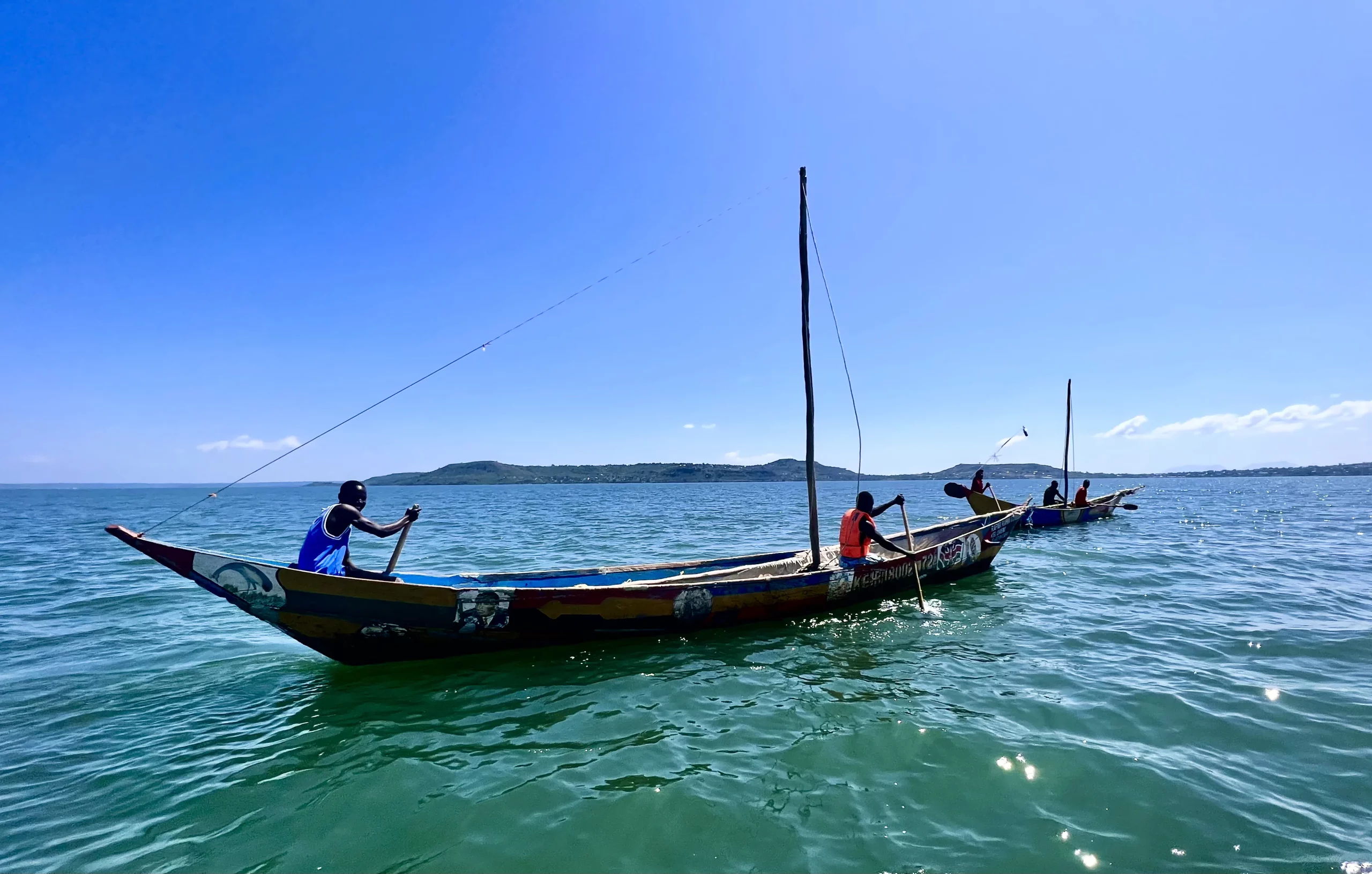
    Lake Victoria Rusinga Island Sailing Boat

    Rusinga Island is more than just a picturesque destination—it’s a living repository of history. The island has garnered attention from archaeologists worldwide, thanks to significant fossil discoveries that have provided insights into early human evolution. Ancient relics and artifacts discovered here stand as silent witnesses to the rich tapestry of human life that has unfolded along the shores of Lake Victoria.

    Local traditions are deeply rooted in the island’s cultural fabric. The residents celebrate their heritage with vibrant music, traditional dances, and a culinary scene that fuses indigenous flavors with influences brought by Arab, Persian, and even European traders over the centuries. This blend of ancient history and living culture creates an atmosphere that is both captivating and authentic.

    Unspoiled Natural Landscapes

    Rusinga Island is renowned for its unspoiled natural beauty. Dense vegetation, scenic wetlands, and open grasslands form a stunning backdrop to the shimmering blue waters of Lake Victoria. The island is a biodiversity hotspot, particularly for bird enthusiasts who flock here to witness a dazzling array of native and migratory species. Early mornings are a symphony of bird calls, offering a peaceful start to the day for anyone exploring the island’s winding trails or serene shores.

    The island’s lush environment is complemented by its tranquil pace of life. Unlike more commercialized destinations, Rusinga remains largely untouched by modern development, providing visitors with an authentic glimpse into a way of life that has endured for generations.

    Discovering Ngodhe Island

    Lake Victoria Ngodhe Island
    The Ngodhe Island near Rusinga Island in Lake Victoria

    Adding another layer to the region’s allure is Ngodhe Island—a nearby gem that enhances the cultural and natural mosaic of Lake Victoria. Often visited on day trips from Rusinga, Ngodhe Island offers additional exploration opportunities with its own unique blend of history and scenic beauty. The island’s quieter pace and rich local lore make it an ideal complement to a broader tour of the Lake Victoria region.

    Getting There and Around

    Reaching Rusinga Island is an adventure in itself. Most visitors arrive via a scenic boat ride from Kisumu or Mbita, enjoying the gentle sway of the lake and panoramic views of the expansive waters of Lake Victoria. Once you land on Rusinga, exploring the island is best done on foot, by bicycle, or with local motorbike rentals.

    Rusinga Island’s strategic location adds to its appeal. It lies within reasonable reach of renowned destinations like the Maasai Mara, with the Kilgoris-Kisii route serving as a vital connection between the inland safari adventures and the tranquil waters of Lake Victoria.

    The Living Legacy of Lake Victoria

    A Vital Ecological Hub

    Lake Victoria, Africa’s largest lake by surface area, is the magnificent setting for Rusinga Island. Covering approximately 68,800 square kilometers, Lake Victoria is more than just a scenic backdrop—it’s a critical ecological and economic resource for the region. The lake supports over 500 species of fish, including the iconic Nile perch and a diverse array of endemic cichlids that sustain local livelihoods and contribute to the region’s culinary traditions.

    A Melting Pot of Cultures

    Lake Victoria has long been a hub of cultural exchange. It has attracted traders, explorers, and settlers from across Africa, the Middle East, and beyond. This exchange of ideas and traditions is evident on Rusinga Island, where the local Swahili culture is interwoven with influences from Arab, Persian, and European encounters. The result is a unique blend of language, food, music, and customs that continues to thrive today.

    Embracing Local Traditions and Cuisine

    Authentic Flavors of the Island

    Omena - Lake Victoria traditional food
    Omena – Lake Victoria traditional food

    Rusinga Island offers a culinary journey that truly reflects its rich cultural heritage and connection to Lake Victoria. The local cuisine is a vibrant blend of traditional Swahili dishes, freshly caught fish, and indigenous ingredients that have sustained the community for generations. One of the island’s signature delicacies is omena—small, dried fish that are typically sautéed with onions, tomatoes, and local spices. Omena is a staple on the island, celebrated for its bold flavor and nutritional value, and it perfectly encapsulates the essence of the local diet.

    In addition to omena, visitors can savor a variety of other authentic dishes. Freshly caught tilapia, often grilled to perfection and served with a side of ugali (a maize-based staple), highlights the bounty of Lake Victoria. Local stews enriched with coconut milk and infused with fragrant spices such as cardamom and cloves provide a comforting taste of Swahili heritage. Seasonal fruits, wild greens, and locally baked chapati add further layers to the island’s gastronomic story. Each meal on Rusinga Island is not only a feast for the taste buds but also a window into the traditions and lifestyles that have evolved along Africa’s largest lake.

    Cultural Celebrations

    Local festivals and cultural events are a cornerstone of Rusinga Island’s community life. These celebrations bring together traditional music, dance, and storytelling, offering an immersive experience into the Swahili way of life. Engaging with the community at these events provides travelers with a deeper understanding of the island’s rich cultural legacy.

    A Warm Welcome

    The genuine warmth and hospitality of the local residents are among Rusinga Island’s greatest treasures. Interactions with the community—whether through casual conversations in local markets or during cultural festivals—offer insights into a lifestyle that has remained remarkably unchanged over centuries. This authentic human connection enriches the travel experience, making every visit to Rusinga more than just a scenic escape.

    Discovering the Archaeological Treasures

    Fossil Discoveries and Ancient Relics

    Rusinga Island has played a significant role in our understanding of early human evolution. The island’s archaeological sites have yielded important fossil discoveries that highlight its historical significance. These findings provide a tangible link to the past, allowing researchers and visitors alike to appreciate the deep roots of human history on the shores of Lake Victoria.

    A Testament to Swahili Heritage

    The archaeological treasures on Rusinga Island also speak to the rich cultural heritage of the Swahili people. The interplay of ancient artifacts and local traditions creates a living narrative that continues to influence the island’s identity today. Every artifact uncovered and every historical site preserved adds depth to the story of Rusinga Island and the broader Swahili coast.

    Practical Travel Tips for Rusinga Island

    Planning Your Visit

    Rusinga Island is an ideal destination for those seeking an off-the-beaten-path adventure. When planning your trip, consider the following tips to ensure a smooth and enriching experience:

    • Boat Travel: Plan your boat ride from Kisumu or Mbita in advance, and be prepared for a scenic journey across Lake Victoria.
    • Local Transportation: Once on the island, travel by foot or consider renting a bicycle or motorbike to explore the quaint roads and local sites.
    • Cash and Connectivity: Carry sufficient cash, as digital payment options may be limited, and expect a relaxed pace of life with less emphasis on modern conveniences.

    Respecting Local Customs

    Understanding and respecting local customs is key to a rewarding visit. Learning a few basic Swahili phrases can enhance interactions with residents and show respect for their culture. Embrace the local way of life—whether it’s savoring traditional dishes, participating in cultural festivals, or simply taking time to listen to local stories—and you’ll find that every moment on Rusinga Island becomes more meaningful.

    What to Pack

    Be sure to pack the essentials for a comfortable island experience:

    • Clothing: Light, breathable clothing suitable for warm days, with a few layers for cooler evenings.
    • Sun Protection: Sunscreen, a hat, and sunglasses are vital to protect against the tropical sun.
    • Insect Repellent: Given the natural environment, insect repellent is a must to safeguard against mosquitoes.
    • Camera/Smartphone: Capture the stunning landscapes, vibrant culture, and memorable moments that define Rusinga Island.

    The Broader Impact of Lake Victoria on Rusinga Island

    Sustaining Life and Culture

    Lake Victoria is not only a stunning natural wonder but also a critical resource that sustains the livelihoods of communities around its shores. The lake supports fishing, agriculture, and trade—activities that have shaped the way of life on Rusinga Island for centuries. The fresh, abundant fish found in local markets are a culinary staple, and the lake’s waters provide both beauty and sustenance to the island’s residents.

    Environmental Challenges and Conservation

    Like many natural ecosystems, Lake Victoria faces environmental challenges such as overfishing, invasive species, and pollution. Efforts are underway to conserve this vital resource, ensuring that the ecological balance of the lake is maintained for future generations. Visitors to Rusinga Island can appreciate the delicate interplay between human activity and nature, and are encouraged to support sustainable practices during their stay.

    The Unique Appeal of Rusinga Island and Ngodhe Island

    A Dual Island Experience

    While Rusinga Island offers a wealth of history, culture, and natural beauty, its nearby neighbor, Ngodhe Island, adds an extra layer of allure to the Lake Victoria experience. Ngodhe Island, often visited as a day-trip destination, provides quieter, less commercialized settings for exploration. Together, these islands offer travelers a comprehensive insight into the region’s rich heritage and unspoiled landscapes.

    A Haven for the Curious Traveler

    For those looking to escape the crowded tourist trails, Rusinga Island and Ngodhe Island provide a peaceful retreat where authentic experiences abound. Whether it’s delving into archaeological sites, enjoying the calm waters of Lake Victoria, or simply soaking in the local culture at a leisurely pace, these islands are perfect for travelers who appreciate both adventure and tranquility.

    Conclusion

    Rusinga Island is a hidden gem on the shores of Lake Victoria that offers a unique blend of ancient history, vibrant culture, and unspoiled natural beauty. From its significant archaeological treasures and the warm embrace of local traditions to the tranquil rhythms of island life and the stunning backdrop of Africa’s largest lake, Rusinga Island promises an unforgettable journey. The island’s rich heritage and connection to the expansive waters of Lake Victoria create an immersive experience that invites travelers to slow down, explore, and truly savor every moment.

    Coupled with its proximity to notable destinations like Maasai Mara via the Kilgoris-Kisii route and the added allure of Ngodhe Island, Rusinga Island stands as a testament to the enduring beauty and cultural wealth of Kenya. Embrace the adventure, respect the local customs, and let the serene landscapes and historical treasures of Rusinga Island ignite your wanderlust—a true off-the-beaten-path escape in one of Africa’s most captivating regions.

    More about Lake Victoria and Rusinga Island

  • Maasai Mara: Breathtaking Wildlife and Memories for Life

    Maasai Mara: Breathtaking Wildlife and Memories for Life

    There are a few places on this planet where nature still roars, struts, stomps, and slithers like it owns the place—and the Maasai Mara is one of them. For first-time Africa travelers, bucket list dreamers, and wildlife enthusiasts who’ve spent years watching National Geographic in HD, nothing quite prepares you for the real thing.

    Welcome to the Maasai Mara, where lions nap like royalty under acacia trees, elephants meander past your 4×4 like old souls, and the ground occasionally trembles with the hooves of a million wildebeest. Whether you’ve got a camera the size of a bazooka or just your phone, every moment in the Mara is one you’ll want to bottle up and take home.

    Where Is the Maasai Mara, and Why Is It So Special?

    Located in the southwest of Kenya, the Maasai Mara National Reserve stretches across 1,510 square kilometers of open savannah, rolling hills, and winding rivers. It’s the northern extension of Tanzania’s Serengeti, and together, they form one of the most stunning continuous wildlife ecosystems on Earth.

    The word “Mara” comes from the local Maasai language, meaning “spotted”—a nod to the scattering of acacia trees and bushes that dapple the landscape. But that’s just the surface. Below the spotted terrain is a wild, beating heart of biodiversity, where game drives bring you face to face with lions, leopards, elephants, cheetahs, hippos, crocodiles, and, of course, the famed Big Five.

    And while you’re here for the animals (we know you are), you’ll also find yourself enchanted by the cultural richness of the Maasai people, the golden glow of the African sunset, and the kind of wide-open spaces that make you forget about your inbox.

    The Great Migration: Earth’s Most Epic Traffic Jam

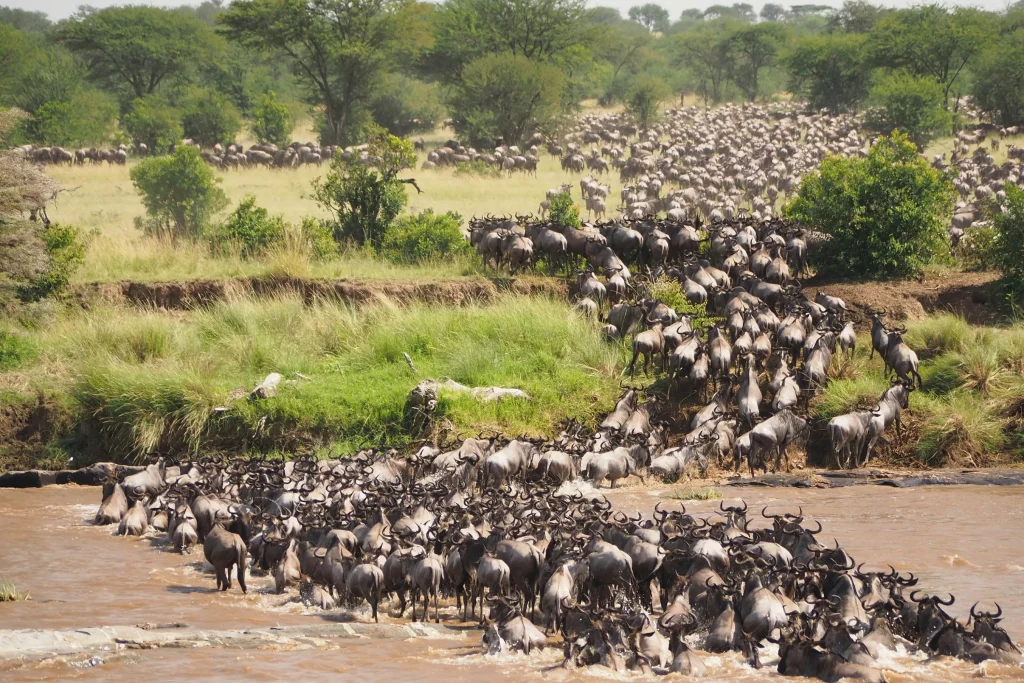
    Maasai Mara Wildebeest Migration Serengeti
    The Wildebeest Migration – an annual spectacle where 1.5 million wildebeest (gnus) migrate between the Maasai Mara and the Serengeti

    If you’ve ever daydreamed about seeing the Great Migration, this is where it all kicks off. Every year from July through October, the Maasai Mara hosts the planet’s largest overland migration. More than 1.3 million wildebeest, 200,000 zebras, and 500,000 gazelles thunder across the Mara River in search of greener grass. And make no mistake—it’s not just the grazers that are on the move.

    The river crossings are raw, dramatic, and absolutely pulse-pounding. Crocodiles lie in wait like prehistoric trapdoors, while lions and leopards hover on the periphery for their chance at a meal. It’s brutal. It’s breathtaking. And it’s the circle of life happening right in front of your dusty safari boots.

    When to Catch the Migration

    If you’re planning your trip around the Great Migration, aim for July through early October. The exact timing can vary slightly year to year depending on rainfall patterns, but August and September are typically peak months for river crossings. Pro tip: book early—this is when the Maasai Mara becomes the safari capital of the universe.

    Game Drives: Your All-Access Pass to the Wild

    Let’s talk about game drives—because this is where the real magic happens. Morning, afternoon, and sometimes night drives are conducted in open-roof 4×4 vehicles with expert guides who somehow spot a cheetah 300 meters away that you still can’t see even with binoculars.

    You’ll spend your days tracking animal prints, following the haunting call of a lion, or watching a tower of giraffes casually cross the horizon like they’re on a catwalk. You’ll see nature in all her moods—gentle, brutal, playful, tense—and you’ll come away with stories for life.

    What You Can Expect to See

    Honestly? Everything. But let’s break it down to the essentials, especially for those who’ve got the Big Five circled in their guidebook.

    Lions: The Kings (and Queens) of the Mara

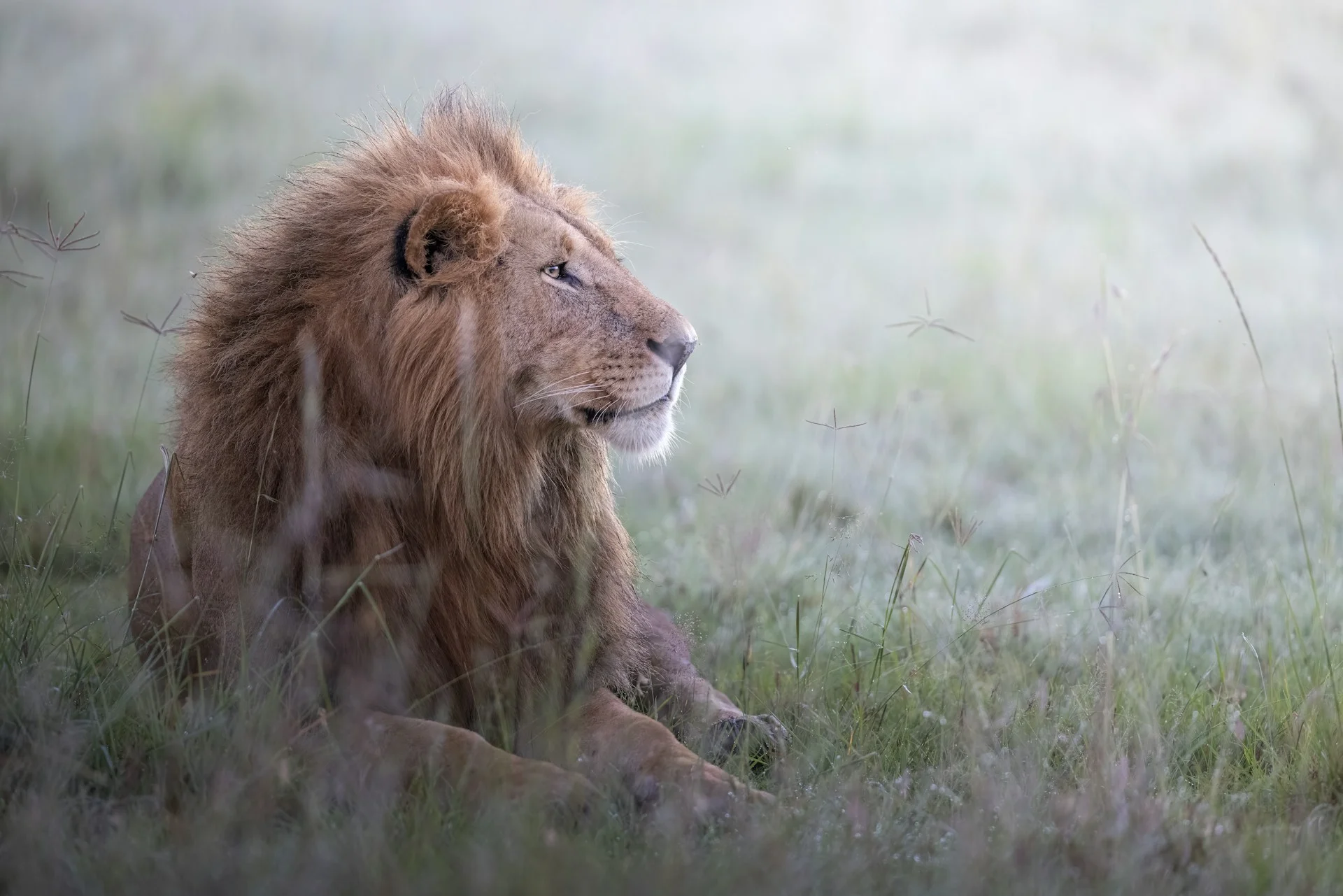
    Maasai Mara Lion Male

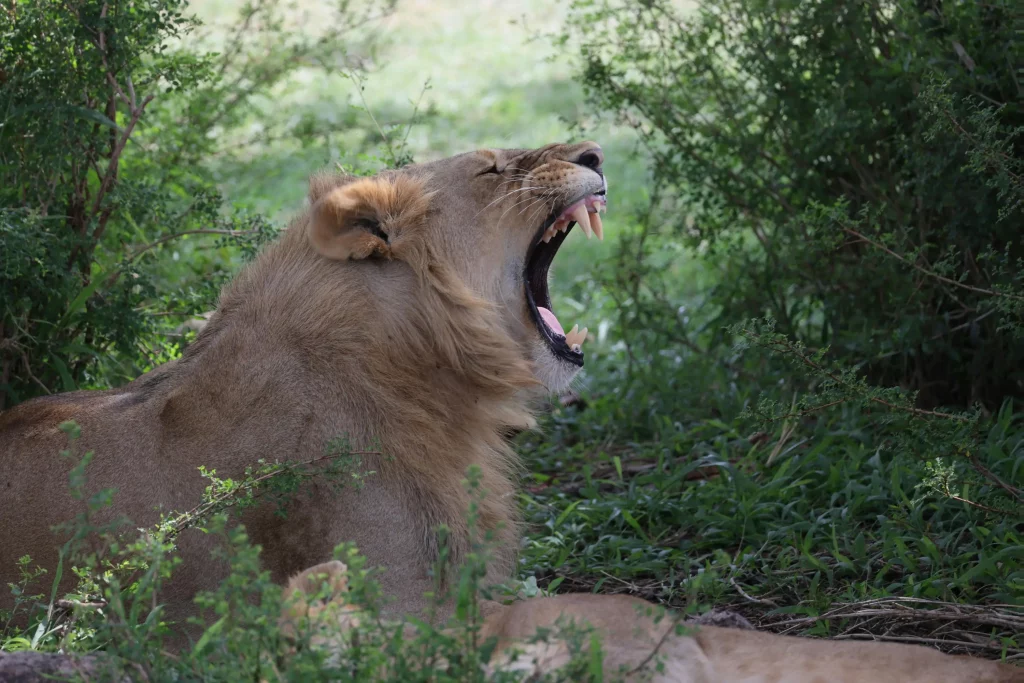
    You’ll hear them before you see them—deep, echoing roars in the pre-dawn stillness. Lions are prolific in the Mara, often found lazing around like they own the place. And honestly, they kind of do. Entire prides sprawl across the open plains, with cubs wrestling, lionesses on the hunt, and males looking impressive even when doing absolutely nothing.

    Leopards: The Elusive Showstoppers

    Leopards are the Mara’s stealthy celebrities—hard to find but unforgettable when spotted. They’re masters of camouflage, often lounging on the branches of sausage trees, tails swaying like lazy pendulums. When you see one, it feels like you’ve just won safari bingo.

    Elephants: Gentle Giants with Swagger

    You’ll never forget your first close-up with an African bush elephant. Their sheer size, the intelligent eyes, and the soft rumble of their footsteps—it’s humbling. In the Maasai Mara, you’ll see elephants in family groups, often with tiny calves waddling behind their mothers. They munch on trees, spray themselves with dust, and sometimes look at you with a mix of curiosity and ancient wisdom.

    Buffaloes: Don’t Mess With These Beasts

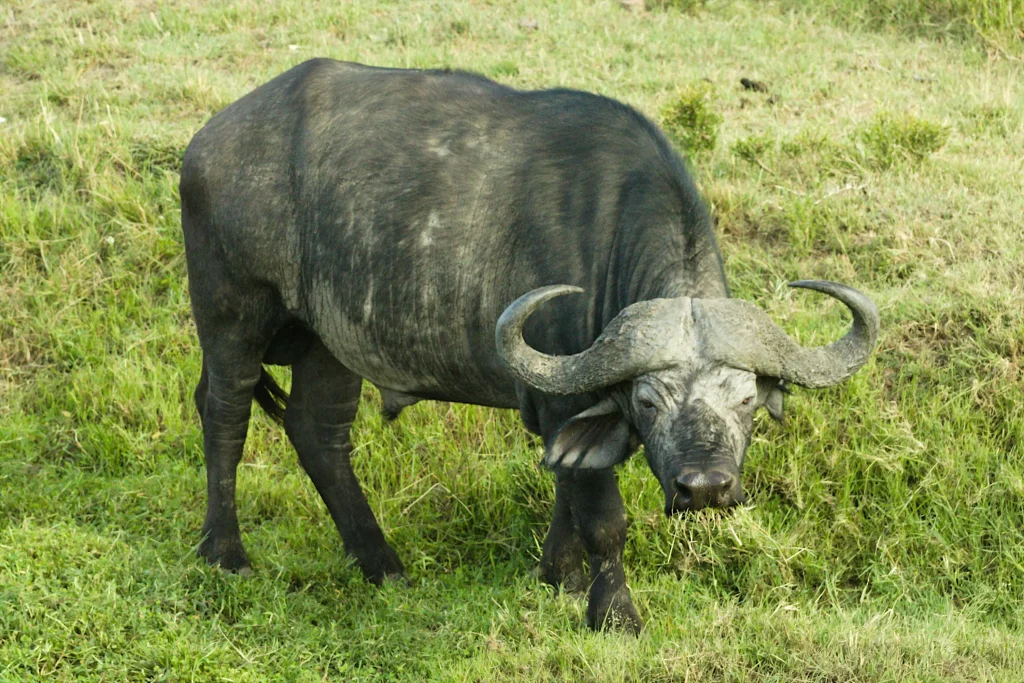
    Massive herds of African buffaloes roam the Mara, their curved horns like natural helmets. They may look like cows with a bad attitude, but they’re one of the most dangerous animals in Africa. Keep your distance, stay in the vehicle, and enjoy the view as they graze and grunt across the savannah.

    Rhinos: The Most Precious Sight

    Rhinos are the most elusive of the Big Five in the Mara, but they’re there—especially in conservancies and protected zones. Black rhinos, with their hooked lips and serious attitude, are critically endangered, so spotting one is a rare privilege and an emotional highlight of any safari.

    Wildlife Beyond the Big Five

    Think the Mara stops at the Big Five? Think again. This is a whole planet of wildlife packed into one reserve.

    Cheetahs: Speed Demons of the Grasslands

    The Maasai Mara is one of the best places in the world to see cheetahs in the wild. Sleek, fast, and elegant, they’re often seen perched on termite mounds, scanning the plains for prey. Watching one take off after an impala is like watching nature’s version of a sports car in action—zero to sixty in three seconds.

    Hippos and Crocodiles: River Royalty

    Down by the Mara and Talek Rivers, you’ll find hippos snorting and yawning in pods, usually submerged up to their eyes in muddy water. They’re cute until they charge—and they can. Meanwhile, crocodiles lurk nearby like armor-plated submarines, mouths agape in the sun, waiting for a moment of weakness from passing wildebeest.

    Giraffes, Hyenas, Jackals, and More

    The Mara is a jungle of personalities. Giraffes tower above the plains, elegantly munching on acacia leaves. Spotted hyenas laugh like lunatics at dusk. Jackals dart through the grass like shadows. Topis stand sentinel on termite mounds. Warthogs run with their tails straight in the air like tiny flags. Every animal here seems to have its own story—and you’re invited to witness it unfold.

    Antelope Abundance

    From twitchy gazelles to regal elands, the antelope population in the Mara is jaw-dropping. You’ll see impalas in ballet-like leaps, dik-diks darting through the underbrush, and the occasional hartebeest with its elongated, puzzled face. It’s a grazer’s paradise—and also a predator’s buffet.

    Birdwatching Bliss: Feathers in Flight

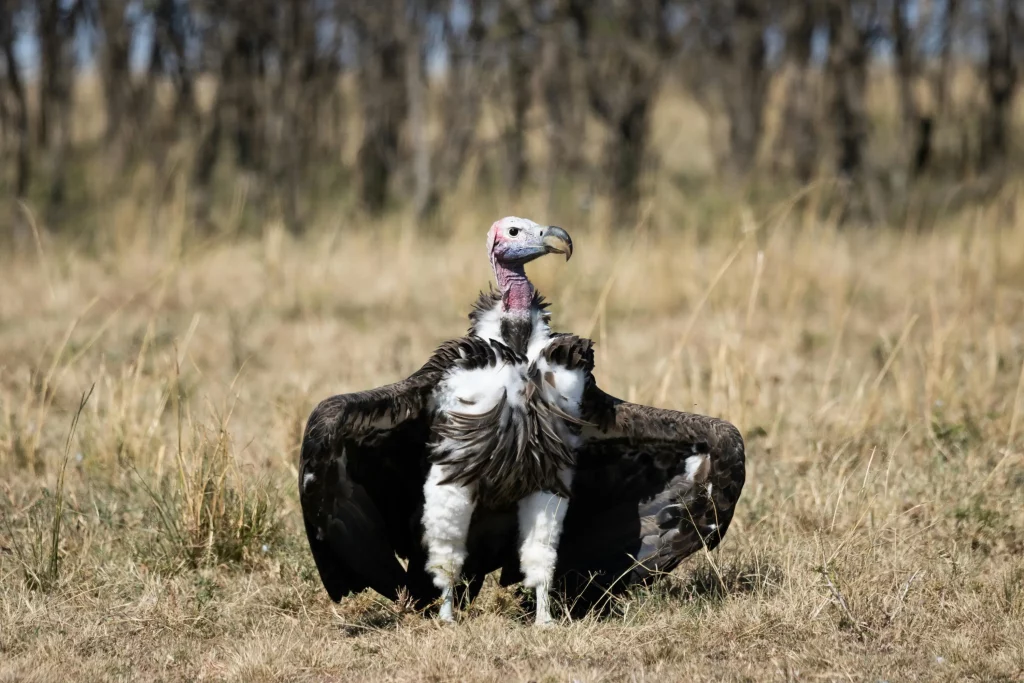
    Maasai Mara Vulture

    If birds are your thing, then the Maasai Mara is your paradise. With over 500 bird species fluttering about, you could spend an entire week just looking skyward.

    Catch sight of the lilac-breasted roller, Kenya’s national bird, its plumage a carnival of colors. Or track down raptors like the bateleur eagle and secretary bird stalking through the grass. From flamingos in seasonal swamps to colorful bee-eaters perched on riverbanks, there’s never a dull moment with binoculars in hand.

    The Mara Triangle: The Wild Side of the Mara

    Let’s zoom in on one of the Mara’s best-kept secrets—the Mara Triangle. Tucked into the westernmost part of the reserve, this 510-square-kilometer wedge of wilderness is bordered by the Mara River and the towering Oloololo Escarpment. It may be smaller than the main reserve, but it punches way above its weight in terms of raw, untamed beauty.

    Why Choose the Mara Triangle?

    If you’re the type of traveler who prefers to sidestep crowds, breathe deeply, and soak in nature with fewer safari vehicles around, the Triangle is your promised land. Managed by the Mara Conservancy, the Triangle is a model for sustainable tourism in Africa. Roads are well-maintained, rangers are vigilant, and the wildlife? Oh, it’s everywhere.

    Game Viewing in the Triangle

    Expect to see everything you’d see in the main reserve—only with fewer humans competing for the same lion photo. Big Five sightings are common, especially lions and elephants. Wildebeest river crossings during the Great Migration often happen right here, with incredible photographic angles from the banks. You’ll also find a high concentration of hippos and crocodiles in the river, and cheetahs who love the open plains for sprinting at full throttle.

    The Oloololo Escarpment: Jurassic Vibes

    The towering escarpment is a dramatic backdrop to this region. At sunrise, it glows amber and gold; at dusk, it turns purple and mysterious. It’s a dream for landscape photographers and anyone who wants to feel like they’ve stepped into the opening scene of a David Attenborough documentary.

    Private Conservancies: The VIP Section of the Wild

    While the main Maasai Mara Reserve gets most of the global fame, the surrounding private conservancies are where things get quietly extraordinary. These are community-owned or privately run areas bordering the reserve where wildlife still roams freely—but with a more exclusive, personalized experience for you.

    Perks of Staying in a Conservancy

    • Fewer Vehicles: Strict limits mean you might have a lion all to yourself.
    • Night Game Drives: Spot nocturnal creatures like aardvarks, civets, and bush babies under the stars.
    • Walking Safaris: Yes, you can ditch the Land Cruiser and explore on foot with expert guides.
    • Cultural Encounters: Many conservancies are co-managed with the Maasai community, so you’re supporting conservation and culture with every stay.

    Some top-notch conservancies include Olare Motorogi, Naboisho, Mara North, and Ol Kinyei. Each offers different landscapes and lodge styles, but all guarantee a more intimate connection with both the land and its wildlife.

    Safari Lodges and Camps: Where the Wild Meets Wow

    Whether you’re a champagne-on-arrival type or a canvas-tent-under-the-stars kind of soul, the Maasai Mara’s got a spot with your name on it. Here’s how to sleep in the wild without giving up comfort—or adventure.

    Angama Mara: Luxury on the Edge

    Angama Mara Luxury Lodge

    Suspended quite literally above the Maasai Mara on the Oloololo Escarpment, Angama Mara is one of the most luxurious safari lodges in East Africa. With floor-to-ceiling glass windows, your room becomes a floating vantage point over the plains. Oh, and it’s the very place where some scenes from Out of Africa were filmed. Fancy that.

    Governors’ Camp: Vintage Vibes and Prime Location

    Governors’ Camp is one of the oldest and most famous safari lodges in Kenya, situated right on the banks of the Mara River. Wake up to hippos grumbling nearby and go to sleep with the call of distant lions. The vibe is classic safari chic with top-tier service and unbeatable game viewing.

    Mara Explorer: Riverside Seclusion

    If you’re after something more intimate, Mara Explorer Camp offers tented elegance right beside the Talek River. Elephants often stroll by camp, and the sounds of the bush provide the best white noise machine nature ever invented.

    Porini Camps: Eco-Friendly Excellence

    Porini’s conservancy-based camps like Porini Lion or Porini Mara offer a more rustic but deeply immersive experience. Solar-powered, plastic-free, and staffed by local Maasai guides, these camps hit the sweet spot between sustainability and comfort.

    Sarova Mara Game Camp: Classic Safari with Family-Friendly Comfort

    Nestled near the Sekenani Gate, Sarova Mara Game Camp offers spacious tents and landscaped gardens in a relaxed, welcoming atmosphere. It’s a comfortable base for game drives with added cultural touches like Maasai performances and nature walks.

    Mara Serena Safari Lodge: Iconic Views from the Mara Triangle

    Perched on a ridge inside the Mara Triangle, Mara Serena combines bold Maasai-inspired design with sweeping views of the Mara River. Its hilltop setting offers instant access to migration crossings and some of the best landscapes in the reserve.

    Saruni Mara: Boutique Seclusion in a Private Conservancy

    Located in the quiet hills of Mara North, Saruni Mara is an intimate lodge with uniquely themed cottages and forest surroundings. With low vehicle traffic and guided walking safaris, it’s ideal for travelers seeking solitude and depth.

    Mahali Mzuri: Ultra-Luxury with a Rock-Star Address

    Set in the Olare Motorogi Conservancy, Mahali Mzuri is Sir Richard Branson’s high-end take on safari living. Futuristic tents, gourmet dining, and first-class service make it a splurge-worthy choice for milestone travelers.

    Budget Safari? No Problem

    Yes, Maasai Mara can be done affordably! There are public campsites within the main reserve, plus mid-range options like Mara Sopa Lodge or Fig Tree Camp that offer solid comfort without the ultra-luxury price tag. Just remember, it’s not about how plush your bed is—it’s about the hippos you hear while lying in it.

    Unique Ways to Explore the Mara

    Safari game drives may be the star attraction, but the Maasai Mara has more tricks up its khaki-colored sleeves. If you’re an experience-seeker with a taste for the extraordinary, try one of these unforgettable additions to your trip.

    Hot Air Balloon Safari: Sky-High Safari Dreams

    Maasai Mara Balloon Flight Safari Views Scenery
    Hot Air Balloon Flight over the Maasai Mara – Safari on Steroids

    Picture this: dawn breaks as your balloon rises silently over the savannah. Below, elephants plod through the mist, giraffes stretch toward breakfast, and wildebeest zigzag across golden grass. It’s surreal, serene, and worth every penny.

    Balloon safaris often end with a champagne breakfast on the plains—a fancy twist on bush life that you’ll remember forever.

    Walking Safaris: Step Into the Wild

    Feeling brave? Swap the safari truck for your own two feet and head out on a guided walking safari in one of the conservancies. You’ll learn how to read animal tracks, identify medicinal plants, and stay very, very quiet when you hear a grunt in the bushes.

    Maasai Mara Maasai Woman Village Tradition Culture
    The Maasai Community is indigenous to the Maasai Mara

    Sundowners: Cheers to the Wild

    A beloved safari tradition, the sundowner is Africa’s answer to happy hour. Your guide finds a scenic spot, sets up a small table, pours a G&T or local Tusker beer, and you sip as the sun dips behind the acacias. You haven’t truly done the Mara until you’ve toasted it with the sky on fire.

    Cultural Visits: Meet the Maasai

    A visit to the Maasai Mara is incomplete without meeting the people who’ve lived in harmony with this land for centuries. Spend time in a Maasai village, learn about their traditions, beadwork, dances, and even how to throw a spear (don’t worry—they’ll keep an eye on you).

    These are not awkward tourist shows—they’re genuine exchanges that support local communities and deepen your connection to the land you’re exploring.

    Best Time to Visit: Seasons of the Mara

    The Maasai Mara is an incredible year-round safari destination, but the timing of your visit can greatly shape your experience depending on your interests, tolerance for crowds, and appetite for adventure.

    From July to October, the Mara transforms into the stage for the Great Migration, offering the most dramatic wildlife spectacles. During these months, the reserve is teeming with life as wildebeest, zebras, and gazelles make their way across the plains—and often across crocodile-infested rivers. This is the busiest time in the Mara, both in terms of wildlife density and visitor numbers, so it’s essential to book your accommodations and permits well in advance.

    December through February brings warm, dry weather and open landscapes with shorter grasses, making it easier to spot predators on the prowl. Big cats like lions, cheetahs, and leopards are especially active during this time, which makes it an excellent season for photographers and those focused on predator behavior.

    If you’re looking for fewer tourists and better deals, March to May marks the Maasai Mara’s long rainy season. The landscape becomes lush and green, migratory birds arrive in droves, and the air feels fresher than ever. While some roads can become muddy and access to certain areas trickier, this season offers a quieter, more contemplative version of the Mara—plus lower rates at many camps and lodges.

    June serves as a transitional month—drying out after the rains but before the migration kicks into high gear. Wildlife viewing is excellent, the grass is still green and beautiful, and the visitor numbers remain moderate. It’s a golden window for travelers who want a balance between game-viewing quality and breathing room.

    In short, the “best” time to visit really depends on what you’re hoping to see and feel—but rest assured, the Mara never disappoints.

    Getting There: The Journey to the Mara

    Let’s face it—your dream safari doesn’t begin when you see your first lion. It starts with figuring out how to actually get to the Maasai Mara. Luckily, whether you’re flying in from Nairobi or bumping your way there by road, the journey is part of the adventure.

    By Air: The Sky’s the Shortcut

    The fastest and easiest way to reach the Maasai Mara is by taking a domestic flight from Nairobi’s Wilson Airport to one of several airstrips near your lodge—think Keekorok, Ol Kiombo, or Mara North. The flight takes about 45 minutes, and you’ll be treated to views of the Rift Valley, Mount Suswa, and endless savannah plains below. Oh, and your plane will probably be tiny—think Indiana Jones, not Boeing 747.

    Most high-end lodges will include transfers from the airstrip to your camp, and you might spot elephants before your welcome drink.

    By Road: For the Rugged at Heart

    If you’re up for a 6–7 hour drive with occasional bone-rattling bumps, driving from Nairobi can be an epic way to see the countryside. You’ll pass through the Great Rift Valley, spot zebras grazing near the road, and catch glimpses of rural Kenyan life. A 4×4 vehicle is highly recommended, especially in the rainy season.

    Pro tip: Break up the journey with a stop at Lake Naivasha or Lake Nakuru for even more birdlife and flamingo-filled views.

    What to Pack for Your Mara Safari

    No, you don’t need a pith helmet or khaki everything (unless you’re going full safari chic). But a few smart packing choices can make your Mara experience infinitely more enjoyable.

    Essentials to Bring

    • Neutral-colored clothing: Greens, tans, and browns help you blend in and avoid attracting insects.
    • Layers: Mornings are crisp, afternoons hot. Think fleece + breathable shirts.
    • Binoculars: Even with a zoom lens, good binoculars are a game-changer.
    • Camera gear: The Maasai Mara is camera candy. Bring extra batteries and memory cards.
    • Sunscreen, hat, sunglasses: The equatorial sun shows no mercy.
    • Insect repellent: Especially important if you’re staying near the river.
    • Comfortable shoes: Even if you’re not walking far, you’ll be standing on game drives.

    Bonus: Leave some room for souvenirs—like beautiful Maasai beadwork or handmade blankets.

    Responsible Travel: Safari with a Conscience

    Maasai Mara Sunset
    Sunset over the Maasai Mara

    Visiting the Maasai Mara isn’t just about ticking off wildlife from a checklist. It’s also an opportunity to be part of a greater story—one of conservation, community support, and respectful exploration.

    Support Conservancies and Community-Owned Lodges

    Choosing to stay in conservancies or locally managed camps directly contributes to wildlife conservation and Maasai community development. Your safari dollars fund anti-poaching patrols, education initiatives, and healthcare for local communities. Pretty powerful for a vacation, right?

    Respect Wildlife Boundaries

    Stay in the vehicle unless your guide says otherwise. Keep your voice down. Don’t feed animals (seriously). And always remember—you’re in their home.

    Reduce Your Environmental Footprint

    Opt for lodges that use solar power, avoid plastic bottles, and follow eco-practices. Carry a reusable water bottle, avoid unnecessary packaging, and pack out what you pack in.

    Creating the Perfect Maasai Mara Itinerary

    There’s no one-size-fits-all when it comes to exploring the Mara, but here’s a sample itinerary that blends game, glam, and grassroots connection.

    Day 1: Arrival and Afternoon Game Drive

    Touch down at your camp, enjoy a welcome drink, and dive straight into the bush with an afternoon game drive. Golden hour is perfect for photography. Sundowners to follow.

    Day 2: Morning Drive, Village Visit, and Evening Drive

    Start early—lions are most active at dawn. After breakfast, visit a Maasai village for a cultural tour. Rest during the heat, then head out for another drive as the bush awakens at dusk.

    Day 3: Hot Air Balloon Safari and Bush Breakfast

    Float over the Mara at sunrise, land to a full English breakfast in the wild. Spend the afternoon relaxing at camp or opt for a walking safari if you’re staying in a conservancy.

    Day 4: Drive to Mara Triangle and Picnic by the River

    Explore the Mara Triangle and enjoy a packed lunch beside the river, hippos grunting nearby. It’s like the Discovery Channel—but you’re in it.

    Day 5: One Last Game Drive and Departure

    Squeeze in one more drive before heading back—because trust us, you won’t want to leave.

    Frequently Asked Questions (Because You Were Probably Wondering)

    Is the Maasai Mara safe to visit?

    Absolutely. The reserve is well-managed and patrolled. Camps and lodges are secure, and guides are expertly trained. As with any destination, follow your guide’s instructions and travel with a trusted operator.

    Can I see all Big Five in one trip?

    Yes—but there are no guarantees. Lions and elephants are easy to spot. Leopards and buffaloes are frequent sightings. Rhinos are rarer but possible, especially in conservancies or protected zones. Stay patient, and keep those binoculars handy.

    How many days do I need in the Mara?

    Three full days is ideal for a satisfying experience. If you’re combining it with other parks like Amboseli, Lake Nakuru, or Samburu, 2–3 nights in the Maasai Mara is enough to catch the highlights and build unforgettable memories.

    The Maasai Mara: More Than a Safari

    Let’s get one thing straight: the Maasai Mara is not just a place you visit. It’s a place that happens to you. It seeps into your skin with the scent of acacia and dust, echoes in your ears with the distant roar of lions, and lingers in your thoughts long after you’ve gone. It’s where nature still writes the rules, where lions prowl the same land their ancestors ruled, and where every sunrise feels like an epic reset button on life.

    For first-time Africa travelers, the Mara is your perfect introduction—a raw, beautiful immersion into a world that feels both ancient and electric. It’s a crash course in perspective, a place where your phone signal fades but your senses light up. For wildlife lovers, it’s a dream come true, a living encyclopedia of creatures great and small. For bucket list travelers, it’s a checkmark that’ll raise the bar forever—because after the Mara, not much else compares. And for experience seekers? Oh, it delivers. In every hoofbeat, every bird call, every silent stare between predator and prey.

    So come ready to feel small, to be awed, and to lose yourself in a place that reminds you the wild is still out there—and it’s magnificent. It’s not just a safari. It’s a story you’ll tell for the rest of your life.

    More about the Maasai Mara

  • Hiking Longonot: Kenya’s Fiery Mountain Trek That’ll Leave You Breathless (In a Good Way)

    Hiking Longonot: Kenya’s Fiery Mountain Trek That’ll Leave You Breathless (In a Good Way)

    If your idea of a relaxing day involves burning thighs, volcanic views, and just the right amount of existential awe, then Mount Longonot might be your perfect match. This iconic peak rising from Kenya’s Great Rift Valley isn’t just a mountain—it’s a rite of passage for hikers, trekkers, and adventure seekers looking for something raw, real, and outrageously scenic.

    Located less than two hours from Nairobi, Longonot offers one of the most thrilling day hikes in East Africa. You climb a mountain, peer into a forest-filled crater, possibly meet a zebra or two, and then strut along a crater rim like you’re in a National Geographic drone shot. And you do it all without needing a week off or a porter named Simon.

    It’s the kind of hiking experience that sticks with you—the kind that shows you exactly how glorious and grueling nature can be, all before lunch.

    What is Mount Longonot?

    Spectacular views from Mount Longonot
    Spectacular views from Mount Longonot

    Mount Longonot is a dormant stratovolcano standing 2,776 meters above sea level. It’s tucked into Kenya’s portion of the Great Rift Valley, not far from Lake Naivasha. Its signature feature is a massive caldera formed during ancient eruptions, now home to dense forest and surrounded by a rugged rim trail.

    The name Longonot comes from the Maasai word Oloonong’ot, which loosely translates to “mountains of many spurs.” It’s a poetic way of warning you that yes, it’s steep. Yes, it’s spiny. And yes, your calves are going to complain.

    From the summit, the 360-degree views stretch across the Rift Valley escarpments to the shimmering waters of Lake Naivasha, with the Aberdare range crouched in the distance. But the real star is the crater itself—a jagged, forested bowl that feels a little prehistoric and entirely magical.

    Longonot isn’t just about height. It’s about drama. A mountain that literally blew its top, cooled off for a few millennia, and now welcomes sweaty hikers to stomp around on its scars.

    Why Longonot is a must-hike for adventurers

    This mountain doesn’t do subtle. It’s steep, dusty, and demanding—but it rewards effort with scenery that feels earned. For those who like their trails with a side of challenge, Longonot delivers a hike that gets your heart pumping in all the best ways.

    It’s perfect for anyone who’s short on time but big on ambition. Longonot is a full-on adventure that fits into a single day. You start in dusty savannah, grind your way up volcanic slopes, stand on the edge of a massive crater, and then, if you’re game, circle the whole thing with a combination of awe and very vocal hamstrings.

    And while it’s true that Longonot isn’t Everest, it’s no walk in the park either. The elevation gain is real. The trail is often exposed to sun and wind. And by the time you’ve climbed up, circled the rim, and descended back down, you’ll have earned whatever oversized meal you reward yourself with afterward.
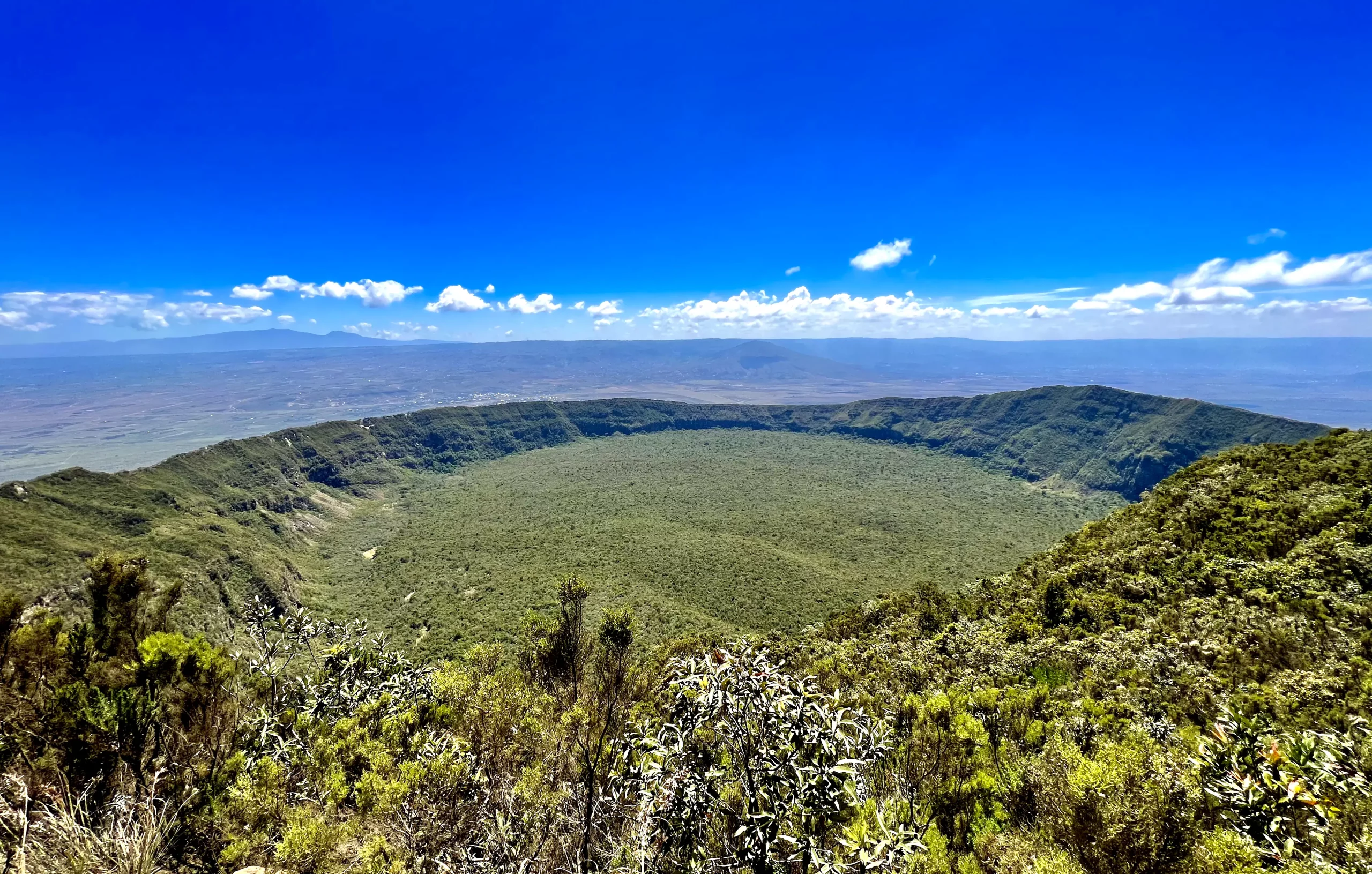
    Wildlife adds an unpredictable edge to the experience. You might spot giraffes or zebras on the lower slopes, or catch sight of buffalo deeper in the crater forest. Birds of prey soar overhead. Lizards dart across your path. It’s a reminder that you’re trekking through real, living wilderness—not just a weekend playground.

    Whether you’re chasing outdoor thrills, building your trekking resume, or just want the kind of photo that makes people ask, “Wait, where is that?”—Longonot checks every box.

    Getting to Longonot

    Mount Longonot 2
    Mount Longonot – a Landmark of the Great Rift Valley

    One of Longonot’s best features is how easy it is to reach. For all its wild beauty, the mountain is just about an hour and a half from Nairobi, depending on traffic and your commitment to speed bumps.

    The most common route is via Waiyaki Way (A104), heading northwest toward Naivasha. Just before Longonot town, you’ll spot a sign pointing toward the national park gate. The last stretch of road can be bumpy, but it’s manageable even in a regular sedan. A 4×4 is more comfortable, especially during rainy months, but not essential.

    For the intrepid budget traveler, there’s always public transport. Take a matatu to Naivasha, then hire a boda boda (motorbike taxi) or regular cab to the park entrance. It’s a more adventurous approach—and definitely dustier—but gets the job done if you’re backpacking or trying to save your shillings for post-hike pizza.

    You can also book a day trip with one of many Nairobi-based tour companies. These often include roundtrip transport, park entry, and a guide, making it an easy option if you prefer focusing on the climb instead of the coordination.

    However you get there, timing is everything. Aim to arrive at the gate by 8:00 AM. Not only does this give you the best light and coolest temps, but it also helps avoid the mid-morning hiking traffic jam—a real phenomenon, especially on weekends.

    What the hike actually feels like

    Mount Longonot Hike Start
    The starting point on the Longonot crater rim – the beginning of an epic hike

    The trail begins deceptively gently, winding through dry scrub and dusty acacia. But that easy start is just the warm-up. Soon, the slope turns unforgiving. The path narrows. Volcanic dust rises with every step. And suddenly, you’re questioning your life choices halfway up a ridge with your knees doing that polite little tremble they do before betrayal.

    The climb from the gate to the crater rim covers about 3.1 kilometers—but it’s all uphill. Expect between 1.5 and 2 hours for this section, depending on your pace, the strength of your legs, and your tolerance for distractions like lizards, birds, or photography stops.

    There are a few rest shelters along the way, though “shelter” is a generous word. They provide a spot to catch your breath but not much shade. Sunscreen and a wide-brimmed hat will be your best allies here, along with a healthy respect for the mountain sun, which can turn necks lobster-red by midmorning.

    As you gain altitude, the air gets cooler and thinner. The views start to open up—first of the valley behind you, then of the crater itself. And then, quite suddenly, you’re there.
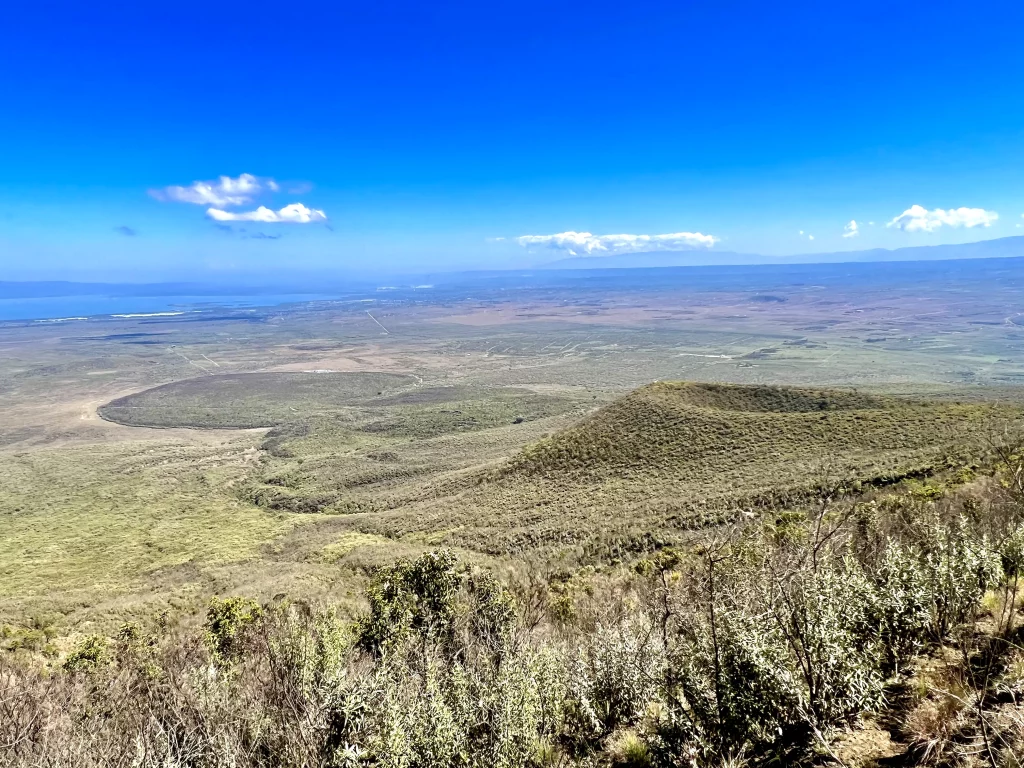
    The rim is the moment everything changes. The steepness fades. The wind picks up. And just like that, you’re standing on the edge of an ancient volcano, looking down into a green crater bowl so vast it swallows sound.

    From this vantage point, the mountain finally reveals itself in full. The forested caldera stretches out below like a lost world. Far beyond it, Lake Naivasha glimmers like a dropped coin. The horizon ripples with escarpments and ridges, and every turn of the head brings a new reason to pause, breathe, and admire.

    Standing at the crater rim, you’re rewarded with a view that feels too big for your eyes to take in all at once. The vast forested bowl stretches out below like a secret world, while the jagged trail circling its edge teases what’s to come. You’ve climbed a volcano—and now it’s inviting you to walk its crown. The air is cooler up here, the wind sharp with altitude, and every direction looks like a postcard waiting to happen. If your legs are up for it, the real adventure is just beginning.

    The Crater Circuit: Walking the Crown of Longonot

    Tackling the rim trail

    Longonot Summit
    Mount Longonot Summit – whether you go clockwise or counter-clockwise, this spot marks the peak of you hike

    If you thought the climb up was the hard part, the mountain has news for you. The crater rim trail may look like a victory lap, but it packs enough ups and downs to make your legs question your judgment.

    The full circuit around the rim is about 7.2 kilometers. It undulates constantly—rising to minor peaks, dipping into saddles, and occasionally narrowing into paths that feel just a little too adventurous for your comfort level. Depending on how often you stop to catch your breath or frame the perfect panoramic shot, this section takes anywhere from 2 to 4 hours.

    There are no signs telling you which direction to go, so you get to choose your fate: clockwise or counter-clockwise. Clockwise gives you a brutal climb early and an easier finish. Counter-clockwise delays the pain until the final stretch, when you’re already tired and starting to fantasize about cold sodas.

    Either way, there’s no cheating. If you commit to the full loop, you’ll be hiking through every rise and fall this crater has to offer.
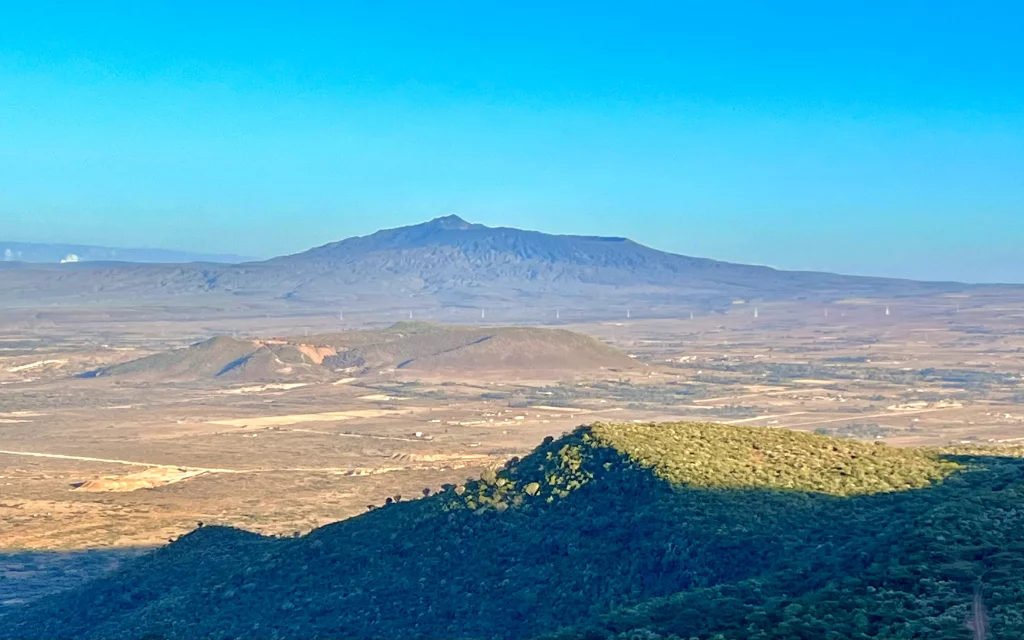
    And what views they are. Every section reveals something new: cliffs plunging into the crater’s forested heart, distant lakes shimmering under heat haze, mountain ridges rolling off toward the horizon. There’s a rawness to the landscape, a kind of unfiltered grandeur that makes even the most tired legs feel triumphant.
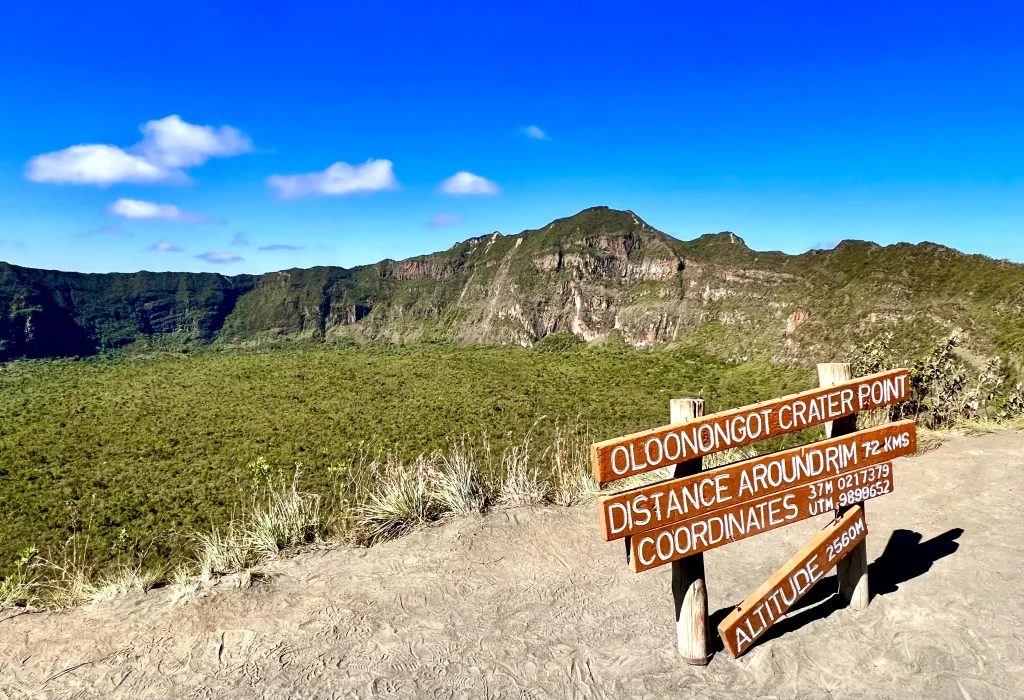
    Just be mindful of your footing—parts of the trail can be narrow, slippery, or eroded. Volcanic soil, while dramatic in photos, isn’t known for its stability. This is a trail that rewards focus as much as fitness.

    Is the rim loop necessary?

    Technically, no. Many hikers climb to the rim, marvel at the view, take some photos, and head back down. And that’s perfectly fine. You still get the summit high, the crater spectacle, and the satisfying ache of a mountain conquered.

    But if you’re the type who gets itchy seeing a trail veer off with the promise of more, the rim loop is irresistible. It’s what transforms the Longonot experience from “great hike” to “legendary day.” It adds challenge, solitude, and a true sense of walking on top of the world.

    And if you’re a photographer? It’s non-negotiable.

    Entry fees, park hours, and practicalities

    Mount Longonot sits within Longonot National Park, managed by the Kenya Wildlife Service. Entry fees vary by residency status and are usually paid via M-Pesa or card at the gate. Here’s what to expect:

    • Kenyan Citizens: KES 250 adults, KES 200 children
    • Residents: KES 600 adults, KES 250 children
    • Non-Residents: USD 26 adults, USD 17 children

    The park is open daily from 6:00 AM to 6:00 PM. Last entry is technically 5:00 PM, but no sane person is starting the hike that late unless they really want to sleep with the buffalo.

    Rules are straightforward:

    • No overnight camping
    • No plastic water bottles (bring your reusable gear)
    • No venturing into the crater itself
    • Don’t feed, chase, or try to photograph yourself hugging wildlife

    And yes—bring your own water. At least 2–3 liters per person. The only thing more exhausting than climbing Longonot is doing it with a dry mouth and no hydration in sight. A few vendors sometimes sell bottled water at the gate, but don’t count on it being cold, cheap, or available.

    What to Pack for a Successful Longonot Trek

    The essential hiking gear

    Mount Longonot might not require ropes or snow goggles, but it’s no casual stroll either. A little preparation goes a long way toward making your trek safer, smoother, and a whole lot more enjoyable.

    Start with solid hiking boots—you’ll want ankle support, grip, and something you don’t mind getting dusty. Trail runners work too, but avoid anything with slick soles or poor traction. The volcanic gravel doesn’t forgive bad footwear choices.

    Carry at least 2–3 liters of water per person. There are no water sources on the mountain, and the sun has a way of draining your reserves faster than you think.

    Pack high-energy snacks—think trail mix, granola bars, or bananas. If you’re doing the full circuit, you’ll need fuel. There’s no picnic bench up there, but any boulder with a view can be a five-star dining spot with the right attitude.

    Add a wide-brimmed hat, sunglasses, and sunscreen. This mountain has no chill when it comes to UV exposure. You’ll be outdoors the entire time, and shade is as rare as flat terrain.

    Other smart additions:

    • A lightweight windbreaker for the breezy rim
    • A small first aid kit
    • Camera or smartphone with a power bank
    • Binoculars for birdwatching or spying on hikers who look more prepared than you

    If you’re trekking in the rainy seasons, bring a rain jacket. The trail turns into a slip-n-slide with just a little moisture, and being soaked at 2,000+ meters is as unpleasant as it sounds.

    Optional but awesome

    • Trekking poles: Some people swear by them, especially on the descent when knees start negotiating.
    • Gloves: For extra grip or to avoid blisters if you’re using poles.
    • Gaiters: If you hate dust in your socks, these are your new best friends.

    And perhaps most importantly, bring a sense of humor. Longonot has a way of humbling hikers, and a little laughter goes a long way when you’re halfway around the crater and realizing you still have “one last climb” for the fifth time.

    When to Hike Longonot: Seasons, Weather, and Timing

    Best months to hike

    Mount Longonot is open year-round, but not all months are created equal. The best seasons are the dry months:

    • June to October: Cool, dry, and crisp—arguably the best hiking weather.
    • January to February: Warmer, but still dry and clear.

    During these months, the trails are firm, the skies are clear, and your chances of panoramic photos without cloud cover are excellent.

    Rainy season realities

    • March to May: Long rains bring mud, fog, and slippery paths.
    • November: Short rains, same issues, slightly less severe.

    It’s still possible to hike Longonot during the rains, but it’s more technical and less fun. Expect reduced visibility, wet gear, and a trail that turns into a calf-deep channel of brown lava silt. Only the bold—or the impatient—attempt it during heavy rain.

    Best time of day to start

    Early. Very early.

    Aim to begin your hike no later than 8:00 AM. Not only do you beat the heat, but you also avoid the midday hiker parade and have better lighting for photos.

    Afternoon hikes are possible, but the heat bounces off the mountain like it’s trying to toast you alive. Plus, late descents mean you’re rushing, tired, and less likely to enjoy the epic views that make the climb worth it.

    Scenic Highlights and Photo Ops

    Best viewpoints

    Longonot Descent
    Marvel at epic views of the Great Rift Valley while hiking Mount Longonot

    Every section of the rim has its charm, but a few spots will make your camera whimper with joy:

    • Eastern rim: Offers sunrise shots with the crater bathed in gold and mist rising from the forest below.
    • Northern ridge: Best place for capturing Lake Naivasha in the background.
    • Southern edge: Faces toward the hazy escarpments and distant volcanic peaks—ideal for dramatic silhouettes.

    You’ll also find plenty of unique rock formations and twisted trees that look like they walked out of a Tim Burton sketchbook. Stop often. Look around. Let your camera eat.

    Wildlife photography

    Keep an eye out for:

    • Birds of prey circling the rim
    • Small mammals darting in and out of brush
    • Giraffes and zebras on the lower slopes
    • The elusive buffalo (preferably from a safe distance)

    Photography tip: bring a telephoto lens if you’re serious about wildlife. Or just let your smartphone do its panoramic thing and enjoy the moment.

    And don’t forget to look behind you. Some of the best compositions on Longonot come from turning around and realizing you’ve climbed into a literal masterpiece.

    What to Do Around Longonot After the Hike

    Lake Naivasha and Crescent Island

    Once you’ve come down from the mountain—literally and emotionally—you don’t have to call it a day. Longonot is just one highlight in a region packed with outdoorsy options.

    Lake Naivasha is only a short drive away and offers a complete change of pace: flat, serene, and teeming with birds and hippos. You can take a boat ride to get up close with wildlife or head to Crescent Island, a privately owned sanctuary where you can walk among giraffes, zebras, waterbucks, and impalas—with no fences and no predators.

    If the crater climb had your heart racing, this place brings it back to a peaceful beat.

    Hell’s Gate National Park

    Just down the road, Hell’s Gate delivers one of the most unique national park experiences in Kenya: hiking or biking through gorges, past geothermal vents, and between towering cliffs that feel like nature’s own coliseum. It’s rugged, wild, and cinematic—literally, since this is where parts of The Lion King and Tomb Raider were filmed.

    Rent a bicycle at the gate, pedal past giraffes and warthogs, then explore the dramatic gorge system on foot. It’s a perfect next-day outing if you’ve still got hiking energy to burn.

    Sanctuary Farm, Oserian, and local wineries

    For something softer (and possibly involving a cold glass of Sauvignon Blanc), head to Sanctuary Farm or Oserian Conservancy, where you can walk or ride among animals in more managed environments. Some of these estates also double as working vineyards, making it entirely acceptable to swap your trekking poles for a wine glass by late afternoon.

    Naivasha’s growing wine scene may be small, but it’s refreshingly laid-back. The wine is decent, the views are lovely, and the air still carries that highland chill that makes you feel like you’ve earned every sip.

    Where to Stay Near Longonot

    Budget options for hikers

    If you’re on a tight budget but still want a comfortable place to rest your dusty limbs, Naivasha town has a good mix of guesthouses, hostels, and basic campsites.

    • Fisherman’s Camp: Lakefront camping and cabins with a boho backpacker vibe
    • Camp Carnelley’s: A favorite among younger travelers, complete with pizza, cold beer, and hammocks

    These are perfect for hikers and trekkers who don’t need luxury, just a clean bed and a place to swap trail stories under the stars.

    Mid-range and boutique lodges

    If you’re looking for a little more charm and comfort—without breaking the bank—there are eco-lodges and boutique stays dotted along the lakeshore and just outside town.

    • Crater Lake Tented Camp: Set around a hidden volcanic lake with excellent birdwatching
    • Naivasha Kongoni Lodge: A quiet, elevated retreat with great views and generous rooms

    These make excellent bases if you’re combining your Longonot hike with a weekend escape.

    Higher-end options for active vacationers

    And if you’ve decided your muscles deserve a reward (or your knees are writing formal complaints), Naivasha has no shortage of luxury.

    • Enashipai Resort & Spa: Pool, spa, plush beds, and every creature comfort imaginable
    • Lake Naivasha Sopa Resort: Expansive lawns, grazing wildlife, and a lakeside setting perfect for recovery mode

    These upscale lodges cater to travelers who like their adventure paired with room service—and there’s no shame in that.

    Local Legends and the Cultural Echo of Longonot

    Maasai lore and volcanic spirits

    Mountains in Kenya aren’t just geological features—they’re part of living culture. For the Maasai communities around Longonot, the volcano has always held power, both as a landmark and a spiritual presence.

    Longonot was once feared as a home for spirits, thanks to its fiery past and occasional tremors. The crater forest was considered sacred, and entering it—let alone hiking across it—was once taboo. Today, that respect lingers in the air. Even if you’re not superstitious, you’ll likely feel the mountain’s stillness as something deeper than just quiet.

    Ask a local and you’ll hear stories of eruptions, divine warnings, or the belief that certain birds seen circling the crater are messengers from another realm. Whether or not you buy into the legends, they give the landscape a weight that’s hard to ignore.

    Colonial expeditions and early climbs

    In the early 1900s, European settlers began to document and explore Longonot in earnest. Colonial geologists, missionaries, and game hunters scaled its slopes, marking trails and mapping its contours. Some came for science, some for sport, and others just to say they’d done it.

    The mountain has watched countless transformations: the carving of roads, the fencing of lands, and the emergence of Naivasha as a weekend playground. But it remains, in many ways, as wild and unbothered as ever.

    Hiking it today connects you to a long line of wanderers—some seeking answers, others just adventure, all of them humbled by the same climb.

    Insider Tips from Those Who’ve Been There

    Hike on weekdays if you can

    Weekends bring crowds, especially around mid-morning when Nairobians show up with full cooler boxes and Bluetooth speakers. If you want the trail to yourself—or at least fewer strangers in your selfies—go on a Tuesday or Wednesday.

    Start early, finish strong

    The earlier you start, the more pleasant your hike. And we don’t just mean cooler temps. The sunrise light across the Rift Valley is absurdly beautiful, and the rim winds are gentler before noon.

    Take breaks on the rim—but pick your spots

    Some parts of the rim have steep drop-offs and loose soil. Save your long water breaks for wider, flatter ledges, and avoid standing too close to the edge, especially in gusty conditions.

    Don’t race it

    There’s no prize for fastest lap—unless your ego counts. Take your time on the rim, soak in the views, let your legs recover between climbs, and give yourself space to enjoy the moment. This mountain doesn’t like being rushed.

    Combine it with Hell’s Gate for a full weekend

    If your legs still work the next morning, Hell’s Gate is the perfect follow-up. Biking through herds of gazelle and exploring wind-carved gorges is a completely different kind of outdoors adventure—and one that makes a killer two-day itinerary with Longonot.

    Final Thoughts: Why Longonot Belongs on Your Hiking Bucket List

    Longonot isn’t the tallest mountain in Kenya. It’s not the most remote or the most photographed. But it might just be the most satisfying.

    It gives you a hard-earned summit with views that feel limitless. It lets you walk the rim of an ancient volcano with wind in your hair and birds wheeling overhead. It challenges your body without requiring altitude acclimatization or technical gear. And it does it all within a few hours of Nairobi, with a crater full of mystery at its core.

    For hikers, trekkers, photographers, and adventure-lovers chasing that feeling of I did something epic today, Longonot delivers. Every step is a reminder that the outdoors is still wild, still beautiful, and still waiting for you to show up with sore legs and a big grin.

    Bring good boots. Bring water. Bring someone who doesn’t mind a little suffering for the sake of a view. And most importantly, bring your sense of adventure.

    Because Longonot doesn’t hand out rewards easily. But when it does, they’re unforgettable.

    More on Mount Longonot

    For more detailed information on planning your hike, trail conditions, and guided tours, consider visiting the following resources: